Slim Casement
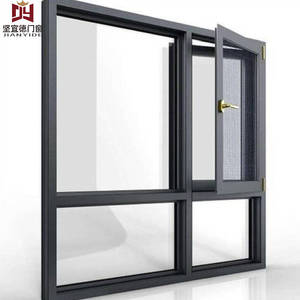
European Hurricane-Resistant Slim Aluminum Casement System
Uw ≤ 0.85 W/m²K
Class 4 Air Permeability
RC3 Security
Engineered for Bucharest's severe continental temperature swings, seismic safety protocols, and strict acoustic dampening thresholds.
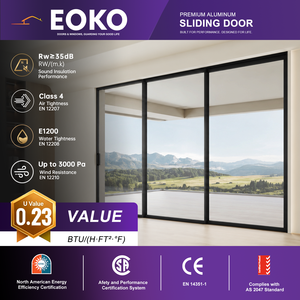
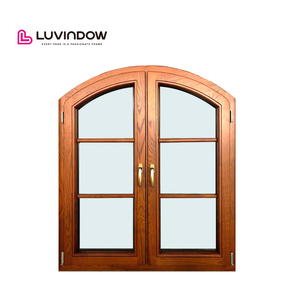
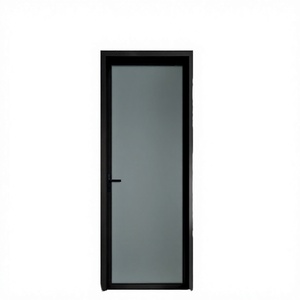
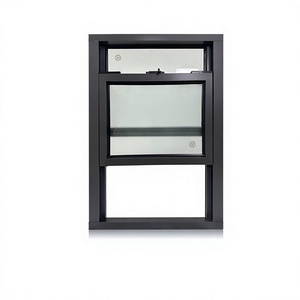
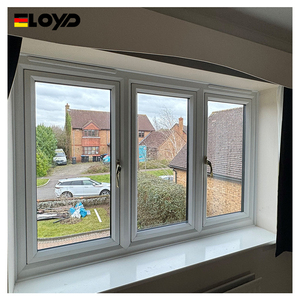
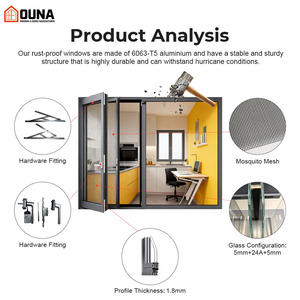
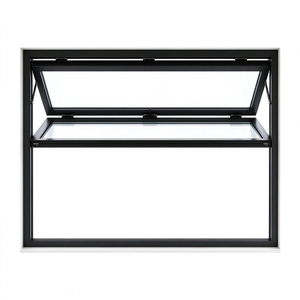
A rigorous review of structural dynamics, thermal containment parameters, and seismic stability compliance under Romanian national building codes.
Bucharest represents one of the most demanding engineering environments in Central and Eastern Europe for external fenestration and heavy commercial glazed swing systems. Positioned firmly within the Danubian Plain, the capital experiences a rigorous Dfa continental climate under the Köppen classification. External building envelopes are subjected to severe summer ambient peaks exceeding +40°C on exposed concrete surfaces, contrasting sharply with winter sub-zero plunges below -20°C accompanied by high-velocity dry Crivăț winds. For architectural facade designers, developers, and general contractors operating in Ilfov and Sector 1 through Sector 6, sourcing high-performance aluminum glass swing doors is not merely an aesthetic consideration—it is a critical calculation of thermal inertia, structural elasticity, and lifecycle operational cost.
Furthermore, Bucharest’s structural envelope specifications are governed by Romania's national seismic design code P100-1/2013. Given the deep Vrancea subcrustal seismic source zone, high-magnitude intermediate-depth earthquakes generate exceptionally long-period fundamental horizontal vibrations that induce significant inter-story drift in medium-to-high-rise concrete and steel frames. Large-format aluminum glass swing doors deployed in commercial ground floors, luxury penthouses in Floreasca, or high-density retail concourses must absorb differential seismic displacements without mechanical frame distortion, catastrophic glass fracture, or airtightness degradation. Our engineered profiles utilize 6063-T6 and 6061-T6 structural aluminum alloys, cold-crimped corner cleats, and elastomeric EPDM setting blocks configured specifically to mitigate cyclical seismic drift.
Equipped with 34mm to 44mm multi-chambered polyamide (PA66 GF25) thermal insulation bars. Effectively stops internal condensation during Romanian winter fronts down to -25°C while maintaining Ud ratings below 0.95 W/m²K with argon triple glazing.
Structural door frames are engineered with deep glass insertion pockets (22mm rebate) and vulcanized central perimeter gaskets capable of accommodating seismic lateral displacements up to ±2.5% inter-story drift without glass-to-metal contact.
Designed for Bucharest's dense urban arteries such as Șoseaua Pipera and Bulevardul Iuliu Maniu. Asymmetric acoustic laminate glazing configurations eliminate low-frequency traffic noise, street vibrations, and tram resonance.
From Class-A commercial towers in Pipera to historical conservation projects around Calea Victoriei, explore specific applications for high-grade swing door systems.
Continuous-traffic commercial entrances. Equipped with our heavy-duty concealed overhead hydraulic closers, tested for 1,000,000 cycles (EN 1154), and integrated with contactless access control systems for corporate headquarters.
High-end residential French swing patio doors. Features panoramic ultra-slim stiles (38mm visible width), flush thermal thresholds ensuring barrier-free transition (DIN 18040-1), and solar-control double Low-E soft coatings.
Adaptive reuse of historical facades. Architectural aluminum clad-wood profiles matching pre-war Art Deco or neoclassical proportions, integrating exterior Qualicoat-certified textured bronze finishes with warm natural interior timber.
High-density balcony entrance swing units. Engineered for extreme wind resistance under EN 12210 Class C4/C5, preventing air drafts, whistle resonance, and water infiltration during intense convective autumn storms.
Compare standard industrial profiles against our high-tier architectural thermal break assemblies engineered for factory-direct dispatch to Bucharest.
| Performance Vector | Conventional Commercial Swing Door | DERCHI Engineered Bucharest-Spec Door | Harmonized European Standard |
|---|---|---|---|
| Thermal Transmittance (Ud) | 1.8 – 2.4 W/m²K | 0.82 – 1.10 W/m²K (nZEB Compliant) | EN ISO 10077-1 / EN ISO 10077-2 |
| Air Permeability | Class 2 (300 Pa) | Class 4 (600 Pa airtight compression) | SR EN 12207 |
| Watertightness | Class 4A (150 Pa) | Class E900 (900 Pa static water head) | SR EN 12208 |
| Wind Load Structural Resistance | Class B3 (1200 Pa) | Class C5 (2000 Pa dynamic deflection) | SR EN 12210 |
| Acoustic Attenuation (Rw) | Rw = 30 – 32 dB | Rw = 42 – 47 dB (Tri-laminate Acoustic) | EN ISO 717-1 |
| Burglary Resistance Rating | Basic Latch / RC1 | RC2 / RC3 (Patented 4-Side 6-Point Lock) | SR EN 1627:2011 |
| Seismic Elastic Tolerance | Standard rigid cleat (untested) | ±28mm dynamic displacement frame allowance | P100-1 / EN 1998-1 Eurocode 8 |
How progressive European construction methodologies are altering fenestration requirements for local developers.
With Romanian energy audits applying punitive taxes to thermal bridge anomalies, institutional developers in Baneasa and Voluntari mandate certified thermal break profiles that isolate interior humidity, eliminating condensation mold risks during long freezing spells.
The aesthetic drive toward minimalist brutalism and Scandinavian lightness has elevated demand for swing doors featuring concealed hinges, sub-floor flush pivots, and ultra-slender frame profiles without compromising sash load-bearing limits up to 300kg.
Foreign institutional capital driving developments across Bucharest West and South heavily prioritizes recycled billet aluminum content (low embodied carbon), certified thermal efficiency, and documented non-toxic fluorocarbon or architectural powder finishes.
DERCHI (Guangdong Dejiyoupin Doors and Windows Co., Ltd.) delivers the production scale, technical documentation, and certified quality controls required by premier European general contractors.
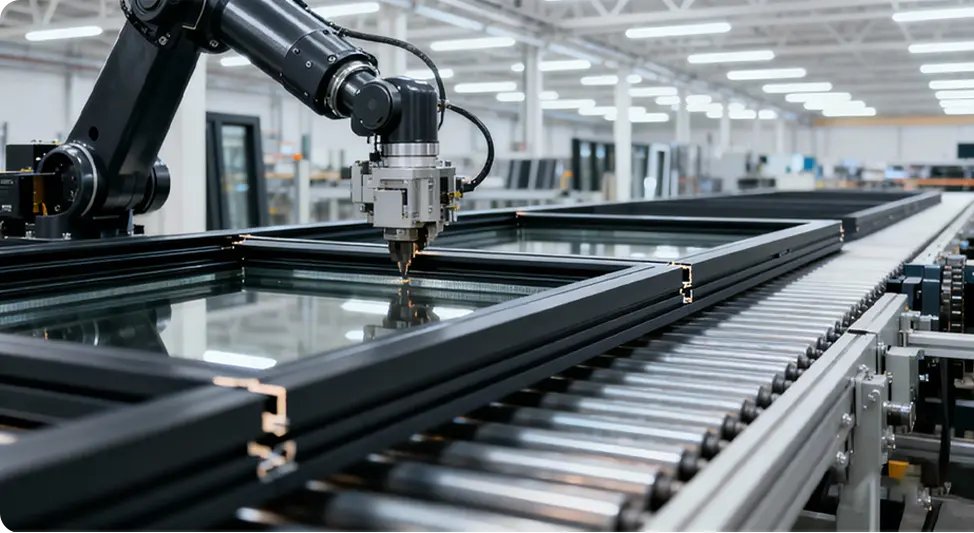
Recognized as a prestigious "China Famous Brand" by Xinhua News Agency, Guangdong Dejiyoupin operates fully automated CNC machining centers, robotic corner-crimping suites, and automated glass bonding facilities in Foshan, ensuring 100% precision execution per approved CAD shop drawings.
Safeguarding structural profiles and sensitive Low-E coatings across maritime and rail freight channels.
Shipments move directly from our factory via sea container to the Black Sea deep-water terminals at Constanța Port, followed by immediate rail or flatbed transport over the A2 highway corridor straight into Bucharest job sites.
All swing door units with pre-glazed insulated units are shipped on custom steel-reinforced heavy timber A-frames. Protected by multi-layer anti-static protective film, corner edge-buffers, and vacuum desiccants preventing sea-fog corrosion.
Every shipment is accompanied by detailed commercial packing schedules, Declaration of Performance (DoP), factory test certificates per EN 14351-1, and certified Bill of Lading enabling zero-delay Romanian customs clearance.
Critical answers addressing statutory compliance, installation methodology, warranty provisions, and custom configurations.
Our swing doors utilize advanced multi-cavity thermal break sections coupled with structural polyamides and argon-gas-filled triple glazing (with soft-coat Low-E layers). This assembly yields overall system thermal transmittance values down to 0.85 W/m²K, well within Romania's stringent nZEB envelope criteria (which generally require Ud ≤ 1.2 W/m²K for exterior glazed doors).
Yes. All DERCHI exterior window and door products conform strictly to the European Union Construction Products Regulation (CPR 305/2011) and EN 14351-1:2006+A2:2016. We furnish full Declarations of Performance (DoP) confirming tested ratings for air permeability, watertightness, acoustic damping, and wind-load resistance for your local site inspector (ISC - Inspectoratul de Stat în Construcții).
Yes. In accordance with Romania’s P100-1/2013 code, our swing door framing features oversized internal perimeter tolerances and reinforced mechanical corner assemblies. These absorb high shear lateral displacements without inducing localized edge stress on the tempered or laminated glass panels, preventing catastrophic blow-outs during seismic events.
We supply Class 2 Qualicoat-certified architectural thermosetting powder coatings and heavy anodic oxidation (20–25 microns). These finishes demonstrate high resistance to micro-abrasion from dust, heavy urban traffic particulates, and chemical weathering caused by seasonal industrial emissions and road salts used in winter de-icing.
Upon final sign-off of CAD fabrication drawings, factory manufacturing takes between 25 and 35 calendar days depending on project volume. Maritime transit from Shenzhen/Guangzhou ports to the Port of Constanța spans approximately 28 to 35 days, followed by 48 to 72 hours of customs and direct container truck transport into Ilfov or the Bucharest metropolitan area.
Yes. Our in-house engineering wing of over 30 specialists produces full BIM/CAD submittals, including section details, sill-anchor structural calculations, and vapor-permeable perimeter membrane flashing diagrams. We supply comprehensive installation manuals and remote video technical auditing for your local Romanian installation teams.