Aluminum Casement Windows: The Complete Technical & Sourcing Guide for Global Buyers
Direct factory engineering, Passive House thermal thresholds (Uw down to 0.78 W/m²K), EN 14351-1 CE compliance, and anti-burglary multi-point locking for project developers, importers, and contractors worldwide.
Engineering Superiority in Architectural Aluminum Casement Windows
As modern international building codes tighten regulatory standards around thermal insulation, airtightness, and structural resilience, Aluminum Casement Windows have emerged as the paramount architectural fenestration choice. Unlike standard sliding or double-hung units that rely on brush seals, side-hung and top-hung casement configurations close inward or outward against a continuous, multi-chambered elastomeric compression gasket. When closed, negative wind load pulls the sash tighter against the frame, creating an impenetrable envelope barrier.
Manufactured by Guangdong Dejiyoupin Doors and Windows Co., Ltd. under our internationally recognized DERCHI brand (honoured as a "China Famous Brand" by Xinhua News Agency), our aluminum casement systems represent the convergence of aerospace-grade extrusion alloys, patented anti-intrusion security hardware, and tailored multi-cavity polyamide thermal breaks.
From ultra-slim minimalist profiles designed for contemporary European cityscapes to ultra-insulated multi-chamber systems meeting German GEG and Passive House standards, explore our flagship configurations.
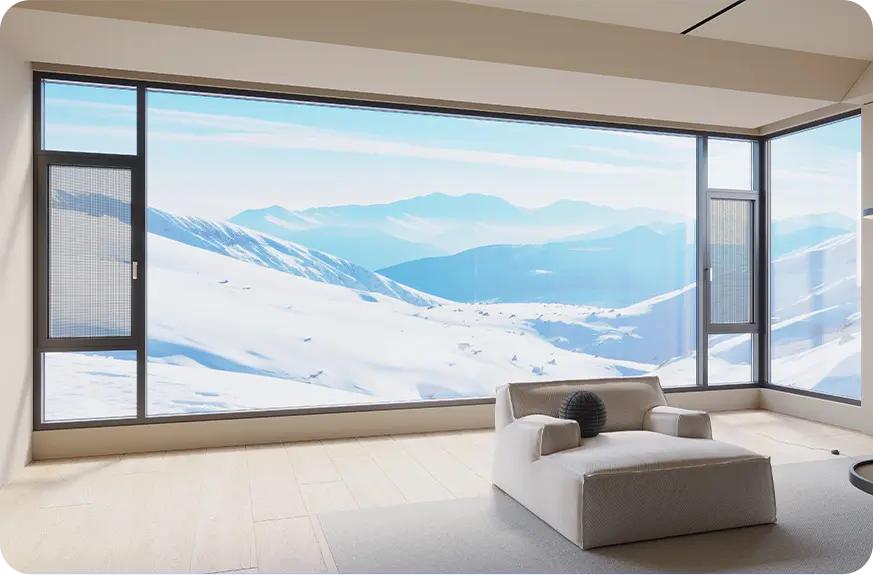
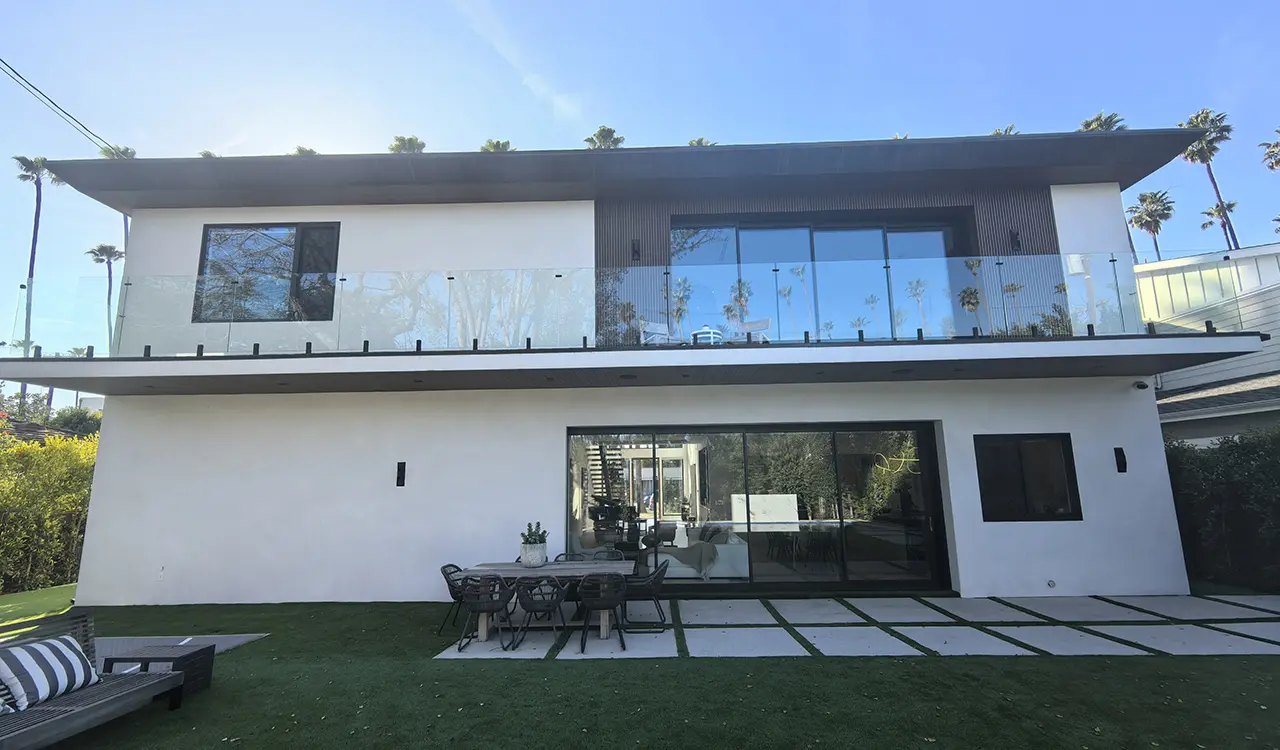
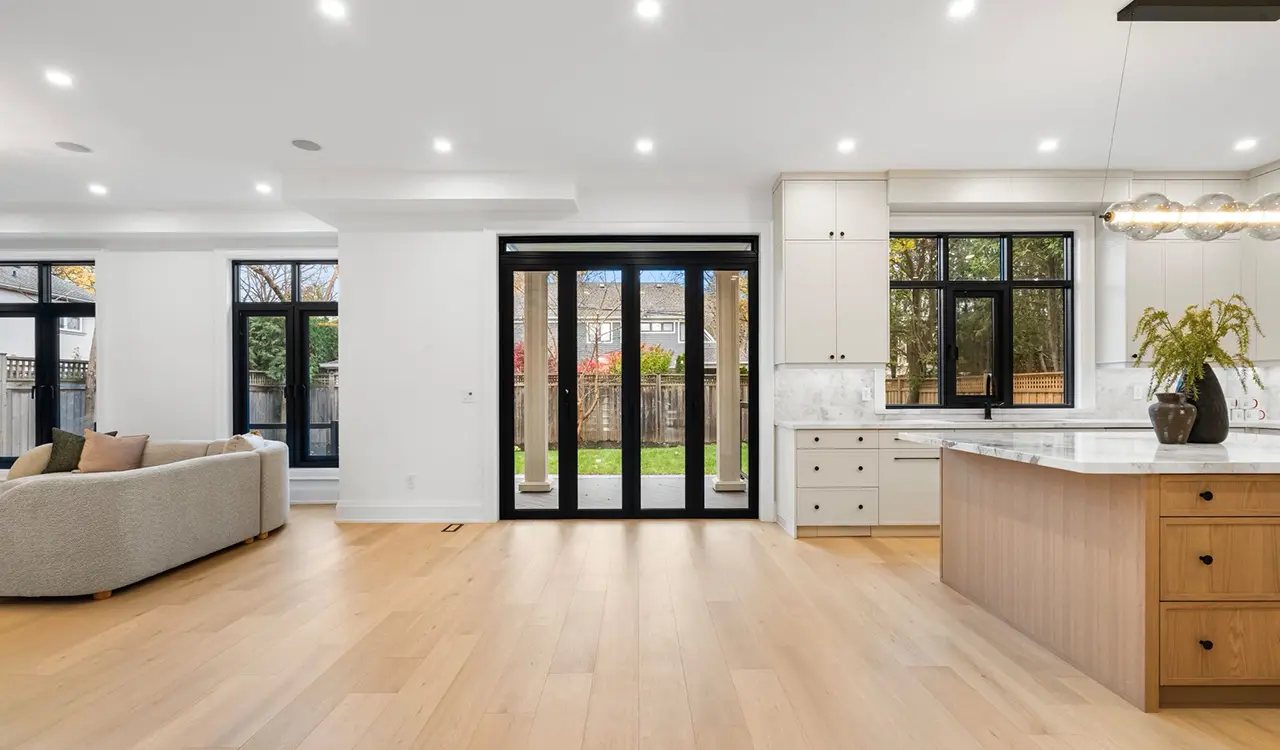
Architectural Tilt-Turn Casement System 85
The definitive European dual-action system. Dual-function gearboxes allow 90-degree inward casement opening for effortless cleaning, combined with top-tilt micro-ventilation to prevent draft turbulence.
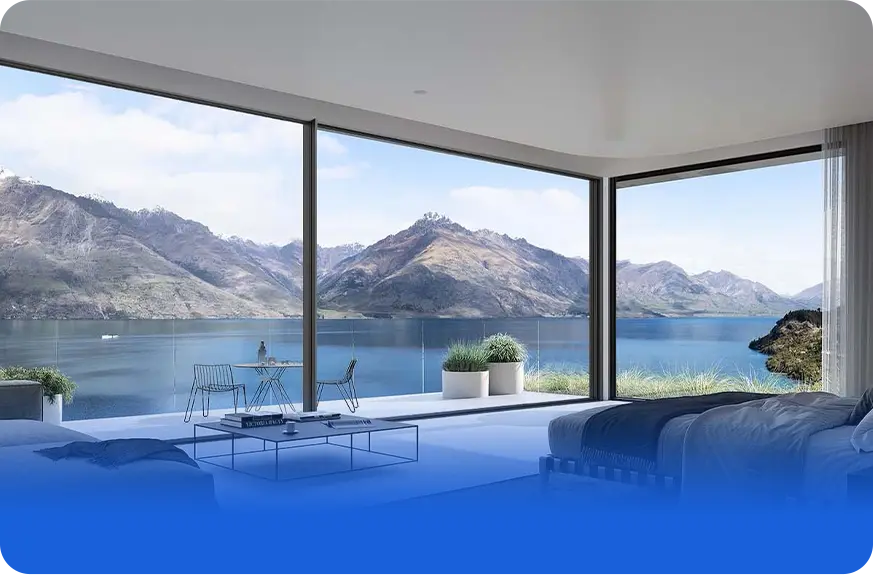
Engineered for regions facing high wind pressures and hurricane conditions. Structural flush sash design with multi-cavity drainage, friction stays tested to 50,000 cycles, and exterior rain baffles.
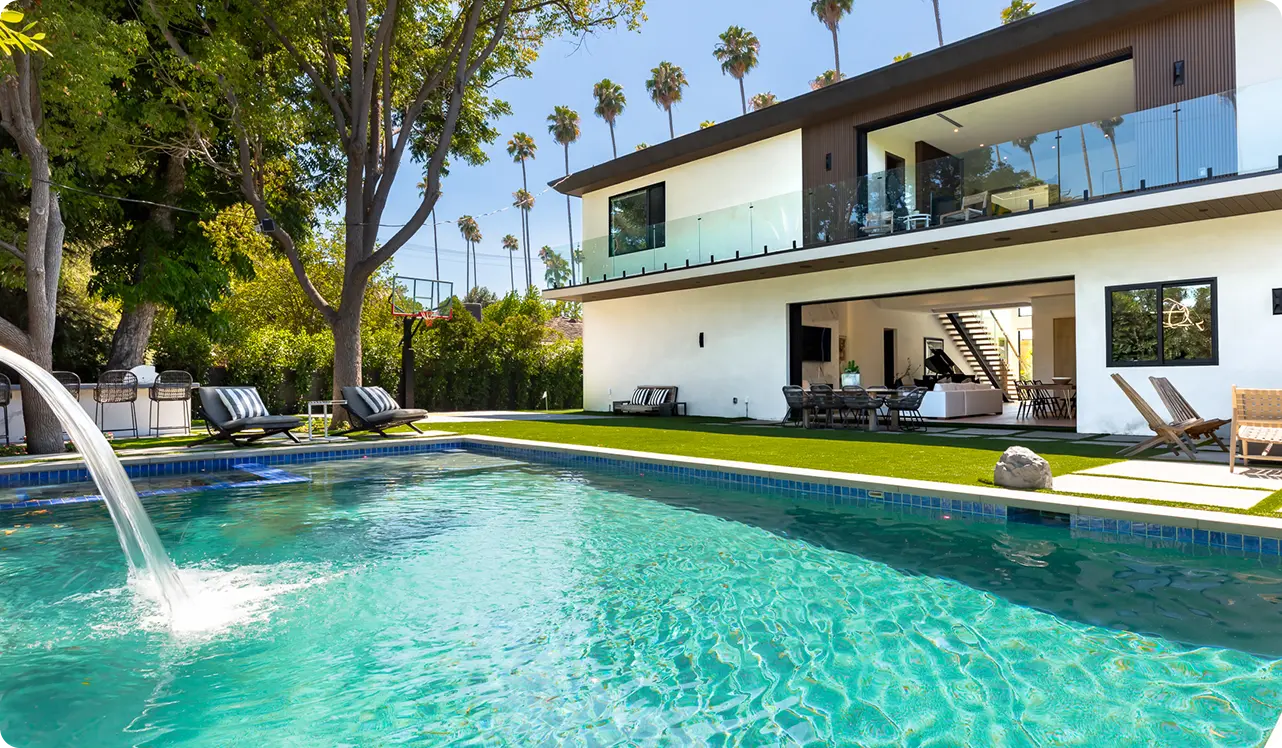
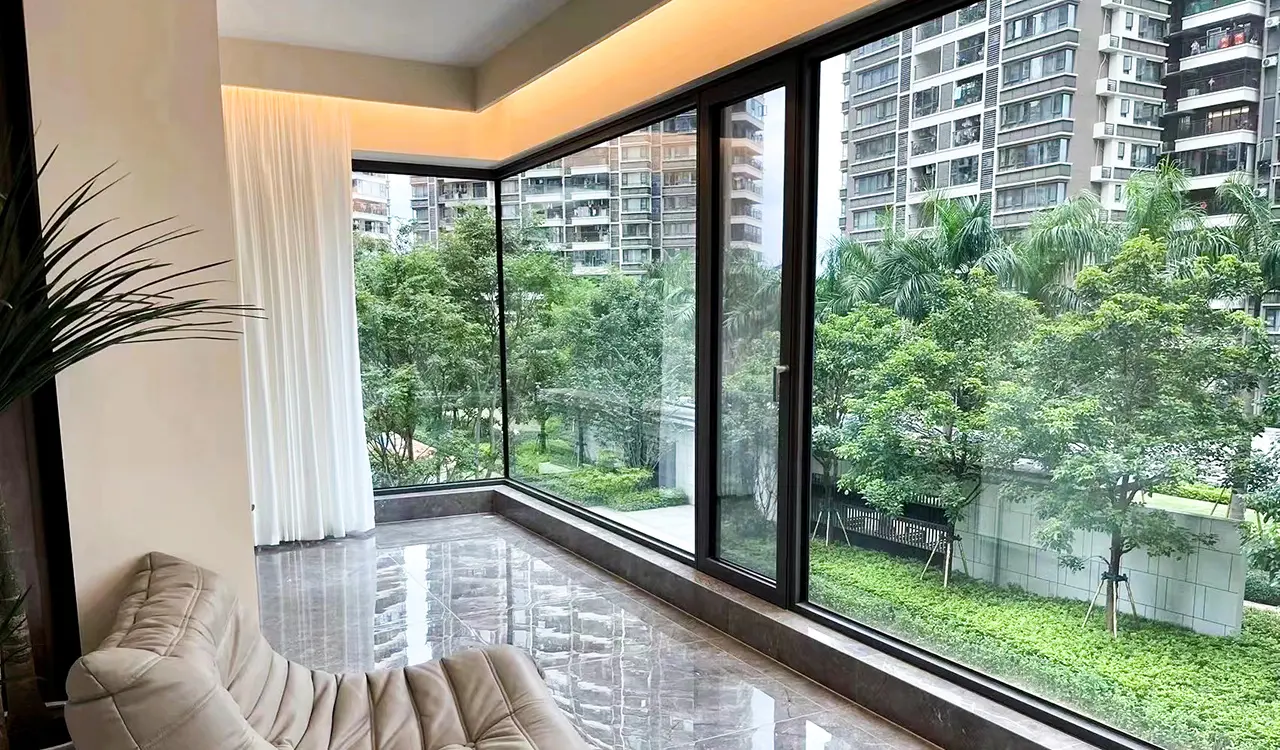
Engineered with concealed sashes that match the outer frame sightline from the exterior facade. Delivers up to 18% higher daylight transmittance without sacrificing thermal break cavity volume.
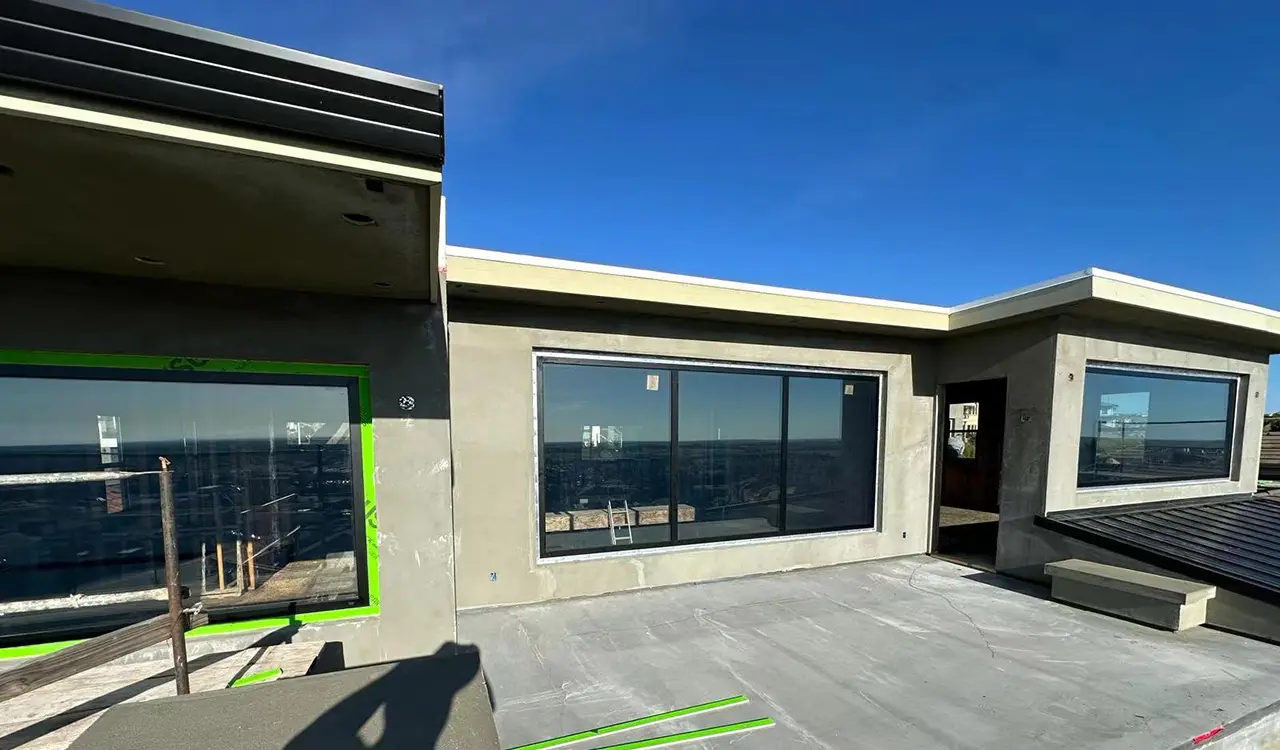
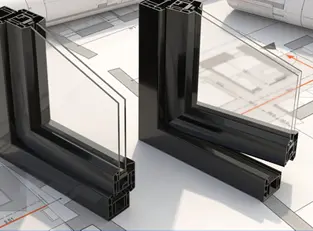
Fully compliant with high-velocity hurricane zone specifications. Built with heavy-wall 2.0mm aluminum, structural silicone perimeter bonding, and SentryGlas (SGP) laminated safety glass systems.
Future Sourcing & Technological Trends in Aluminum Casement Windows
How global environmental directives, AI-driven digital manufacturing, and architectural evolution are transforming the B2B procurement matrix for windows and doors.
TREND 01 · THERMAL BENCHMARKS
Ultra-Low Uw Targets & Embodied Carbon
Global building energy regulations (including EU EPBD, RE2020, and North American Net-Zero codes) are requiring window overall U-values below 1.0 W/m²K. In response, Guangdong Dejiyoupin Doors and Windows Co., Ltd. utilizes low-carbon recycled hydroelectric aluminum billets and bio-based polyamide thermal break bridges to minimize both operational and upfront embodied carbon footprints.
Expanded 34mm - 45mm multi-chamber thermal breaks
Warm-edge hybrid spacer bars to eliminate edge frosting
Aerogel composite profile infills
TREND 02 · SMART ENVELOPE
BIM Integration & Sensorised Automation
Casement windows are evolving into intelligent facade nodes. Procurement tenders for multi-unit residential and commercial towers now increasingly require factory-integrated concealed chain actuators, rain sensors, and indoor air quality (CO2) automated ventilation triggers linked to central Building Management Systems (BMS).
Concealed 24V DC / 230V mechanical actuators
Integrated magnetic reed contact security sensors
BIM Level 2 / Revit object parameter integration
TREND 03 · EXTREME RESILIENCE
Micro-Climate Resilience & Acoustic Engineering
Rapid climate shifts have intensified urban storm wind pressures and ambient urban noise levels. Modern architectural demands prioritize multi-point perimeter compression seals that maintain acoustic dampening performance (exceeding Rw 42 dB) while resisting structural wind buffeting up to Class C5 (2000+ Pa).
Critical Procurement Criteria for Global B2B Buyers
Procuring direct from Chinese manufacturing facilities requires precise contractual, technical, and engineering alignment. Ensure your procurement schedule verifies these key milestones before issuing release deposits.
Independent third-party laboratory test reports (CE EN 14351-1, NFRC, or AS2047)
Detailed structural calculation sheets for wind deflection based on site elevation
Hardware brand authenticity guarantees (Siegenia, HOPPE, or our patented systems)
Powder coating certification (Qualicoat Class 2 or AAMA 2604/2605 compliant)
What thermal transmittance (Uw value) can your aluminum casement windows achieve under European test standards?
Guangdong Dejiyoupin Doors and Windows Co., Ltd. engineers its aluminum casement window profiles with multi-cavity polyamide (PA66 GF25) thermal barriers. Paired with triple-glazed units featuring dual Low-E coatings, warm-edge composite spacer bars, and 90% argon gas fill (e.g., 4Low-E + 16Ar + 4Clear + 16Ar + 4Low-E), our casement windows achieve overall thermal transmittance values down to Uw 0.78 W/m²K. Standard double-glazed architectural systems achieve Uw values between 1.2 and 1.4 W/m²K, easily surpassing strict requirements established by Germany's GEG, France's RE2020, and the UK's Approved Document L.
How does Guangdong Dejiyoupin Doors and Windows Co., Ltd. ensure wind load and watertightness resistance on high-rise or coastal installations?
Every casement window system is constructed from high-tensile 6063-T5/T6 structural architectural aluminum alloy with profile wall thicknesses ranging between 1.4mm to 2.0mm+. Corners are reinforced with heavy cast aluminum crimped brackets and injected with dual-component structural polyurethane epoxy adhesives. We utilize vulcanized, continuous EPDM triple-gasket compression sealing systems paired with pressure-equalized decompression drainage chambers. Under EN 12210 wind resistance testing, our systems achieve Class C5 ratings (withstanding test pressures up to 3000 Pa), and under EN 12208 water tightness tests, our casement units maintain watertight performance up to Class 9A (600 Pa) and beyond.
What security hardware configurations and anti-burglary ratings do your casement systems offer?
Security is integral to our architectural designs. We integrate proprietary innovations including our patented Four-Side Six-Point Lock alongside premier European gear systems from Siegenia, HOPPE, Sobinco, or G-U. Hardened mushroom cams lock securely into heavy-gauge stainless steel keep brackets along all four perimeter edges of the sash. This configuration prevents sash pry-out attacks, delivering certified resistance compliant with EN 1627 RC2 and RC3 European standards, as well as PAS 24 British standard security benchmarks.
Can you provide customized acoustic insulation specifications for projects near transit corridors?
Yes. Acoustic attenuation relies on mass decoupling, varied glass thicknesses, and continuous perimeter compression sealing. By combining our multi-chamber acoustic EPDM compression seals with asymmetric acoustic laminated glazing configurations (for example: 6mm float + 0.76mm acoustic PVB interlayer + 6mm float interior pane, a 16mm argon cavity, and an 8mm toughened exterior pane), our aluminum casement windows achieve sound reduction indexes of Rw 40 dB to Rw 46 dB, tested per ISO 717-1. This ensures tranquil indoor ambient sound levels even adjacent to arterial highways and transit hubs.
How are international sea-freight shipments packaged to completely eliminate transit oxidation and glass breakage?
To protect delicate surface coatings and insulated glazing over 30 to 45-day ocean freight routes, we implement a standardized 5-tier packaging protocol: (1) All anodized or powder-coated aluminum surfaces are wrapped with clean-peel UV-resistant electrostatic film. (2) Heavy-duty impact-absorbing corner protectors are fastened to every edge. (3) The entire window frame is sealed in waterproof poly heat-shrink film with moisture desiccants. (4) Frames are wrapped in high-density multi-layer EPE foam padding. (5) Assemblies are packed inside bespoke ISPM-15 compliant fumigated solid plywood crates reinforced with interior timber bracing and exterior steel banding, suitable for direct forklift handling at European destination ports.
What is the complete procurement workflow, lead time, and minimum order quantity (MOQ) for commercial B2B orders?
Our production infrastructure accommodates projects ranging from custom private villas (minimum order volume 50 m²) to expansive commercial mixed-use developments exceeding 50,000 m². The procurement workflow follows: (1) Architectural opening review and thermal modeling proposal; (2) Detailed CAD/BIM shop drawing generation and hardware scheduling; (3) Milestone sample approval; (4) Automated CNC precision machining and assembly; (5) 360-degree quality inspection with video reporting; (6) Export packing and containerized shipping. Production turnaround averages 20 to 35 business days following final drawing confirmation.
Enterprise Strengths
Guangdong Dejiyoupin Doors and Windows Co., Ltd.: Scale & Reliability
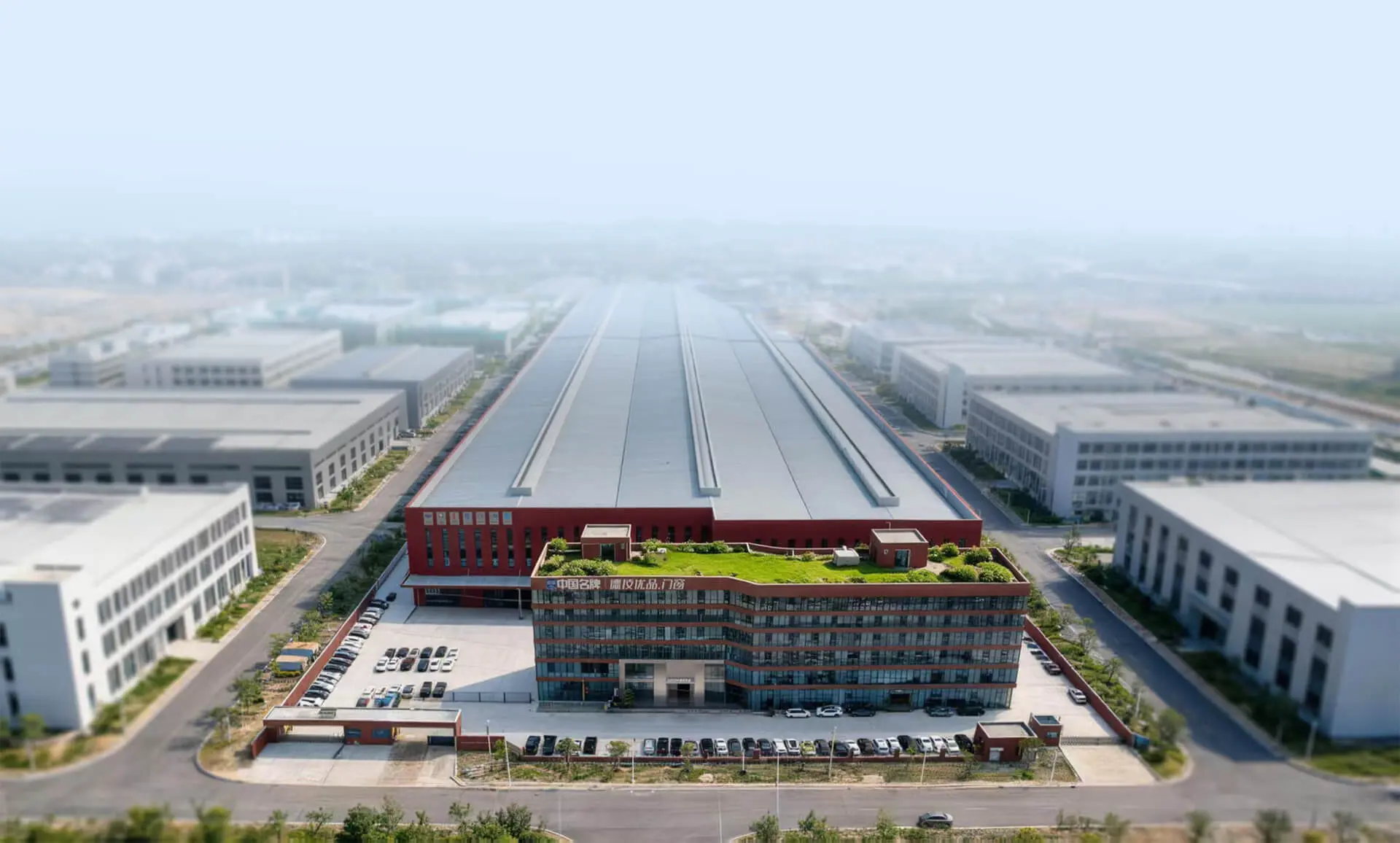
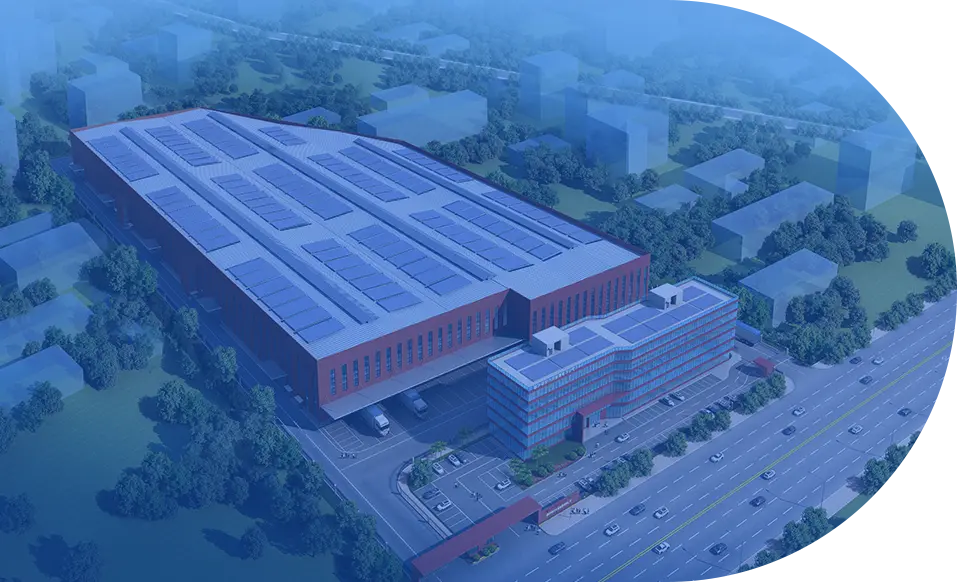
Headquartered in Shishan Town, Nanhai District, Foshan—the heart of China's premier aluminum manufacturing cluster—we combine cutting-edge German fabrication technology with rigorous ISO 9001 process governance.
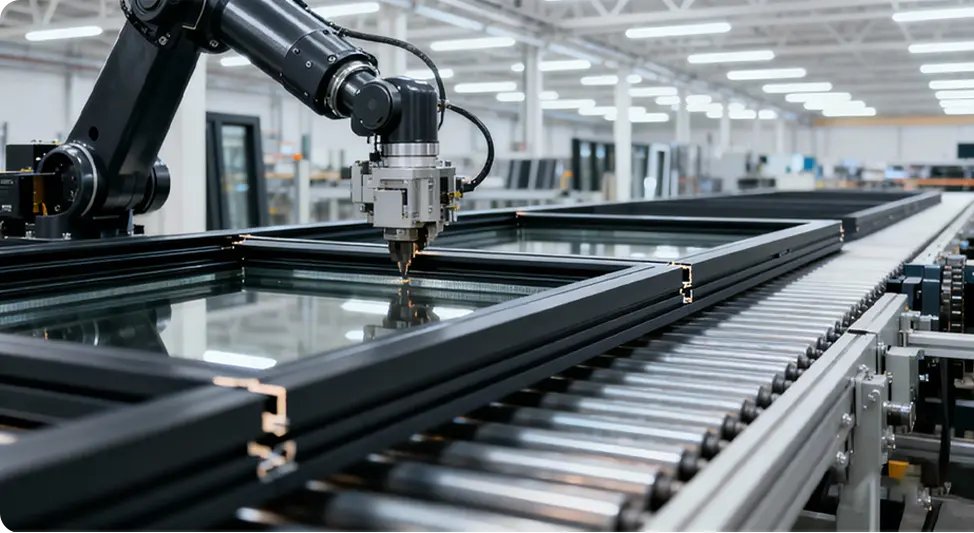
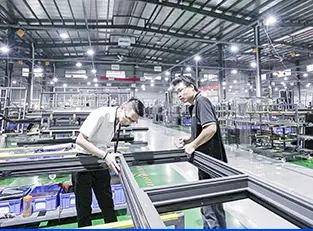
From raw aluminum billet spectroscopic testing through CNC automated cutting and multi-stage seal pressure audits, every casement unit conforms strictly to the approved architectural shop drawing.
100+ Proprietary Patents
Including our signature Four-Side Six-Point perimeter lock invention, engineered for uncompromising burglar resistance.
Digital CNC Automation & 360° QC
Sub-millimeter cutting precision and multi-stage air, water, and load pressure testing prior to shipment authorization.
Xinhua News Agency Brand Honor
Recognized as an industry leader and awarded "China Famous Brand" distinction by national authorities.
Full International Certification Suite
Fully compliant with CE (EN 14351-1), NFRC, AS2047, CSA, Energy Star, and ISO 9001 management systems.
Proven Field Experience
Over 18,000 Projects Successfully Engineered Worldwide
Our architectural portfolio covers five continents, from prestigious hospitality landmarks such as Hilton Hotels and Atour Hotels to private luxury residential compounds in Beverly Hills, Ruyi Lake, Emerald City, and prime European estates.
Europe
Residential & Villa Developments
Hospitality
International Hotel Envelopes
Middle East
Thermal Break Villa Solutions
North America
Energy-Star Luxury Estates
Oceania
High-Wind Marine Residences
Asia
Acoustic Urban High-Rise Envelopes
Systematic B2B Fulfillment
Our 8-Step Engineering & Delivery Process
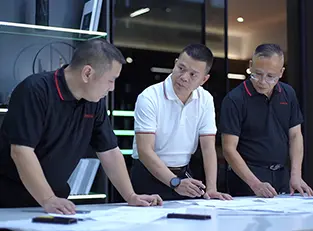
A completely predictable, documented production protocol guaranteeing seamless translation of architectural drawings into high-performance fenestration on your job site.
01
Drawing Review
In-depth architectural plan, elevation, and structural review.
02
Engineering & R&D
Custom profile calculations, wind load stress, and thermal modeling.
03
Technical Proposal
Comprehensive Bill of Materials (BOM) and transparent pricing.
04
CAD Sign-Off
Full-scale shop drawings, finishes, and hardware confirmation.
05
Scheduling
Priority production slot reservation and billet procurement.
06
Measurement Check
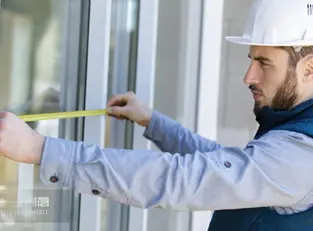
Precision rough-opening verification to ensure zero site errors.
07
CNC & Assembly
Automated fabrication followed by multi-point quality audits.
08
Global Delivery
Reinforced crating, shipping, and detailed installation guides.
Source Certified Aluminum Casement Windows Directly From the Factory
Submit your architectural schedule, elevation drawings, or project tender requirements. Our senior engineering export team will provide a comprehensive technical assessment and cost optimization proposal within 24 hours.






 Virtual Showroom Access


