Verified Aluminum Half Glass & Architectural Openings Matrix
Precision-engineered thermal break profiles, specialized glazing integration, and certified barrier hardware manufactured for seaside estates, urban renovations, and commercial developments across Valencia, Alicante, and Castellón.
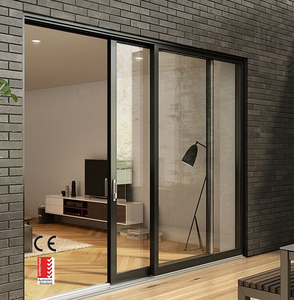
Residential House Commercial Heavy Duty Thermal Break Aluminum Sliding Door with Mosquito Net
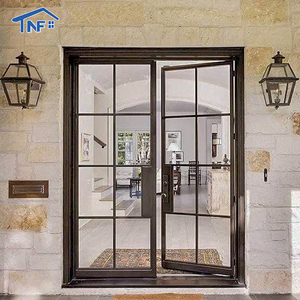
Customized Design Modern Thermal Insulation Villa Casement Glass Aluminum Door with French Door Style and SDL Grill Design
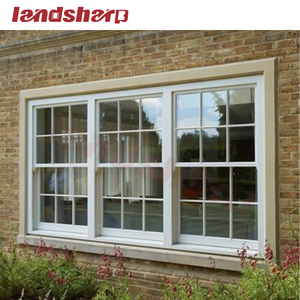
Landsharp American Style Aluminum Single Pane Double Hung Windows Vertical Sliding Sash Windows Triple Double Hung Windows
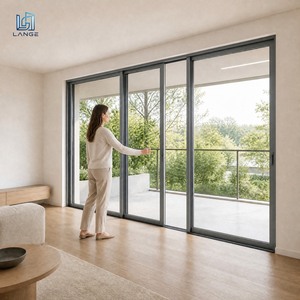
LANGE Aluminum Lift and Slide Door Heavy Duty Double Glazed Sliding Glass Doors Aluminium Profiles Glass Windproof Sliding
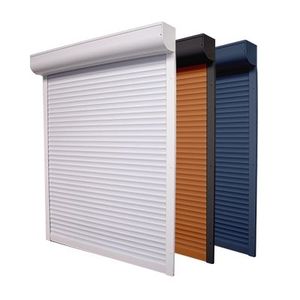
Commercial Modern Design Security Doors Aluminum Alloy Rolling Shutters Finished Roller Shutter Door
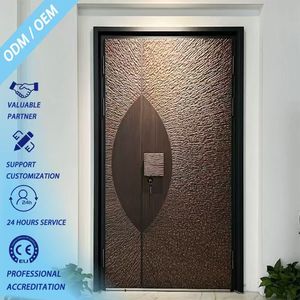
Modern Minimalist Waterproof Fluorine Coated Cast Aluminum Fiberglass Reinforced Exterior Entry Door Contemporary Light Luxury
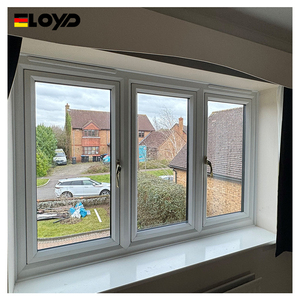
Eloyd Modern Black Aluminum Alloy Casement Windows Slim Frame Profiles for Exterior Vertical Folding Made in Foshan
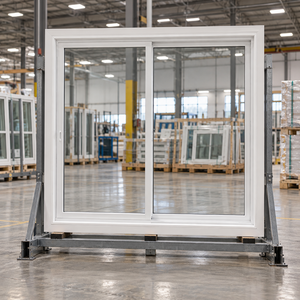
US Standard Living Room Sliding Window Double Pane Glass Upvc NFRC Window Certified Panel Vinyl Window For Houses
Engineering Aluminum Half Glass Doors for the Valencian Microclimate
Why standard fenestration profiles fail in eastern Spain, and how rigorous thermal-break engineering combined with marine-grade surface chemistry resolves structural degradation along the Mediterranean coastline.
The Microclimatic Tension: Mediterranean Salinity Meets Continental Heat Waves
The Valencian Community (Comunidad Valenciana), stretching across the provinces of Castellón, Valencia, and Alicante, represents a challenging test environment for exterior architectural fenestration. Unlike the maritime conditions of Northern Europe, Valencia experiences over 2,700 hours of intense annual ultraviolet irradiation, combined with airborne sea salts (chlorides) carrying across prevailing Mediterranean sea breezes (Levante winds), alternating with high summer ambient temperatures frequently exceeding 38°C in interior flatlands.
When selecting aluminum half glass doors—which feature a structural solid or louvered lower panel paired with an insulated architectural glass upper section—architects and developers face distinct physical forces. The solid bottom panel absorbs concentrated solar infrared radiation, generating intense localized thermal expansion, while the upper glazed unit transfers solar heat unless protected by advanced magnetron sputtering Low-E glass and polyamide thermal breaks. Standard non-broken aluminum profiles or subpar surface finishes suffer from surface blistering, galvanic corrosion, gasket embrittlement, and thermal bowing (the bimetallic effect), rendering locking mechanisms unusable within 24 to 36 months of coastal exposure.
To eliminate these points of failure, industrial suppliers like DERCHI (Guangdong Dejiyoupin Doors and Windows Co., Ltd.) engineer aluminum half glass assemblies utilizing high-tensile 6063-T6 aluminum alloys. These systems integrate multi-cavity PA66GF25 (polyamide reinforced with 25% structural fiberglass) thermal barrier strips. This structural design isolates the exterior and interior aluminum extrusions, curtailing linear thermal bridging and eliminating internal surface condensation caused by high relative humidity (often exceeding 80% RH along the Malvarrosa and El Saler shorelines).
| Performance Vector | Standard Generic Importer Profile | DERCHI Engineered System (Valencia Spec) | Regulatory Reference (EU / Spain) |
|---|---|---|---|
| Thermal Barrier Extrusion | Non-thermal break or 12mm PVC bridge | 24mm - 34mm PA66GF25 Multi-Cavity Strips | CTE DB-HE / EN ISO 10077-2 ($U_f \le 1.6\ \text{W/m}^2\text{K}$) |
| Coastal Corrosion Defense | Standard 40µm powder coat (starts pitting at 400h) | Qualicoat Seaside Class 2 / Marine Anodized 25µm | EN 12206-1 / ISO 9227 Acetic Acid Salt Spray (1000h+) |
| Water Tightness Under Wind | Class 4A (150 Pa pressure threshold) | Class 9A / E1050 (1050 Pa Hurricane Certified) | UNE-EN 12208 (Coastal Mediterranean Gota Fría resistance) |
| Locking Security Matrix | Single latch or two-point standard hook | Patented 4-Side 6-Point Burglary Resistance | EN 1627 - RC2 / RC3 Compliance Matrix |
| Glass Cavity Configuration | Clear 4-6-4 with air fill and aluminum spacer | 6mm Low-E + 16Ar + 6mm Toughened Warm-Edge | EN 1279-2, 3 (Argon concentration $\ge 90\%$) |
Localized Application Scenarios Across the Valencian Landscape
How versatile half glass aluminum door architectures accommodate historical preservation guidelines, modern coastal luxury, and high-density urban residential dynamics.
Ciutat Vella & Eixample Urban Heritage Retrofits
Valencia’s historic core features iconic nineteenth-century residential blocks with strict municipal aesthetic guidelines (Comisión de Patrimonio). Half glass doors deployed here serve as secondary courtyard access doors, balcony walk-outs, and entrance porticos.
- Custom SDL grills replicating historical woodwork
- Woodgrain thermal transfer powder finishes
- Acoustic glass dampening city tramway decibels ($R_w \ge 41\text{dB}$)
Coastal Luxury Villas in Cullera, Denia & Jávea
Along the cliffside villas of the Costa Blanca and northern Valencian littoral, homes face direct exposure to salt spray and severe autumn storms known as DANA (or Gota Fría), where gale-force gusts drive torrential water loads.
- Cast-aluminum reinforced lower impact panels
- Hurricane-impact laminate glass (PVB/SGP interlayer)
- Fluorocarbon (PVDF) anti-saline surface passivation
Contemporary Suburbia: Bétera, Campolivar & La Cañada
New single-family villa developments in Valencia’s suburban belt demand minimalist architecture that connects indoor living spaces with gardens, summer kitchens, and swimming pool patios.
- Ultra-slim frame profiles with hidden transoms
- Flush floor transitions eliminating tripping thresholds
- Tinted solar reflective Low-E double glazing
Trends Shaping Fenestration Sourcing in Spain
The Spanish architectural fenestration sector is moving through a regulatory and aesthetic paradigm shift. Three prominent dynamics govern current procurement cycles for major developers and independent builders across Valencia:
Guangdong Dejiyoupin: Manufacturing Excellence for Europe
Recognized as an authoritative industrial force, Guangdong Dejiyoupin Doors and Windows Co., Ltd. (operating the DERCHI brand) delivers end-to-end precision manufacturing backed by world-class accreditations.

100+ Patents & Locking Inventions
Proprietary engineering including the patented Four-Side Six-Point Lock system, providing multi-directional perimeter anti-lift protection against forced mechanical intrusion.

Intelligent Production & 360° QC
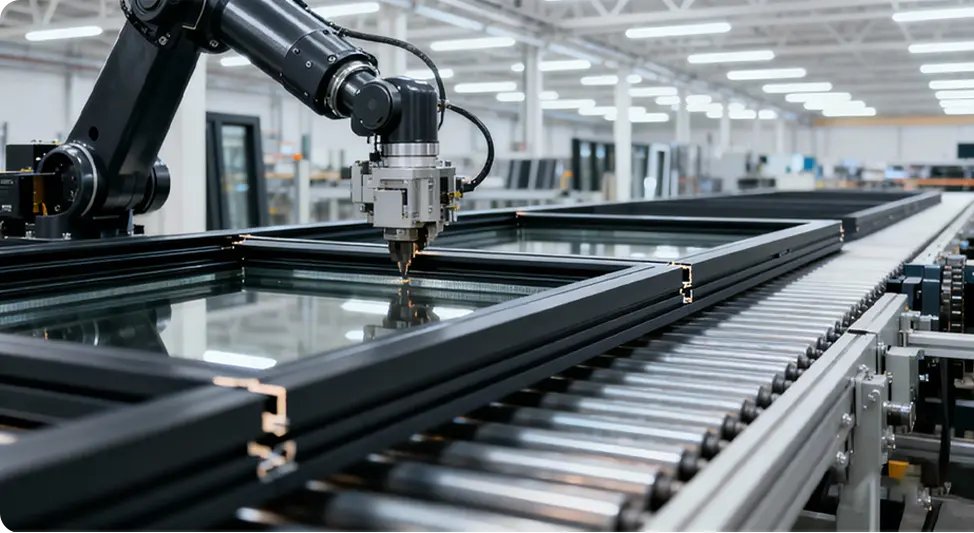
Computerized CNC milling lines, automated corner crimping with dual-component adhesive injection, and 28 internal inspection protocols from billet extrusion to final crating.

Xinhua "China Famous Brand"
Officially recognized and certified by Xinhua News Agency as an industry-leading exporter, demonstrating financial stability, reliable production lines, and trustworthy international operations.

Comprehensive EU Certifications
CE marking fully harmonized with EN 14351-1, ISO 9001 quality management, Energy Star ratings, NFRC thermal performance verifications, and Australian AS2047 structural approval.
The 8-Stage Turnkey Engineering Protocol for Valencia B2B Orders
Frequently Asked Questions by Valencian Contractors & Importers
Direct, technical answers addressing customs, regulatory standards, port routing, and architectural guarantees for Spanish developments.
Do your aluminum half glass doors satisfy Spain's CTE DB-HE energy requirements?
Yes. Our thermal break profiles feature polyamide barrier strips ranging from 24mm to 34mm. Combined with argon-filled low-emissivity double or triple insulated glazing units (IGUs), our doors achieve thermal transmittance ratings ($U_d$) as low as $1.1\ \text{W/(m}^2\cdot\text{K)}$. This easily outperforms the mandatory requirements for Climatic Zones B and C defined in Spain's Código Técnico de la Edificación.
What ocean freight logistics and clearance support exist for the Port of Valencia?
The Port of Valencia (Puerto de Valencia) is one of our primary shipping destinations in Southern Europe. Shipments depart from Shenzhen or Guangzhou ports with typical sea transit times of 28 to 34 days. We provide commercial invoices, packing lists, bill of lading (B/L), CE Declaration of Performance (DoP), and Certificate of Origin documents to ensure clear customs clearance via your Spanish forwarding agent.
How do you prevent salt fog corrosion on coastal projects in Alicante and Valencia?
For projects situated within 3 kilometers of the shoreline, we mandate our Qualicoat Seaside certified powder coatings or architectural anodizing with film thicknesses exceeding 20-25 microns. Profile extrusions undergo multi-stage chemical pre-treatments (including acid etching and deoxidation) that resist pitting and filiform corrosion in accordance with ISO 9227 acetic salt spray benchmarks.
Can the bottom half panel be custom-designed for architectural matching?
Yes. The lower panel configuration is fully customizable. We produce solid polyurethane-insulated aluminum sandwich panels, architectural louvered grilles for air exchange, classic recessed shaker-style profiles, or cast aluminum textured panels. These can be color-matched to any standard RAL color or finished in wood-grain textures to suit historical center aesthetic codes.
What documentation is provided to satisfy local building control inspectors?
Every shipment is accompanied by CE Declaration of Performance (DoP) certificates referencing harmonized standard EN 14351-1. We supply third-party laboratory test reports detailing air permeability (EN 12207), water tightness (EN 12208), wind resistance (EN 12210), and acoustic insulation metrics ($R_w$), ensuring full approval by Spanish municipal technical architects (Aparejadores / Arquitectos Técnicos).
What is the minimum order quantity (MOQ) and production turnaround?
For bespoke residential villas and commercial developments, our typical project MOQ is 1 complete container (20GP or 40HQ) or equivalent consolidated project volume. Customized engineering drawings are completed in 3-5 working days, while factory production cycles range from 25 to 35 calendar days following final shop drawing and deposit confirmation.