180,000 m²
Manufacturing Base
Uw ≤ 0.85
Passive Energy Efficiency
18,000+
Global Installations
100% CE
DIN EN Verified Protocols
Engineered Aluminum Window & Door Solutions for Berlin Architecture
Discover our comprehensive portfolio of CE-certified, thermally separated architectural systems configured specifically for Germany's climate zones, high acoustic standards, and rigorous building energy laws.
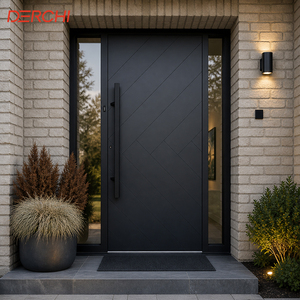
Aluminum Entrance Door Soundproof Thermal Break Aluminum Front Door Exterior Security Door Custom
Explore Specifications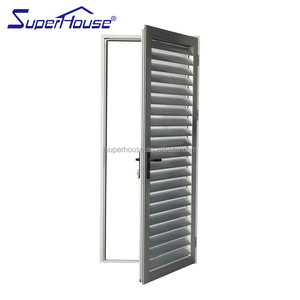
Superhouse Economical Exterior Aluminium Louver Swing Out Door
Explore Specifications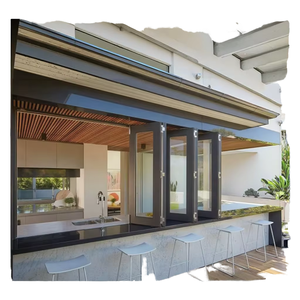
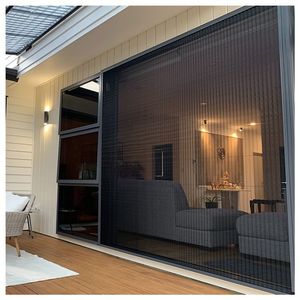
Aluminum Alloy Frame Anti Mosquito Net Plisse Retractable Screen Door Pleated Mesh Fly Screen Door
Explore Specifications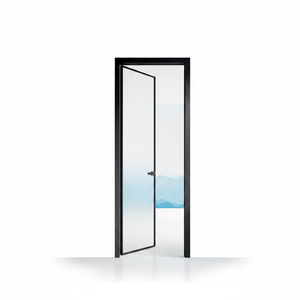
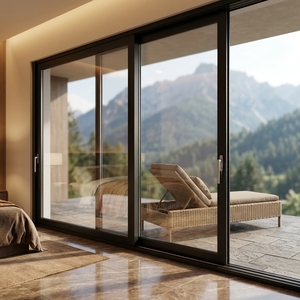
Aluminum Sliding Door Tempered Glass Smooth Gliding Track For Patio Balcony Modern Villa Doors Window
Explore Specifications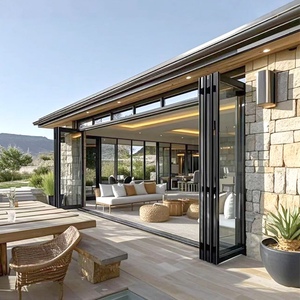
NFRC Thermal Break Aluminum Folding Door Aluminum Large Folding Patio Doors Exterior with Retractable Insect Screen
Explore Specifications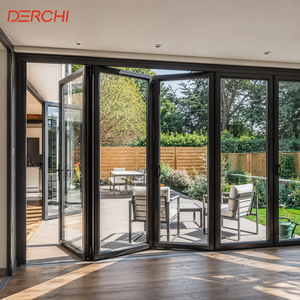
Balcony Accordion Bifold Door Design Exterior Aluminum Ally Glass Folding Patio Doors
Explore SpecificationsArchitectural Demands for Aluminum White Windows in Berlin
Balancing strict monument conservation (Denkmalschutz) guidelines, GEG thermal regulations, and modern acoustic comfort across the German capital.
The Berlin metropolitan construction market presents one of Europe's most nuanced fenestration procurement environments. From the historic Wilhelminian-era stucco façades in Prenzlauer Berg, Charlottenburg, and Kreuzberg to cutting-edge Passivhaus developments in Adlershof and Europacity, window systems must address conflicting engineering criteria. A simple off-the-shelf window assembly cannot satisfy the rigorous local building codes, strict energy conservation mandates (Gebäudeenergiegesetz - GEG 2024), and urban sound reduction indices required across the Spree river basin.
As direct manufacturers and global exporters serving general contractors, window distributors (Fensterhändler), and property developers in Berlin, our engineering department designs extruded aluminum thermal break profiles treated in pristine architectural whites—predominantly RAL 9016 (Verkehrsweiß / Traffic White) and RAL 9010 (Reinweiß / Pure White). These systems combine the structural strength, fire safety (Baustoffklasse A1/A2), and ultra-narrow sightlines of aerospace-grade 6063-T6 aluminum with the high thermal resistance traditionally associated only with bulkier multi-chamber uPVC or thick timber profiles.
In addition to thermal insulation, urban densification along Berlin’s arterial traffic corridors—such as the Stadtbahn railway line, the A100 city motorway, and high-frequency transit routes along Torstraße and Karl-Marx-Allee—imposes rigorous acoustic performance requirements. Under DIN 4109 (Sound Insulation in Buildings), our specialized glazed assemblies achieve Schallschutzklasse (Acoustic Rating Class) 3 to Class 5, dampening external airborne noise by 38 dB to beyond 48 dB using asymmetrical laminated glass panes bonded with acoustic PVB (polyvinyl butyral) or acoustic resin interlayers.
Classic Berlin Altbau Facades
Historic multi-family residential blocks constructed between 1870 and 1914 feature tall ceiling heights and oversized window apertures. Our narrow-frame white aluminum assemblies replicate historical proportions with modern tilt-and-turn (Dreh-Kipp) functionality.
- Slim sightlines: 55mm to 72mm face width
- Concealed hinges for seamless plaster lines
- RAL 9016 satin finish resists coal-soot staining
- Integrated trickling vents for humidity control
Modern Berlin Living & Offices
Developments in Friedrichshain, Mitte, and Adlershof require floor-to-ceiling glazing with superior wind load resistance (Class C5 under DIN EN 12210) and airtight barrier sealing against harsh Continental winters.
- Uw values down to 0.78 W/(m²K) with Argon triple glazing
- Air permeability: Class 4 according to EN 12207
- RC2 & RC3 anti-burglary hardware suites
- Warm-edge thermal spacers (Swisspacer Ultimate)
Wannsee & Grunewald Villas
Private luxury residences in Berlin's suburban green belts demand panoramic lift-slide and accordion multi-fold glass systems. Thermally broken bottom tracks create continuous barrier-free transitions from interior salons to lakeside decks.
- Panel weights up to 400 kg with effortless glide
- Flush threshold complying with DIN 18040 barrier-free
- Multi-point deadbolt locking on every moving sash
- Qualicoat Seaside powder coating certification
Technical Performance Standards for the Berlin Fenestration Sector
Compare our export-grade thermal break white aluminum window systems against mandatory German DIN and European EN standard benchmarks.
| Performance Criterion | German Building Standard (GEG / DIN) | DERCHI Europe Export Standard | Engineering Compliance Verification |
|---|---|---|---|
| Thermal Transmittance (Uw) | GEG Mandate: Uw ≤ 1.30 W/(m²K) KfW 55: Uw ≤ 0.95 W/(m²K) |
Uw 0.82 – 1.05 W/(m²K) (Standard Configuration) Triple Argon low-E glass (Ug = 0.5–0.6) |
Exceeds GEG Standard |
| Acoustic Attenuation (Rw) | DIN 4109: Class 2–4 (32 dB to 44 dB) Target for Berlin urban transit zones |
Rw 38 dB to 49 dB Asymmetrical double/triple glass with Acoustic PVB |
SSK 3 to SSK 5 Compliant |
| Air Permeability | DIN EN 12207: Minimum Class 3 required for multi-story residential | Class 4 (Max Rating) Continuous cellular EPDM central gasket barrier |
Airtight Passivhaus Ready |
| Watertightness (Driving Rain) | DIN EN 12208: Class 7A (300 Pa) to 9A (600 Pa) | Class 9A / E1050 (up to 1,050 Pa) Staggered drainage channels & pressurized weep holes |
Extreme Storm Tested |
| Wind Load Resistance | DIN EN 12210: Class C3/B3 standard urban low-rise | Class C5 / B5 Engineered corner crimping with structural corner cleats |
High-Rise Façade Qualified |
| Surface Coating Resilience | Qualicoat Class 1 / AAMA 2603 | Qualicoat Class 2 / Seaside Powder Coat Super-durable polyester resin; UV resistance ΔE < 2.0 |
30-Year Color Guarantee |
| Anti-Burglary Protection | DIN EN 1627: RC1N or RC2 recommended for ground levels | RC2 & RC3 Hardware Builds Mushroom cams, anti-drill plates, laminated safety glass (P4A) |
Secured Police Approved |
Polymer Science: PA66 GF25 Thermal Barriers
The fundamental vulnerability of aluminum frames in cold regions like Berlin is the metal's high thermal conductivity (~205 W/mK). To counteract cold bridges that induce condensation, frost framing, and interior mold proliferation, our manufacturing campus employs custom polyamide 6.6 reinforced with 25% short glass fibers (PA66 GF25).
The coefficient of thermal expansion of PA66 GF25 (2.8 × 10⁻⁵ 1/K) matches extruded aluminum alloy 6063-T6 precisely, preventing longitudinal shear stresses, warping, or delamination across a temperature differential spanning from -25°C in deep Berlin winters to +40°C during direct summer solar irradiance. Internal hollow insulation chambers are additionally injected with hydrophobic aerogel or polyolefin foam to halt radiative heat loss inside the profile pocket.
Local Trends Shaping Berlin Fenestration Procurement
Industry shifts observed by procurement directors, façade engineers, and institutional property developers across the Berlin-Brandenburg metropolitan region.
The GEG 2024 Energy Retrofit Squeeze
The revised German Building Energy Act (Gebäudeenergiegesetz) places strict sanctions on commercial and residential portfolios failing to achieve aggressive operational decarbonization. Institutional landlords in Berlin are actively replacing deteriorated 1980s timber and early uPVC window stock with long-life cycle aluminum systems that reduce envelope transmission loss while ensuring a 40+ year maintenance-free lifecycle.
Shift from Wood to Powder-Coated Aluminum
While classic wooden windows have deep heritage roots in Berlin, soaring local labor costs for periodic stripping, repainting, and sash squaring have driven a structural market transition. Architects increasingly specify RAL 9016 Traffic White powder-coated aluminum that delivers an immaculate satin architectural appearance without repetitive maintenance expenditures.
Circular Economy & Low-Carbon Aluminum
Public tenders in the State of Berlin now evaluate circularity metrics and Environmental Product Declarations (EPDs). Aluminum profiles manufactured with renewable hydropower electrolysis and recycled billet scrap achieve an embodied carbon rating beneath 4.0 kg CO₂e/kg Al, satisfying German DGNB and international LEED/BREEAM gold certification requirements.
Factory-Direct Engineering from Guangdong Dejiyoupin (DERCHI)
Operating one of the world's most advanced fenestration manufacturing bases, directly backing European importers, building contractors, and trade networks.
180,000 m² Facility
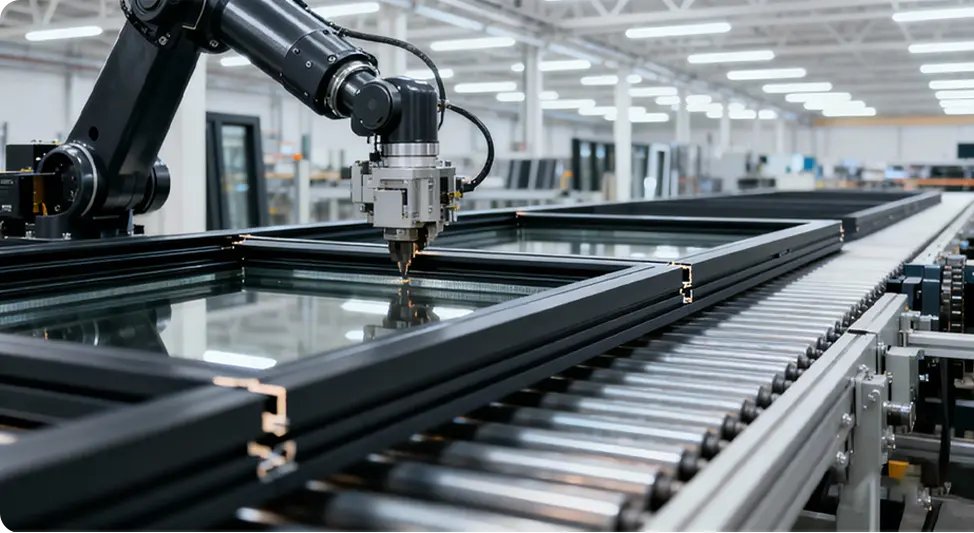
Our centralized production campus incorporates robotic high-precision CNC cutting centers, German multi-angle milling machines, and automatic silicone sealant injection lines that eliminate human assembly errors.
100+ Core Patents
We hold extensive intellectual property, including proprietary high-load concealed hinges, acoustic barrier dampeners, and our signature Four-Side Six-Point perimeter lock system engineered for superior anti-burglary performance.
30+ R&D Engineers
Our technical office works alongside German architects, converting architectural DWG/BIM drawings into millimeter-accurate shop drawings, static wind load calculations, and thermal isotherm simulations.
CE & EN Documentation
Every commercial consignment exported to Germany includes CE Declaration of Performance (DoP), factory production control (FPC) audit compliance per EN 14351-1, and comprehensive test certificates ready for local building authority audits (Bauaufsicht).
Dedicated Door-to-Site Logistics Corridor: Port of Hamburg to Berlin Baufelder
Freight safety is paramount when moving large-format triple-glazed aluminum window units. Our export packing protocol utilizes reinforced heavy-timber steel-banded crates, edge corner guards, desiccant moisture packs, and protective low-tack blue PE films that protect pristine RAL 9016 white coatings from jobsite abrasions.
Frequently Asked Questions: Sourcing Windows for Berlin Projects
Detailed technical answers to common queries from German architects, property developers, and window trading companies.
How do DERCHI windows satisfy German GEG 2024 compliance for Berlin building permits?
Under the Gebäudeenergiegesetz (GEG), replacement and new-build exterior windows in Germany must typically demonstrate a whole-window heat transfer coefficient (Uw) of at least 1.30 W/(m²K) or better. Our multi-chamber thermal break aluminum systems incorporate 25% glass-fiber reinforced polyamide thermal barriers (PA66 GF25) coupled with triple insulated glass units (4mm Low-E + 16mm Argon + 4mm Float + 16mm Argon + 4mm Low-E) with warm-edge spacers, achieving certified Uw ratings between 0.82 and 0.95 W/(m²K), effortlessly satisfying both GEG rules and KfW 40/55 subsidy guidelines.
Is the European CE Mark and Declaration of Performance (DoP) provided with the shipment?
Yes. All windows and exterior doors supplied by our manufacturing base are certified under the European Harmonized Standard EN 14351-1:2006+A2:2016 (Windows and doors - Product standard, performance characteristics) in full compliance with the European Construction Products Regulation (CPR 305/2011). We issue a legally binding Declaration of Performance (DoP), CE marking labels on every shipping frame, and provide factory test certificates covering airtightness, water tightness, and wind load resistance for approval by Berlin district building authorities (Bezirksamt Bauaufsicht).
How resistant is the RAL 9016 White powder coating to Berlin's urban climate and acid rain?
Our aluminum profiles receive an automated multi-stage chrome-free pre-treatment followed by electrostatic architectural powder coating certified according to Qualicoat Class 2 (Superdurable) standards. The polyester powder resin is baked at 200°C to achieve a minimum dry film thickness of 60 to 80 microns. This formulation demonstrates extreme UV stability (weathering resistance after 3 years in Florida testing with gloss retention > 50%), guarding against yellowing, chalking, and degradation from industrial micro-pollutants and urban soot common in high-density European cities.
Can you manufacture European classic Dreh-Kipp (Tilt-and-Turn) inward-opening mechanisms?
Yes. Tilt-and-turn (Dreh-Kipp) functionality is the baseline requirement across Germany. Our aluminum window sashes integrate premium European perimeter hardware suites with concealed multi-point locking. In the turn position, the window swings inward 90° or 180° for convenient glass cleaning; in the tilt position, the top of the sash opens inward by approximately 100mm to 150mm to provide continuous draft-free hygienic ventilation without compromising home security.
What is the typical shipping lead time and customs procedure to Berlin?
Production cycles typically take 25 to 35 business days following final architectural shop drawing sign-off and deposit confirmation. Container ocean transit from our nearest deepwater ports (Shenzhen/Guangzhou) to the Port of Hamburg takes approximately 28 to 34 days, followed by 2 to 3 days of customs clearance and intermodal road freight transport directly to construction staging zones in Berlin or Potsdam. We provide both CIF Hamburg and full DDP (Delivered Duty Paid) door-to-jobsite logistics solutions, handling all export and import documentation.
What anti-burglary (Einbruchschutz) options are offered for ground floor Berlin residences?
For ground level or accessible balcony installations in Berlin apartments and suburban villas, we build custom assemblies compliant with DIN EN 1627 Resistance Classes RC2 and RC3. Engineering measures include perimeter steel mushroom locking cams, hardened anti-drill internal gearbox plates, lockable handles with 100 Nm torque resistance, glass edge bondings preventing pane removal, and laminated safety glass (VSG) featuring impact-resistant P4A or P5A transparent multi-film interlayers.
Plan Your Berlin Project with Certified Fenestration Engineers
Send your architectural schedules, elevation plans, or DWG drawings for an immediate technical review, structural wind load calculation, and factory-direct commercial proposal tailored for the German building sector.