High-Performance Aluminum Porch & Veranda Windows
Precision-manufactured thermal barrier systems optimized for North German maritime dampness, high wind loads (DIN EN 1991-1-4), and energy conservation benchmarks.
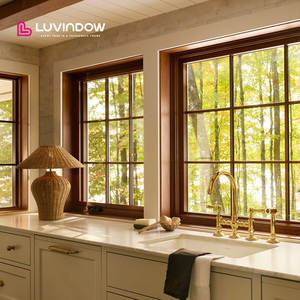
Aluminum Clad Wood Vintage Porch Casement Windows
Combines architectural red-oak interior warmth with heavy-gauge exterior marine powder-coated aluminum, perfect for heritage veranda restorations in Blankenese and Winterhude.
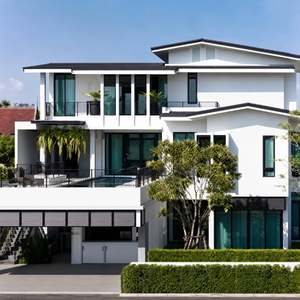
Complete Architectural Porch Glazing Solution System
Comprehensive whole-veranda envelope system with integrated sub-frames, sill flashing, multi-point locks, and argon-filled double/triple safety laminated glazing units.
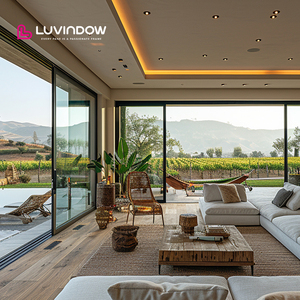
Heavy-Duty Commercial & Residential Porch Sliding Windows
Engineered for large opening spans along the Elbe waterfront. Reinforced roller carriages support panels up to 400kg with effortless whisper-quiet glide and air sealing.
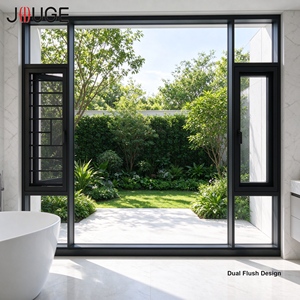
Thermal Break Porch Outswing Window with Fly Screen
Multi-chambered polyamide PA66 GF25 thermal struts deliver sound dampening and high energy ratings, coupled with high-transparency stainless steel mesh insect protection.
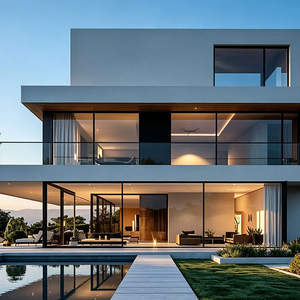
Storm & Hurricane Resistant Casement Porch Windows
Equipped with patented Four-Side Six-Point locking mechanics, tempered laminated security glazing, and certified structural resistance against gale-force North Sea storm winds.
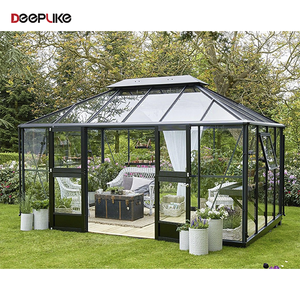
Modular Balcony & Porch Glass Screen Enclosure
Factory-pre-engineered modular aluminum framing for rapid conversion of exposed terraces, balconies, and garden porches into fully sheltered, year-round usable spaces.
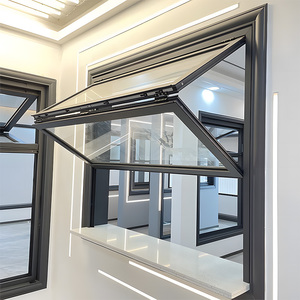
Architectural Vertical Bifolding Porch Glass Windows
Gas-strut counterbalanced vertical bi-fold system designed for urban Hamburg cafes, restaurant porches, and open-plan residential kitchen verandas seeking full clearance.
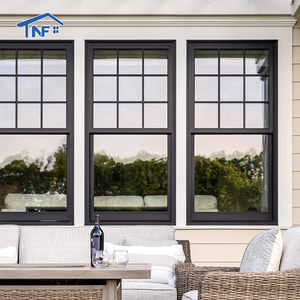
Thermal Break Double Glazed Porch Slider with Grille
Classic decorative Georgian bar grilles embedded inside airtight insulated glass units, combining traditional North German Hanseatic aesthetics with high thermal efficiency.
Engineering Porch Windows for the Hamburg Climate: Thermal, Maritime & Acoustic Requirements
The Free and Hanseatic City of Hamburg presents a demanding microclimatic operating environment for external architectural glazing. Situated at the convergence of the Elbe, Alster, and Bille waterways and influenced directly by North Sea maritime airflows, structures in Hamburg face sustained relative atmospheric humidity exceeding 80% throughout prolonged winter spans, frequent driving rain (Schlagregen), and cyclic gale gusts exceeding Beaufort Scale 8 to 10 during autumn storm fronts (e.g., severe maritime low-pressure systems).
When selecting and specifying aluminum porch windows for Hamburg properties—ranging from classical red-brick historic facades (Klinkerfassaden) in districts such as Winterhude, Eppendorf, and Blankenese to contemporary waterfront redevelopments in HafenCity—architects, facade builders, and property owners cannot rely on standard uninsulated aluminum profiles. Standard aluminum enclosures suffer from catastrophic thermal bridging, resulting in interior dew-point condensation, mold colonization along structural reveal perimeters, and severe structural heat dissipation that breaches German Federal Energy Regulations (Gebäudeenergiegesetz - GEG).
Climatic Engineering Fact: Under DIN 4108-2 (Thermal Protection and Energy Economy in Buildings), the temperature factor (fRsi) along the inner frame edge must remain strictly above 0.70 to completely prevent the formation of mold fungi under Hamburg's typical winter outdoor conditions of -5°C with 85% relative humidity.
Why Polyamide Thermal Barrier Technology is Crucial for Veranda & Porch Conservatories
Our architectural systems deploy multi-cavity thermal break profiles fabricated from aerospace-grade 6060-T66 aluminum alloy, structurally isolated by glass-fiber-reinforced polyamide insulation strips (PA66 GF25). This thermal decoupling interrupts the conductive bridge between the frigid maritime exterior and the conditioned porch interior. Coupled with warm-edge composite spacer bars (such as Swisspacer Ultimate) and low-emissivity argon-filled glass units, our systems effortlessly achieve whole-window thermal transmittances (Uw) down to 0.80 - 1.1 W/m²K, exceeding passive-house auxiliary structure specifications and qualifying projects for municipal German energy grants (KfW Förderprogramme).
Corrosion Protection Against North Sea Saline Mist and Port Industrial Atmosphere
Hamburg is home to Europe's third-busiest container seaport (Port of Hamburg / Hamburger Hafen), creating an atmospheric environment characterized by maritime moisture infused with industrial particulate emissions and airborne chlorides. Standard architectural powder coatings will undergo filiform corrosion within 24 to 36 months if cut ends, miters, and drilled hardware cavities are unprotected. DERCHI applies Qualicoat Class 2 certified architectural powder coatings with pre-anodized or enhanced chromate-free chemical conversion coatings (Sea-Proof pre-treatment). With an average film thickness of 60 to 80 microns, our profiles guarantee over 3,000 hours of Neutral Salt Spray (NSS) test resistance in strict compliance with DIN EN ISO 9227.
DIN & EN Performance Compliance Matrix
Direct comparative test data proving suitability for residential and commercial porch installations across the Hamburg Metropolitan Region.
| Performance Parameter | European / DIN Standard | DERCHI Hamburg Specification | Local Regulatory Impact | Verification Status |
|---|---|---|---|---|
| Thermal Transmittance (Uw) | EN ISO 10077-1 / EN ISO 10077-2 | 0.82 to 1.18 W/m²K (Triple/Double Low-E) | Meets & exceeds GEG 2024 (max 1.30 W/m²K) | Certified Pass |
| Watertightness Under Rain | EN 12208 (Schlagregendichtheit) | Class 9A / E1050 (Up to 1050 Pa pressure) | Prevents water ingress during violent Elbe gales | Class 9A+ |
| Air Permeability | EN 12207 (Luftdurchlässigkeit) | Class 4 (Highest residential tier) | Zero draft discomfort; critical for blower-door tests | Class 4 |
| Wind Load Resistance | EN 12210 (Widerstandsfähigkeit Wind) | Class C5 / B5 (2000 Pa design wind pressure) | Withstands storm surges in Hafencity & high-rises | Class C5 |
| Acoustic Sound Reduction (Rw) | EN ISO 717-1 (Schallschutz) | 38 dB to 46 dB (Acoustic PVB lamination) | Crucial for rail/port corridor noise zones in Altona | Class 4-5 |
| Burglar Intrusion Resistance | DIN EN 1627 - 1630 | RC2 / RC2 N / Optional RC3 upgraded hardware | Deters forced entry on ground-floor garden verandas | RC2 Certified |
Primary Architectural Application Scenarios in Hamburg
Tailored configurations engineered for specific urban structural typologies across the Elbe metropolis.
Historic Klinker Altbau Veranda Conversions
Many classic late 19th-century and 1920s Wilhelminian and Art Deco brick residential homes throughout Winterhude, Uhlenhorst, and Eppendorf feature recessed open loggias and ground-floor brick-arched verandas. Converting these spaces into year-round livable sunrooms requires custom slim-sightline aluminum frames in dark RAL 7016 Anthracite or custom heritage Bronze.
- Narrow 50mm profile sightlines preserve facade heritage
- Arched top sashes matching original structural lintels
- Concealed friction hinges and heritage Georgian glazing bars
Waterfront & High-Exposure Hafencity Terraces
Balconies and winter gardens along the Norderelbe, Grosser Grasbrook, and Sandtorkai encounter severe open-water wind pressure, saltwater spray, and sudden localized squalls. Our heavy-duty architectural lift-slide windows and multi-point sealing casements withstand relentless meteorological forces without water seepage or rattle.
- Interlocking labyrinth seals with continuous EPDM gaskets
- Heavy-duty 10mm+1.52PVB+10mm laminated safety glazing
- Integrated trickle ventilation with acoustic baffled intakes
Suburban Wintergardens (Blankenese & Poppenbüttel)
Detached family villas in Hamburg's green belts utilize our integrated thermal break porch and glass sunroom systems to create seamlessly connected indoor-outdoor dining pavilions. The structural aluminum profiles support substantial snow loads (DIN EN 1991-1-3) while maintaining floor-to-ceiling thermal enclosure.
- Thermal insulation matching the main heated building thermal envelope
- Motorized roof ventilation louvers with rain and wind sensors
- Multi-track sliding patio integration with barrier-free zero-step sills
Hamburg Market Trends & Regulatory Drivers
Critical shifts in building energy mandates, urban noise requirements, and sustainable circular material selection.
Stringent GEG 2024 & Decarbonization Mandates
Germany's updated Building Energy Act (GEG) places rigorous caps on overall primary energy loss. Porch enclosures that are heated or open to heated interior living spaces are treated as primary thermal envelope extensions. Sourcing certified factory-direct aluminum profiles with guaranteed Uw values below 1.1 W/m²K protects developers from compliance penalties and lowers winter heating consumption by up to 32%.
Noise Insulation in Mixed Logistics & Rail Corridors
With Hamburg’s intensive port logistics, freight railway arteries, and inner-city S-Bahn routes passing near residential quarters (Altona-Nord, Wilhelmsburg, Barmbek), acoustic porch glazing has become a major property valuation driver. Buyers prioritize asymmetric acoustic glass layups (e.g., 8mm toughened outer + 16mm argon gap + 6.76mm acoustic laminated inner) yielding sound attenuation ratings up to Rw 45 dB.
Direct Maritime Sourcing via the Port of Hamburg
With domestic German metal fabricator lead times frequently exceeding 16 to 24 weeks alongside inflated local distributor markups, Hamburg-based contractors, commercial shopfitters, and property developers increasingly choose direct FOB/CIF container shipping to Hamburg Port (HHLA Container Terminals Burchardkai or Altenwerder). This direct supply chain model shortens overall procurement costs by 30-45% without compromising CE EN 14351-1 verification.
Our 8-Stage Engineering & Logistics Delivery Workflow
From digital architectural review to port customs clearance, every window unit is tracked under an ISO 9001 quality framework.
CAD Drawing & Schedule Review
Our engineering team analyzes structural elevations, opening schedules, and local wind load calculations according to German DIN standards.
Thermal & Acoustic Simulation
We calculate exact profile Uw values, condensation resistance factors, and glass acoustic performance to meet your project's specific GEG criteria.
Technical Proposal & Bill of Materials
Detailed itemized offer covering profile alloys (6060-T66), hardware brand (e.g., German Siegenia/Roto compatible), and finish specs.
Shop Drawings Confirmation
Full 1:1 cross-sectional drawings, drainage weep-hole schematics, and anchor point details are finalized and approved prior to machining.
CNC Precision Machining & Assembly
Automated German double-head mitering and corner-crimping systems ensure air-tight, water-tight joint tolerance under 0.1mm.
360° Quality Control & Pre-Erection
Every finished porch window assembly undergoes sash squaring, airtightness gasket compression checks, and complete hardware cycling.
Heavy-Duty Export Crating
Units are wrapped in protective film, fitted with corner edge guards, and secured inside moisture-barrier treated wooden export crates for ocean transit.
Direct Port of Hamburg Delivery
We manage full container shipping (FCL/LCL) directly into Port of Hamburg terminals, including export documentation and CE certificates for customs.
Why Hamburg Contractors & Architects Partner with Us
World-class manufacturing scale combined with accountable technical engineering and strict European compliance.
180,000 m² Campus
Massive automated intelligent production center ensuring prompt scheduling and capacity guarantee for volume contracts.
30+ R&D Engineers
Dedicated architectural engineering staff specialized in structural wind calculations, thermal optimization, and bespoke CAD.
Patented 4-Side 6-Point Lock
Proprietary high-security anti-burglary invention patent providing superior intrusion resistance on ground-level porch installations.
Xinhua Famous Brand
Recognized by Xinhua News Agency as an industry benchmark manufacturer with thousands of prestigious global installations.
Port of Hamburg Sea Freight
Direct ocean container routes from South China hub ports directly to Hamburg Port terminal gates with full export clearance support.
Frequently Asked Questions by Hamburg Window Buyers
Direct technical and operational answers compiled by our European fenestration export specialists.
Do your aluminum porch windows satisfy Germany's GEG (Gebäudeenergiegesetz) thermal requirements?
What documentation is provided for German customs clearance and local building inspection (Bauaufsicht)?
How do your window frames resist corrosion in the saline, humid microclimate near the Elbe and Alster?
Can you produce custom shapes, arched tops, and historic colors for Altbau heritage porches in Hamburg?
What is the typical shipping lead time and logistical method to Hamburg?
Do you offer installation guidance or sub-frame integration drawings for German window fitters?
Transform Your Hamburg Porch Project with Direct Factory Engineering
Whether you are renovating a historic Altbau veranda in Blankenese, planning a high-wind-resistant terrace enclosure in HafenCity, or developing multi-family suburban residences, get in touch with our European Technical Desk today for direct engineering support, CE documentation, and factory-direct pricing.
Inquire Now