Featured Aluminium Windows & Architectural Systems
Engineered by Guangdong Dejiyoupin Doors and Windows Co., Ltd. for extreme thermal retention, wide-aperture stacking capability, and structural rigidity.
Global Intelligent Production Base
Annual Facade Production Capacity
Patents (4-Side 6-Point Security)
Global Projects Completed
Aluminium Stacking Windows: Architectural Applications Across Greater Moscow
Navigating the thermal gradient from +32°C summer heatwaves to -35°C severe winter conditions in Central Russia with structural multi-track stacking glazing.
Suburban Moscow Cottage Settlements & Dachas
In high-end gated communities along Novorizhskoye Shosse and Rublyovo-Uspenskoye Shosse, private residences demand seamless transitions between thermal interior spaces and exterior garden terraces.
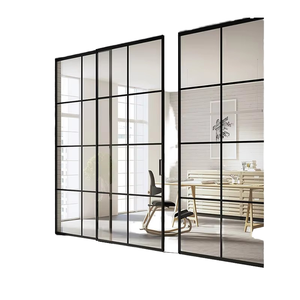
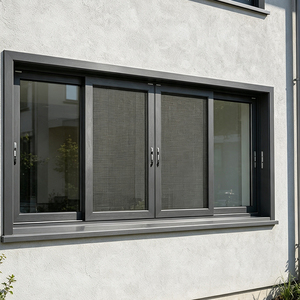
Aluminium stacking windows deliver multi-panel telescopic operation, permitting homeowners to compress four to eight sashes into a single storage pocket during July and August, while locking down against severe blizzards during December through February.
- Polyamide thermal breaks (PA66 GF25) prevent interior frost bridging
- Concealed floor tracks engineered with sub-sill electrical trace heating
- Flush-mount perimeter gaskets eliminating Siberian draught ingress
Commercial Verandas, Terraces & HORECA
From central Moscow rooftop restaurants around Patriarch Ponds to riverside hospitality venues along the Moskva River, four-season operational flexibility is the primary revenue driver.
Our heavy-duty commercial multi-panel stacking systems transform enclosed dining verandas into open-air pavilions in minutes. When closed, their acoustic damping coefficients reach Rw 42 dB, filtering out metropolitan traffic noise while retaining radiant climate heating.
- Heavy-duty tandem bogie rollers rated for sash weights up to 400 kg
- Multi-point compression interlocks securing air tightness under gale-force gusts
- High-transmittance Low-E coatings maximizing interior daylight capture
Penthouse Balcony Enclosures & Glazed Gazebos
Within Moscow International Business Center (Moscow City) and contemporary elite residential complexes (Zhk), structural stacking systems are increasingly specified for high-altitude wind resistance and panoramic viewing.
Structural 6063-T6 virgin extruded aluminium alloy frames deliver modulus of elasticity capable of resisting extreme negative wind pressures experienced above the 25th floor, satisfying rigorous SNiP II-3-79 aerodynamic guidelines.
- Triple-pane insulated glazing units (IGU) with warm-edge TGI spacer bars
- Laminated interior security glass ensuring zero spontaneous breakage fallout
- Multi-track drain weep cavities designed for rapid meltwater discharge
Engineering Compliance Matrix: Moscow Climatological Demands vs. DERCHI Specifications
Comparative technical evaluation against Russian Federation State Construction Standards (GOST 23166-99 and SP 50.13330.2012 Thermal Performance of Buildings).
| Performance Parameter | Moscow Normative Requirement (SP 50 / GOST) | DERCHI Aluminium Stacking System Capability | Engineering Solution Applied |
|---|---|---|---|
| Thermal Transmittance (Uw) | ≤ 1.0 - 1.2 W/(m²·K) for residential envelope | Down to 0.85 W/(m²·K) (Customizable) | Multi-chamber PA66 thermal barrier, 34-39mm depth + Argon fill |
| Air Permeability (Air Infiltration) | Class A under GOST 23166-99 | Class 4 (EN 12207) / Exceeds Class A GOST | Triple continuous EPDM cellular rubber co-extruded gaskets |
| Wind Pressure Resistance | Wind Zone II-III (up to 450-600 Pa working load) | Class C5 / Class E2400 (Up to 2400 Pa structural) | Reinforced structural mullions with internal high-tensile steel bars |
| Acoustic Attenuation (Rw) | Rw ≥ 34 - 38 dB adjacent to major highways/MKAD | Rw 40 - 45 dB | Asymmetric sound-insulation glass panes (6mm Low-E + 16Ar + 4 + 16Ar + 6.38 Laminate) |
| Hardware Cycle Life | ≥ 20,000 operational cycles | Certified 100,000+ mechanical open-close cycles | Stainless steel 304 tracks, self-lubricating sealed bearing trolleys |
Emerging Trends in Moscow's Architectural Glazing Market
Structural pivots transforming commercial specifications and private architectural investments across the Russian Federation.
Transition from uPVC to High-Performance Thermal Aluminium
Historically dominated by multi-chamber uPVC systems due to low initial capital expenditure, the premium residential sector across Moscow Oblast is experiencing an aggressive architectural shift toward thermal-break aluminium.
The drivers are straightforward: modern Russian architecture prioritizes expansive floor-to-ceiling glass apertures that plastic profiles cannot physically support without unsightly sagging, frame warping under freeze-thaw cycles, and operational jamming. Stacking aluminium systems maintain micron-level tolerances over decades regardless of ambient temperature swings.
Demand for Accelerated Factory Lead Times & Direct Logistics
Supply chain constraints on Western European hardware and extrusions have created prolonged project backlogs in the Moscow construction sector. Importers and general contractors now bypass intermediary trading hubs in favor of direct collaboration with Tier-1 Chinese manufacturers.
By controlling everything from structural extrusion, powder coating lines, and CNC machining to insulated glass unit assembly within our 180,000 m² campus, we guarantee 25-35 day production schedules, with direct multimodal freight routing via rail corridors straight to Moscow railway container terminals (Vorsino, Bely Rast, Silikatnaya).
Integrated Anti-Burglary & Smart Perimeter Automation
Security expectations in suburban Moscow residences require advanced multi-point physical deterrence. Traditional latch-style sliding doors are viewed as vulnerable entry points. The architectural trend has shifted decisively toward multi-point peripheral deadbolts.
Our proprietary Four-Side Six-Point Lock invention integrates perimeter locking jaws driven into hardened stainless steel keepers across all four frame boundaries. Furthermore, stacking configurations are engineered to integrate seamlessly with smart home bus protocols (KNX, Tuya) for motorized sash deployment and biometric control.
Why Major Russian Developers & Importers Partner with DERCHI
Guangdong Dejiyoupin Doors and Windows Co., Ltd. (Brand: DERCHI) operates one of Asia's most advanced smart production facilities, recognized by Xinhua News Agency as a 'China Famous Brand' and verified across global markets.
180,000 m² Scale & Capacity
Our 180,000 m² mega-facility ensures mass-scale production volume exceeding 1,000,000 m² annually. No Moscow commercial project suffers delivery delays due to factory bottlenecks.
100+ Technological Patents
Backed by an in-house engineering team of 30+ elite R&D engineers, holding patents including the four-side six-point burglary lock system and ultra-insulated profile geometries.
360° Intelligent QC System
From spectral testing of incoming 6063-T6 billets to hermetic seal leak detection and laser coordinate measurement, zero-defect quality control is embedded at every station.
Comprehensive Global Certifications
Certified under ISO 9001, European CE (EN 14351-1), North American NFRC, CSA, and Australian AS2047, confirming adherence to global structural and environmental codes.
Frequently Asked Questions: Aluminium Windows Procurement for Moscow
Clear, authoritative technical answers addressing customs clearance, thermal barrier physics, logistics, and on-site assembly.
How do DERCHI aluminium stacking windows prevent track freeze and ice bridging in Moscow's -30°C winter climate?
1. Polyamide Structural Separation: The internal and external aluminium extrusions are completely decoupled by 34mm-39mm glass-fiber reinforced polyamide insulation strips (PA66 GF25), eliminating metallic conductivity.
2. Internal Trace Heating Ready Track: Our extruded sill profiles feature a dedicated sub-channel designed to house self-regulating electric heating cables (15-20 W/m), ensuring meltwater drainage remains liquid even during sub-zero temperatures.
3. Concealed Multi-Chamber Weep System: Downward gravity drainage routes melted ice through internal baffle chambers with one-way EPDM check valves, preventing cold wind counter-pressure from forcing moisture back inside.
What documentation and export certificates are supplied for Russian customs clearance and EAC compliance?
What is the standard shipping transit time and container packing method from Foshan to Moscow?
Shipping routes typically move via direct container rail freight (Foshan / Guangzhou to Vorsino / Bely Rast terminals, Moscow), taking approximately 18 to 26 days transit time. Alternatively, multimodal sea freight via Vladivostok or St. Petersburg port facilities is arranged depending on the client's preferred logistics forwarder.
Can DERCHI manufacture custom RAL powder-coating finishes to match Russian suburban architectural regulations?
How does our on-site construction team receive technical installation support in the Moscow region?
Each crated window system is labeled with clear item numbers referencing the floorplan schedule. We supply step-by-step video installation manuals, exploded hardware assembly schematics, and offer real-time video conference technical support between our structural engineers and your local installation foremen to guarantee flawless perimeter vapor-barrier sealing (according to GOST 30971-2012 principles) and operational adjustment.
How do aluminium stacking window sashes perform against high wind pressures in top-floor penthouses?
Initiate Your Moscow Architectural Glazing Project Today
Send your façade elevations, opening schedules, or CAD drawings directly to our engineering desk. Receive an itemized technical proposal, thermal transmittance calculation, and factory-direct pricing within 24 hours.