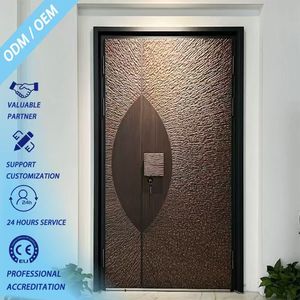
Security Entry
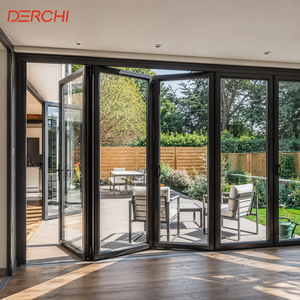
Direct manufacturer export solutions encompassing ultra-slim accordion patio doors, high-wind load casements, and engineered security entrances matching Portuguese structural standards.
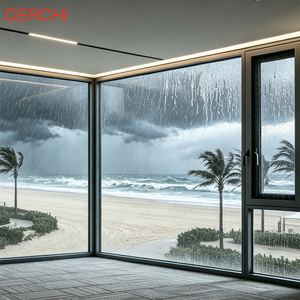
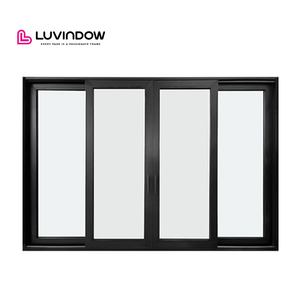
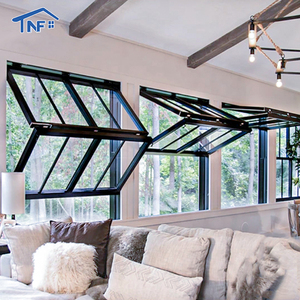
A rigorous examination of thermodynamic insulation, coastal salt mist degradation resistance, and spatial fluidity requirements for contemporary Portuguese residential developments.
The architectural landscape of Lisbon and the greater Estoril-Cascais coast presents one of Europe’s most demanding fenestration design environments. Characterised by an Atlantic-Mediterranean transitional microclimate, the Portuguese capital demands building envelopes capable of enduring high seasonal thermal amplitudes, intense ultraviolet irradiance (frequently exceeding UV Index 9 across June through August), sustained airborne marine salinity, and severe driving winds funneled along the Tagus River estuary. As property developers, specifiers, and civil contractors seek to eliminate physical barriers between interior living areas and exterior calçada terraces, the choice of aluminium bifold patio doors shifts from an aesthetic choice to a critical structural calculation.
When engineering fenestration systems for Lisbon properties—ranging from contemporary cliff-top villas in Cascais and Quinta da Marinha to historic rehabilitation projects in Chiado, Príncipe Real, and Alfama—the structural specification must satisfy Portuguese building regulations governed by the Regulamento de Desempenho Energético dos Edifícios de Habitação (REH) alongside European Union harmonised norms under EN 14351-1. Sourcing aluminium bifold patio doors from a high-capacity global manufacturer demands uncompromising adherence to polyamide thermal barrier integrity, marine-grade surface passivisation, multi-point burglar-resistance engineering, and high-performance insulated glazing units (IGUs).
Under Portuguese REH standards, exterior fenestration in Lisbon’s coastal climate zone must mitigate excessive solar gain while preventing winter thermal leakage. Standard uninsulated aluminum frames are non-compliant. DERCHI systems integrate 24mm to 34mm technoform polyamide insulating strips reinforced with 25% glass fibre (PA66 GF25), achieving whole-window thermal values of $U_w \le 1.3\text{ W}/(\text{m}^2\cdot\text{K})$ with standard low-emissivity argon-filled double glazing, and down to $U_w \le 0.88\text{ W}/(\text{m}^2\cdot\text{K})$ using triple glazed compositions.
Tailoring profile geometries, sill mechanics, and surface coatings to specific geographical and urban conditions.
Front-line oceanfront residential developments subject to continuous Atlantic salinity, abrasive maritime winds, and sea spray. Demands Qualicoat "Seaside" certified powder coating (minimum 60-80 microns thickness) with pre-anodisation treatment and grade AISI 316 stainless steel bogie rollers to eliminate pitting corrosion.
Modern high-rise residential properties overlooking the wide Tagus River mouth, where wind suction forces reach extraordinary pressures. Structural bifold mullions with internal steel stiffeners achieve Wind Load Resistance Class C4/C5, preventing frame deflection and air-water infiltration during severe stormfronts.
Rehabilitation of Pombaline and early 20th-century masonry structures requiring slim visual sightlines and strict acoustic decoupling. Bifold configurations engineered with asymmetric laminated safety glass (e.g., 6.6.2 acoustic PVB + 16Ar + 8mm toughened) attenuate tram, tourist, and urban noise by up to $42\text{ dB } (R_w + C_{tr})$.
Micro-climatic zones defined by persistent mist, high atmospheric humidity, and lower ambient temperatures. Systems utilise warm-edge composite glass spacers and high-elasticity EPDM vulcanised corner gaskets, entirely preventing interior condensation and thermal bridging across cold winter cycles.
How the shift toward Nearly Zero-Energy Buildings (nZEB) and contemporary open-concept architecture is transforming door specification.
Under Portuguese and EU 2030 decarbonisation targets, residential buildings must drastically lower operational energy consumption. Modern aluminium bifold patio doors in Lisbon now feature multi-chambered thermal breaks and solar control glass coatings (such as Guardian Sun or Saint-Gobain Planistar) that limit the Solar Heat Gain Coefficient ($g$-value) to between 0.35 and 0.42, slashing summer air conditioning loads without darkening the interior.
The contemporary Portuguese lifestyle prioritises continuous indoor-outdoor living from living rooms directly onto pool decks and limestone patios. The development trend leans towards concealed, flush-mounted drainage sub-sills with integrated stainless steel linear channels that ensure Class 9A water-tightness while providing barrier-free, wheelchair-accessible transit.
Architects across Lisbon’s Belém, Restelo, and Cascais areas are rejecting bulky framing in favour of minimalist bifold systems featuring sash stiles as slim as 105mm to 118mm. Advanced structural extrusions fabricated from primary 6063-T6 architectural aluminium alloy allow panel heights exceeding 3.2 meters and sash widths up to 1.2 meters, supporting individual glass leaf weights up to 120 kg.
Comprehensive performance parameters evaluated in accordance with European Fenestration Standards (EN 14351-1).
| Performance Criterion | European Test Standard | DERCHI Lisbon-Grade Spec | Local Market Typical Baseline |
|---|---|---|---|
| Thermal Transmittance ($U_w$) | EN ISO 10077-1 / EN ISO 10077-2 | $0.88 - 1.3\text{ W}/(\text{m}^2\cdot\text{K})$ (Polyamide PA66 GF25) | $1.8 - 2.4\text{ W}/(\text{m}^2\cdot\text{K})$ (Sub-standard breaks) |
| Air Permeability | EN 1026 / EN 12207 | Class 4 (600 Pa max test pressure) | Class 2 or Class 3 (300 Pa) |
| Watertightness | EN 1027 / EN 12208 | Class 9A / E750 (Up to 750 Pa under driving rain) | Class 5A / 7A (200 - 300 Pa) |
| Resistance to Wind Load | EN 12211 / EN 12210 | Class C4 / C5 (Frontal deflection < 1/300) | Class B2 / B3 |
| Acoustic Attenuation ($R_w + C_{tr}$) | EN ISO 717-1 | Up to 42 dB (Acoustic laminated configurations) | 29 - 33 dB (Standard clear double glass) |
| Anti-Burglary Classification | EN 1627 - EN 1630 | RC2 / RC3 (Patented Four-Side 6-Point Lock) | Basic unrated multi-point latch |
| Surface Corrosion Class | Qualicoat / ISO 9227 | Seaside Class 2 (1,000h+ Acetic Acid Salt Spray) | Standard Architectural (Qualicoat Class 1) |
State-of-the-art production capacity backed by Guangdong Dejiyoupin Doors and Windows Co., Ltd. / DERCHI Europe.
Our expansive industrial base in Foshan integrates high-precision 5-axis CNC machining centers from Germany, automated profile cutting, and robotic sealant application lines capable of delivering over 1,000,000 m² of certified fenestration annually, ensuring zero delivery bottlenecks for large Portuguese residential developments.
We do not assemble generic catalogue extrusions. DERCHI possesses over 100 invention and utility patents, highlighted by our proprietary Four-Side Six-Point Anti-Intrusion Hardware System, engineered to counteract forced prying and corner deflection on oversized bifold panels.
Recognised as a "China Famous Brand" by Xinhua News Agency, our full line is engineered for stringent global compliance: holding European CE (EN 14351-1), ISO 9001 Quality Certification, North American NFRC, Australian AS2047, and Canadian CSA accreditation.
Our dedicated engineering department—comprising more than 30 fenestration R&D engineers—supports Lisbon clients through comprehensive drawing conversion (DWG/BIM), static wind-load calculations, structural thermal simulations, and tailored shop drawing generation before extrusion lines activate.
Every frame, leaf, and glass element is packed in non-fumigation solid plywood sea-crates with moisture barriers, corner protectors, and steel perimeter banding. Direct sea container shipments arrive through the Port of Lisbon (Porto de Lisboa) or Port of Leixões with full EUR.1 and export customs dossiers.
Critical commercial, regulatory, and engineering queries answered by DERCHI’s European Technical Export Division.
Whether you are designing a private residential villa in Sintra, upgrading luxury penthouses in Parque das Nações, or distributing commercial fenestration across Portugal, leverage DERCHI's factory-direct engineering scale, CE certification, and technical expertise.