Featured Aluminium & High-Impact Glazed Door Systems
Rigid thermal break frames, polymethyl methacrylate (acrylic) acoustic safety composites, and high-spec security systems engineered for commercial, civic, and residential envelopes across the West Midlands.
Architectural Specification Whitepaper: Aluminium Acrylic Door Systems for Birmingham Envelopes
As the United Kingdom accelerates toward the Future Homes Standard (2025) and stringent local planning requirements across the West Midlands Combined Authority (WMCA), architectural specifiers, main contractors, and structural engineers in Birmingham face increasing pressure to balance envelope structural rigidity, aesthetic transparency, and stringent thermal regulations. Modern architectural fenestration has evolved beyond traditional fenestration formats. The integration of extruded aluminium framing with high-molecular optical acrylics (polymethyl methacrylate - PMMA) and impact-modified polycarbonate glazing has established a formidable solution for high-traffic public structures, commercial storefronts, acoustic partitions, and contemporary residential extensions.
Material Science: Extruded 6063-T6 Aluminium Coupled with Structural PMMA Glazing
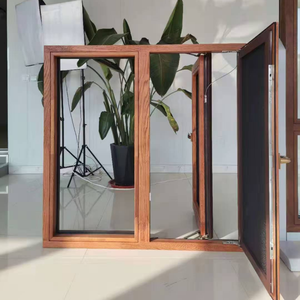
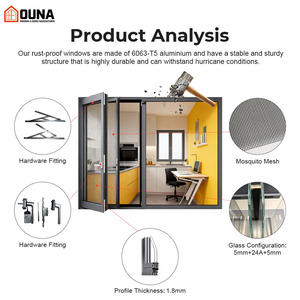
The structural efficacy of our aluminium acrylic door series lies in the metallurgical and polymer composition. Extrusions are cast using prime aluminium billeting treated to a T6 temper, ensuring an ultimate tensile strength exceeding 205 MPa and yield strength over 170 MPa. To circumvent cold bridging—an issue heavily penalized under Approved Document L (Conservation of fuel and power) of the UK Building Regulations—the internal and external aluminium profiles are thermally decoupled utilizing precision-crimped 24mm to 34mm glass-fibre reinforced polyamide (PA66 GF25) insulating struts.
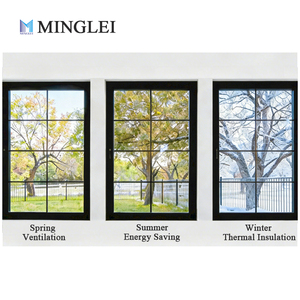
When acrylic or specialized acoustic cast polymethyl methacrylate sheets are specified in lieu of or combined with insulated glass units (IGUs), thermal conductivity drops from typical glass levels ($k \approx 0.96 \text{ W/m}\cdot\text{K}$) to acrylic core values ($k \approx 0.19 \text{ W/m}\cdot\text{K}$). This dramatic thermal impedance minimizes condensation risk in humid indoor microclimates, dampens transmission of mid-frequency sound waves generated by Birmingham's urban rail network (New Street, Moor Street, Curzon Street HS2 interchange), and enables wide-span glazed assemblies that remain effortless to operate on concealed roller bearings.
Comparative Matrix: Architectural Glazing Configurations for Urban Door Openings
| Performance Characteristic | Thermal Break Aluminium + Optical Acrylic | Standard Aluminium + Double Glazed Toughened | Heavy Composite Aluminium-Clad Timber |
|---|---|---|---|
| Structural Density / Deadweight | Ultra-Light (~1.19 g/cm³) | Heavy (~2.50 g/cm³) | Medium to Heavy (~1.80 - 2.20 g/cm³) |
| Impact Resistance (Charpy Unnotched) | Extremely High (Resists dynamic shatter) | High (Subject to nickel-sulfide spontaneous fracture) | Medium (Timber core absorbs shock) |
| Acoustic Attenuation ($R_w + C_{tr}$) | 36 dB - 44 dB (Viscoelastic internal damping) | 32 dB - 38 dB (Standard laminated required) | 35 dB - 42 dB (High natural timber damping) |
| Whole Aperture U-Value ($U_d$ Target) | 1.1 to 1.3 W/m²K (Exceeds UK Part L 2023) | 1.2 to 1.4 W/m²K (Low-E required) | 1.0 to 1.3 W/m²K (Excellent core insulation) |
| Burglary Resistance Rating (EN 1627) | RC2 to RC3 (Multi-Point Locking Integration) | RC2 (PAS 24 Compliant) | RC2 to RC3 |
Acoustic Dampening Physics and Vibration Dissipation
A primary criterion for Birmingham city center redevelopments (such as the Smithfield regeneration and the Paradise masterplan) is ambient noise suppression. Standard glass often suffers from acoustic coincidence dips within the 1000 Hz to 3000 Hz spectrum—the critical frequency range of sirens, automotive tyres, and construction equipment. Solid and hollow-core acrylic glazed aluminium door infills break structural resonance due to their high loss factor ($\eta \approx 0.05$ versus glass at $\eta \approx 0.002$). By eliminating sympathetic vibration transfer through heavy-duty EPDM multi-chambered co-extruded perimeter gaskets, our door configurations maintain interior acoustic comfort even in mixed-use residential quarters adjoining the A38(M) motorway.
Engineered Fenestration for West Midlands Architectural Topographies
From post-industrial retail refurbishments in Digbeth to modern residential extensions in Solihull and high-density developments across Birmingham City Centre.
Commercial Frontages & Retail Complexes
In high-footfall destinations such as the Bullring & Grand Central, Mailbox, and Colmore Business District, storefront doors require extreme shatter resistance and swift opening cycles. Our aluminium acrylic entrance assemblies deliver transparent, lightweight leaves that relieve strain on automated swing operators, minimizing mechanical downtime and preventing accidental public liability injuries from shattered glazing.
Industrial Warehouse Conversions & Digbeth Lofts
Birmingham's historic manufacturing spaces require fenestration systems that honor the city's heritage brickwork while achieving contemporary environmental performance. Our bespoke slim-line profiles with matte black and anthracite powder coatings (Qualicoat Class 2) preserve the industrial aesthetic of the Custard Factory and Gun Quarter developments, coupled with translucent acrylic panels for private internal office partitions.
Residential Grand Extensions: Edgbaston & Solihull
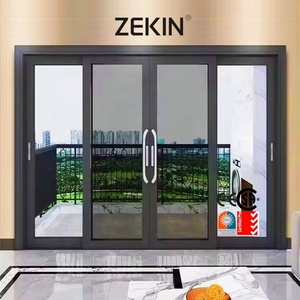
Affluent suburban estates in Sutton Coldfield, Barnt Green, Harborne, and Solihull frequently specify oversized sliding and bifold door apertures spanning up to 12 meters. By using advanced aluminium framing paired with reinforced insulated panels and acoustic glazing, we achieve sweeping panoramic garden connections with an effortless glide and low floor-threshold details designed to avoid tripping hazards.
Acoustic Attenuation along Key Transport Arteries
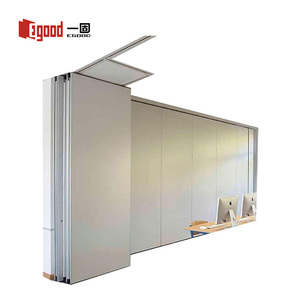
With massive infrastructure projects centered on the Curzon Street HS2 terminus and arterial links like the M6 and A4540 ring road, developments within Birmingham's Clean Air Zone require targeted decibel reduction. Our luxury soundproof partition assemblies provide tested laboratory suppression up to 56 dB, creating quiet sanctuaries in high-density urban residential apartments.
Educational, Civic & Healthcare Facilities
Across the University of Birmingham, Aston University campus expansions, and Queen Elizabeth Hospital precincts, door systems must withstand aggressive sanitization chemicals and heavy impact without clouding, warping, or cracking. Acrylic-glazed architectural portals provide hygiene-compliant, antimicrobial surfaces resistant to heavy daily usage.
Regulatory Evolution: Building for Birmingham's Low-Carbon Future
The West Midlands has adopted an aggressive trajectory toward achieving carbon neutrality by 2041 (the WM2041 Net Zero Road Map). This regional strategy places direct statutory demands on fenestration manufacturers supplying projects in the Greater Birmingham conurbation. Sourcing systems that merely satisfy minimum guidelines is no longer viable for Tier 1 contractors and commercial specifiers.
Approved Document L (2021 Revisions & 2025 Future Homes Alignment)
Under the revised Part L regulations in England, the target U-value ($U_d$) for external doors in newly constructed domestic dwellings is mandated at $1.2 \text{ W/m}²\text{K}$, with existing building refurbishments targeting $1.4 \text{ W/m}²\text{K}$. DERCHI Europe and Guangdong Dejiyoupin engineer our door systems with thermal breaks up to 34mm, triple EPDM compression seals, and thermal barrier inserts, achieving door set $U_d$ values as low as 0.85 W/m²K when combined with argon-filled, warm-edge triple glazed acrylic or low-E glass composites. This places our assemblies within Passivhaus-certified parameters.
Approved Document Q (Security - Dwellings) & PAS 24:2022
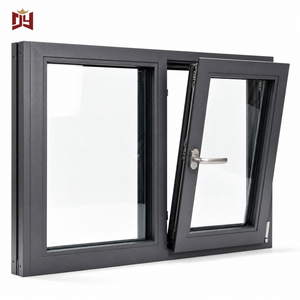
Security remains paramount in metropolitan Birmingham developments. Approved Document Q mandates that ground-floor accessible doorsets must resist opportunistic physical attack. Our patented Four-Side Six-Point Locking Invention anchors into the reinforced frame with anti-lift, anti-jemmy mushroom cams and hardened steel strike plates. Combined with our high-impact optical acrylic safety laminates, the door leaves resist continuous mechanical levering, crowbars, and blunt dynamic impacts, surpassing the stringent requirements of PAS 24:2022 and BS EN 1627 Class RC3.
Why Main Contractors & Specifiers Partner with DERCHI
Guangdong Dejiyoupin Doors and Windows Co., Ltd. (DERCHI Europe) operates one of the world's most sophisticated door and window manufacturing hubs, providing reliable supply chains directly to Birmingham.
180,000 m² Production Base
Our centralized manufacturing campus houses automated German elumatec CNC machining centres, cutting, routing, and crimping structural extrusions to tolerances under 0.1mm.
100+ Patents & 30+ R&D Engineers
A full-time in-house engineering academy continuously develops proprietary anti-burglary hardware, concealed drain tracks, and zero-gravity sliding mechanics.
Full CE & EN 14351-1 Compliance
Every system exported to the UK arrives accompanied by complete Factory Production Control (FPC) logs, CE marking, Declarations of Performance (DoP), and wind/air/water test certificates.
Direct Sea Logistics to UK Ports
Regular scheduled container shipments unload through the Port of Felixstowe, Southampton, and Liverpool, arriving straight to West Midlands sites via reinforced sea-crating packaging.
Frequently Asked Questions by Birmingham Specifiers & Builders
Essential answers regarding structural design, thermal compliance, custom fabrication, and international freight directly to the West Midlands.
Are DERCHI aluminium acrylic and glazed door systems compliant with current UK Part L and Part Q regulations?
Why choose an aluminium acrylic composite door over standard toughened glass in commercial Birmingham venues?
What is the typical production and shipping lead time from your factory to the West Midlands?
Can you supply bespoke custom RAL colours to match Birmingham heritage conservation zones?
How does your company prevent transit damage on long-distance maritime freight to the UK?
Do you provide engineering support, structural calculations, and installation guidance for local Birmingham fitters?
What is the warranty coverage provided on your aluminium frames, hardware, and glazing?
Ready to Engineer Your Architectural Door System for Birmingham?
Connect with our technical estimating department today. Submit your architectural schedules, CAD floor plans, or performance specifications to receive an accurate factory-direct quotation within 24 hours.