Crittall Double Glazed
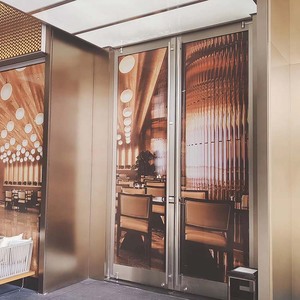
Engineered to combat tropical relative humidity, coastal salt-fog corrosion, and structural temperature differentials while delivering supreme acoustic damping and daylight calibration.
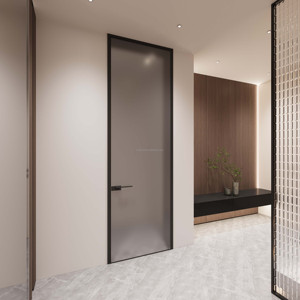
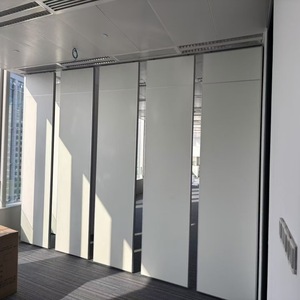
Bathroom environments represent the most physically punishing microclimate within any residential or commercial building envelope. Fenestration systems installed in wet zones operate under unrelenting relative humidity (often spiking beyond 95%), drastic indoor-to-outdoor thermal gradients, vaporized aerosolized surfactants, and severe microbial vectors. Conventional residential windows frequently fail in bathroom applications within 24 to 36 months—manifesting in localized galvanic corrosion of unpassivated hardware, interstitial seal degradation of insulating glass units (IGUs), perimeter caulking mildew, and cold-bridge sweating that ruins interior finishes.
As a premier aluminum bathroom windows factory and exporter, Guangdong Dejiyoupin Doors and Windows Co., Ltd. (operating the DERCHI global enterprise brand) engineers fenestration profiles specifically formulated to master these environmental challenges. By deploying primary 6063-T5 and high-tensile 6063-T6 virgin architectural aluminum billets, multi-chambered polyamide PA66GF25 thermal barrier bridges, fluorocarbon (PVDF) electro-deposition coatings, and hermetically sealed double or triple glazing packages with automated pressure-equalized weep systems, our fenestration delivers perpetual structural integrity, pristine thermal efficiency (Uw values down to 0.8 W/m²K), and total hygienic reliability.
Core Technical Takeaway: Specifying bathroom fenestration is fundamentally an exercise in psychrometric boundary management. Standard casements allow internal frame condensation because the Dew Point of 90% RH bathroom air at 24°C is roughly 22.2°C. DERCHI's multi-cavity thermal break designs prevent the internal frame surface temperature from ever dropping beneath the local dew point, eliminating condensation risk permanently.
Different bathroom spatial layouts demand tailored ventilation dynamics, sightline ergonomics, and acoustic isolation properties. We manufacture four primary architectural classifications for export:
The global benchmark for multi-mode wet-room ventilation. Tilts inwardly from the top sash (100mm to 150mm gap) for drafted, moisture-evacuating airflow without compromising perimeter privacy or admitting torrential rain. Swings open fully for rapid cleaning and emergency egress.
Features an outward projected bottom opening path with multi-point perimeter compression locking. Allows continuous 24/7 moisture exhaust during humid precipitation events. Outfitted with heavy-duty 304/316 stainless-steel friction stays and tamper-proof safety limiters.
Designed for compact luxury en-suites where inward sash clearance is non-existent. Features ultra-narrow 16mm-21mm sightlines, concealed sub-frame drainage chambers, and dual-track nylon composite silent rollers rated for 200,000 continuous opening cycles.
In high-density urban developments and luxury hospitality suites, the bathroom window must balance three competing performance indices: absolute visual obscurity, high luminous transmittance (VLT), and sound transmission class (STC) attenuation against noisy city avenues. Our factory integrates specialized optical and smart glazing architectures directly into the automated insulated glass processing line:
1. Acid-Etched Ultra-Clear Low-Iron Glass: Unlike sandblasted glass which absorbs moisture droplets, collects mineral stains, and becomes translucent when wet, our satin acid-etched obscure glass is chemically treated with hydrofluoric acid to form a permanent nano-crystalline scattering surface. It exhibits zero moisture absorption, cleans easily, and sustains an impressive light transmission rate of 82% while preventing visual silhouette projection even with internal direct backlighting.
2. Fluted / Moru / Reeded Geometric Texture: Premium fluted glass profiles offer a distinct vertical optical diffraction that scatters line-of-sight imagery while transforming exterior daylight into elegant linear architectural luminescence. Often specified in dual-glazed configurations: outer 6mm low-E tempered + 12A argon spacer + inner 6mm low-iron reeded glass.
3. Polymer Dispersed Liquid Crystal (PDLC) Switchable Smart Glass: Ideal for modern penthouse master baths and boutique hotel installations. The liquid crystal molecules align instantly when electric current is applied, transitioning the glass panel from milky opaque (99.8% visual privacy) to crystal transparent within 20 milliseconds via wall switch, smartphone app, or home automation systems.
| Performance Parameter | Test Standard | DERCHI Factory Achieved Metric | Architectural Significance |
|---|---|---|---|
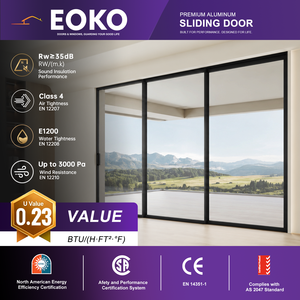
| Air Permeability | EN 12207 / ASTM E283 | Class 4 / < 0.1 m³/(h·m) | Prevents outdoor air and moisture drafts from infiltrating the dry wall cavity. |
| Watertightness | EN 12208 / ASTM E331 | Class 9A / 1050 Pa | Resists torrential storm driving rain; no backflow through internal weep ports. |
| Wind Load Resistance | EN 12210 / ASTM E330 | Class C5 / > 3500 Pa | Withstands typhoon and hurricane gust pressures on high-rise coastal facades. |
| Thermal Transmittance (Uw) | ISO 10077-2 / NFRC 100 | 0.8 to 1.3 W/(m²·K) | Stops cold bridge condensation; complies with German GEG and US Energy Star. |
| Acoustic Isolation | ISO 717-1 / ASTM E413 | Rw 38 dB to 44 dB (STC 42) | Isolates exterior urban street noise for a quiet, spa-like bathroom environment. |
| Corrosion Resistance | ASTM B117 (Salt Fog) | > 3,000 Hours Rating | Prevents pitting or flaking in marine atmospheres and chlorine splash zones. |
As commercial developers, general contractors, and tier-1 procurement executives plan multi-year capital projects, the specification criteria for aluminum bathroom windows are shifting from passive aesthetic enclosures to active, decarbonized building envelopes. We identify four defining trends driving future global tenders:
Trend 1: Decarbonized Low-Embodied Carbon Alloys & EPD Verification. Institutional developers across Europe, North America, and Australia now demand verified Environmental Product Declarations (EPDs). Future tenders will mandate aluminum smelted with renewable hydro-electric energy (< 4.0 kg CO2e per kg aluminum). Our factory utilizes high-grade circular billets, ensuring project tenders pass stringent LEED Platinum, BREEAM, and DGNB carbon lifecycle benchmarks.
Trend 2: Micro-Ventilation Hardware with Concealed Trickle Aerodynamics. Traditional mechanical extractor fans consume parasitic electrical energy and often fail due to motor dampness. Next-generation aluminum bathroom window profiles integrate concealed trickle ventilation slots with embedded hygrometric self-regulating flaps. These micro-membranes automatically flex open when indoor relative humidity crosses 65%, venting moisture passively via stack effect pressure differentials without compromising acoustic or intrusion security.
Trend 3: Prefabricated Sub-Frame Fast-Fix Systems (Offsite Modular Construction). With the meteoric rise of prefabricated bathroom pods (PBPs) in student housing, hospitality, and residential towers, fenestration must arrive factory-certified to drop into place without wet trades. Our engineering division pre-calibrates aluminum sub-frames with integrated EPDM waterproof membrane aprons and acoustic expansion anchors, reducing jobsite installation cycles from 4 hours per opening to under 20 minutes.
Trend 4: Fluorocarbon Nano-Ceramic Surface Treatments. While standard powder coating degrades when routinely subjected to acidic cleansers, bleach, and hard water calcification, high-durability AAMA 2605 compliant PVDF fluorocarbon coatings reinforced with siliconized resins offer unmatched resistance against chemical etching and micro-scratching, ensuring 25+ years of color stability.
Sourcing high-specification fenestration directly from an established manufacturing authority eliminates intermediary margins while ensuring absolute design compliance. Situated in the global aluminum extrusion heartland of Foshan, Guangdong, our corporate footprint represents world-class manufacturing scale:
Four dedicated production facilities running automated German Elumatec 5-axis CNC machining centers and digital profile cutting lines.
Predictable monthly volume execution that guarantees critical path delivery schedules for multi-phase hospitality and residential builds.
In-house structural, thermal, and acoustic engineering team providing full shop drawings, BIM models, and custom die extrusions.
Accredited across CE (EN 14351-1), ISO 9001, US NFRC, Australian AS2047, Canadian CSA, and Energy Star frameworks.
Having completed over 18,000 projects worldwide—including five-star Hilton hotels, custom Beverly Hills private residences, high-rise developments in Sydney, and residential villas across the European Mediterranean—we understand international freight protection. Every window unit leaves our factory packed with vacuum sealants, corner impact bumpers, heat-treated plywood crating, and desiccated container packaging to eliminate sea-freight oxidation.
Essential technical and logistical answers for commercial developers, architects, and international importers.
We incorporate continuous 24mm to 34mm multi-chambered polyamide (PA66GF25) thermal break strips within our aluminum extrusions. By physically separating the cold exterior profile from the warm, moisture-laden interior sash, the internal surface temperature stays above the dew point of the room, preventing thermal bridging and condensation buildup.
All functional mechanisms—including friction hinges, multipoint locking cams, transmission rods, and security stays—are fabricated from Austenitic 304 or Marine-Grade 316 stainless steel. Zinc-plated components are completely banned in our bathroom fenestration assemblies to prevent electrolytic oxidation.
Yes. Our low-iron, acid-etched obscure glass scatters direct optical lines while preserving up to 82% visible light transmittance (VLT). For maximum design flexibility, we also offer custom fluted (reeded) glass and electronic PDLC switchable smart glass that shifts from opaque to clear in 20 milliseconds.
Our profiles feature a pressure-equalized, stepped drainage chamber. Exterior wind pressure dynamically balances the internal weep chamber, while silicone gravity check-valves allow moisture to drain freely while preventing wind-driven backflow from entering the sill.
For custom architectural projects utilizing standard RAL finish profiles, our lead time is 25 to 35 business days from final shop drawing sign-off. We accommodate flexible volume tiers, ranging from consolidated container orders for luxury private estates to multi-container shipments for commercial developments.
Each unit is vacuum-wrapped in low-density polyethylene protective film, lined with corrugated edge guards, packed with desiccants to control container humidity, and secured in fully enclosed, fumigated solid wood shipping crates for sea freight transport.
Send your architectural elevation drawings, opening schedules, or performance criteria (Uw, STC, wind load). Our facade engineering specialists will return detailed shop drawings, thermal calculations, and factory-direct estimates within 24 hours.