Precision-Engineered Architectural Door Solutions
Configured for strict international energy codes, hurricane wind-load criteria, and structural longevity across high-traffic residential and commercial envelopes.
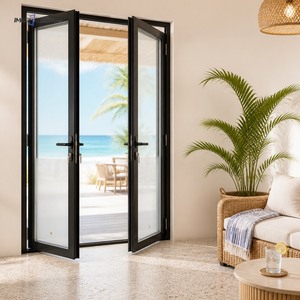
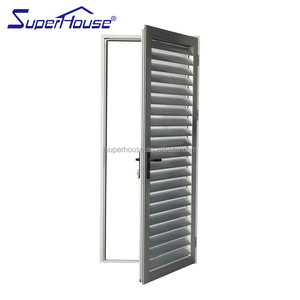
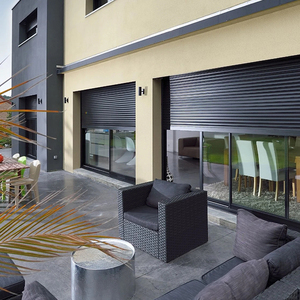
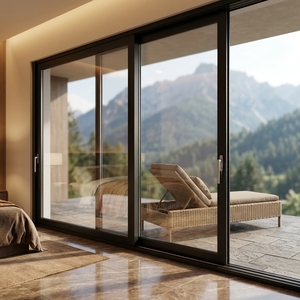
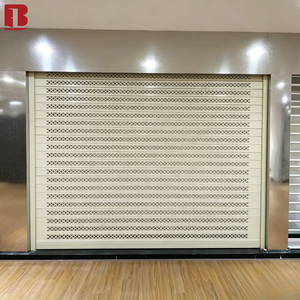
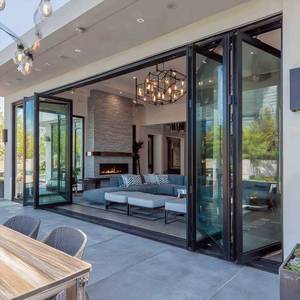
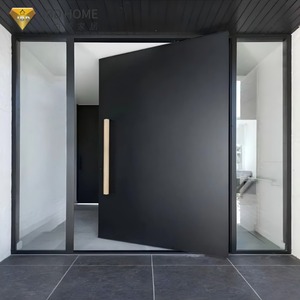
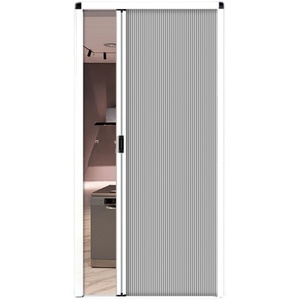
Structural Analysis & Thermal Barrier Anatomy
In modern architectural fenestration, the specification of aluminium hinged and French swing doors requires deep technical scrutiny of alloy composition, structural break placement, and mechanical locking tolerances.
Alloy Metallurgy & Wall Thickness
Commercial-grade exterior hinged doors require virgin 6063-T5 or 6063-T6 architectural aluminium alloy profiles. A critical indicator of long-term resistance against wind deflection and panel sag is a structural profile thickness exceeding 2.0mm to 3.0mm on active stiles and meeting rails, ensuring uncompromising frame rigidity under cycle testing exceeding 100,000 opening operations.
Polyamide Thermal Barriers
Uninsulated aluminium transfers heat rapidly. Superior systems integrate multi-chambered glass-fiber reinforced Polyamide (PA66 GF25) thermal break strips (24mm to 34mm wide). This structural decoupling significantly lowers whole-door thermal transmittance, achieving overall thermal performance (Ud) as low as 1.1 W/(m²·K), effortlessly complying with European GEG, RE2020, and North American Energy Star benchmarks.
Four-Side Multi-Point Hardware
Traditional single-latch hinged doors are susceptible to forced entry, air infiltration, and thermal warping over extended spans. Our proprietary Four-Side Six-Point locking hardware locks the door sash mechanically into the perimeter frame at top, bottom, and lateral points, establishing airtight compression against continuous EPDM cellular rubber gaskets and providing certified RC2/RC3 burglary resistance.
Technical Performance Benchmark Matrix
Comparing baseline commercial aluminium systems with DERCHI high-performance thermal break hinged door engineering standards.
| Engineering Performance Metric | Standard Non-Thermal Door | Commercial Standard Swing Door | DERCHI Engineered Hinged System | Regulatory Compliance |
|---|---|---|---|---|
| Thermal Transmittance (Ud / Uw) | > 5.0 W/(m²·K) | 2.2 – 2.8 W/(m²·K) | 0.9 – 1.3 W/(m²·K) | EN ISO 10077-1 / NFRC |
| Air Permeability | Class 1 (150 Pa) | Class 2 (300 Pa) | Class 4 (600 Pa) | EN 12207 / ASTM E283 |
| Watertightness Under Pressure | Class 2A (50 Pa) | Class 5A (200 Pa) | Class E900 (≥ 900 Pa) | EN 12208 / ASTM E331 |
| Wind Load Resistance | Class B2 (800 Pa) | Class C3 (1200 Pa) | Class C5 / Class E (≥ 3000 Pa) | EN 12210 / AS2047 |
| Acoustic Attenuation (Rw) | 24 dB – 28 dB | 30 dB – 34 dB | 38 dB – 45 dB (With Acoustic Lami) | ISO 717-1 / ASTM E90 |
| Forced Entry Security Rating | Standard Cylinder | Single Hook Deadbolt | RC2 / RC3 (Patented 6-Point Lock) | EN 1627-1630 Certified |
Future Procurement Trends in Aluminium Door Systems
Strategic purchasing behavior in the fenestration sector is moving rapidly beyond entry-level unit pricing toward life-cycle carbon accounting, smart home connectivity, and extreme-weather resilience.
Low-Carbon Circular Aluminium Sourcing
European and North American developers increasingly mandate Environmental Product Declarations (EPDs) with verifiable embodied carbon metrics. Procurement teams are specifying aluminium extrusions smelted using renewable hydro-electric power, achieving an embodied carbon footprint below 4.0 kg CO2e per kg of raw aluminium. Furthermore, scrap recyclability at end-of-life has become a mandatory selection factor for LEED Platinum and BREEAM Outstanding developments.
Smart Access & Mechatronic Integration
Architects are abandoning standalone external deadbolts in favor of factory-integrated motorized multi-point lock mechanisms. Sashes are pre-machined during automated CNC profiling to incorporate concealed wiring harnesses, electronic door position sensors, biometric fingerprint modules, and BACnet/KNX building automation integration. This eliminates contractor field-drilling errors and guarantees warranty protection.
Extreme Climate & Hurricane Adaptation
Coastal and hurricane-prone corridors face tightening windborne debris testing requirements. Procurement pipelines now heavily emphasize laminated impact glazing (using SentryGlas® or 1.52mm PVB interlayers) paired with heavy-duty structural hinges capable of supporting leaf weights exceeding 350 kg without sag, fully passing Miami-Dade County NOA and ASTM E1886/E1996 cyclic pressure testing protocols.
Evolution of Architectural Hinged Door Design
How cutting-edge industrial styling and modern minimalist architecture are reshaping profile geometries, sightlines, and flush aesthetic integrations.
Ultra-Slim Sightlines & Concealed Hardware
The transition from bulky legacy frames to razor-thin 45mm face profiles maximizes glass surface area while maintaining required moment of inertia (Ix/Iy). Advanced systems utilize completely hidden 3D adjustable pivot hinges embedded inside the frame profile cavity, presenting perfectly flush planar surfaces devoid of visible barrel hardware or unsightly fastener heads.
Coplanar Interior-Exterior Surfaces
Modern luxury villas demand continuous planar alignment where door leaf, threshold, and peripheral frame sit completely coplanar on both interior and exterior elevations. This engineering achievement prevents unsightly step-backs, optimizes water evacuation through concealed bottom weep chambers, and integrates barrier-free zero-thresholds compliant with DIN 18040 accessibility guidelines.
Super-Durable Dual-Color Finishing
Utilizing high-performance fluorocarbon (PVDF) and Qualicoat Class 2 certified powder coatings, exterior profiles resist intense coastal salt-spray and solar UV exposure, while interior profiles feature anodized champagne, graphite, or natural wood-grain textures that complement sophisticated interior architectural joinery seamlessly without risk of thermal delamination.
Guangdong Dejiyoupin: Manufacturing Excellence
Combining 25+ years of fenestration craftsmanship with smart manufacturing to deliver zero-defect window and door systems for premier developers worldwide.

100+ National Patents
Pioneering independent R&D with breakthroughs such as our patented Four-Side Six-Point locking mechanism, delivering unmatched anti-burglary and wind resistance.

Smart Automation & 360° QC
Digitally integrated German cutting and assembly lines ensuring zero-error precision from raw extrusion checks to automated packaging and container loading.

Xinhua Certified Brand
Officially recognized as a "China Famous Brand" by Xinhua News Agency, testifying to top-tier industrial credibility and international manufacturing standards.

Five-Continent Certification
Fully compliant with CE (EN 14351-1), NFRC (USA), AS2047 (Australia), CSA (Canada), Energy Star, and ISO 9001 quality management systems.
Complete project support: Drawing Review → System R&D → Technical Proposal → Detail Approval → Production Scheduling → Site Measurement → 360° QC → Field Installation Guidance
Send an InquiryCommercial Door Procurement FAQ
Direct technical answers addressing air permeability, wind load engineering, export packaging, and international certification compliance.
What alloy specification and profile wall thickness are required for commercial exterior hinged doors?
How do thermal break hinged doors satisfy strict energy codes like RE2020 or German GEG?
What hardware mechanism provides optimal security against forced entry?
How are door units protected during long-distance multimodal sea freight?
What engineering documentation is supplied for architect and building inspector sign-off?
Can customized opening sizes, dual finishes, and low-threshold solutions be accommodated?
Collaborate With a Certified Global Manufacturer
Whether you require custom oversized entrance doors for luxury residences, commercial storefront swing systems, or full container-load OEM fabrication, our project engineering team is ready to analyze your architectural schedules and provide detailed proposals within 24 hours.
Send an Inquiry