Global Architectural Fenestration: Factory-Direct Pricing & Engineering Standards
Navigating global supply chains for architectural aluminium fenestration requires an uncompromising evaluation of structural metallurgy, thermal break performance (Polyamide PA66 GF25), safety glazing assemblies, and verifiable export certifications. From hurricane impact resistance along coastal North America to ultra-stringent U-factor regulations under Germany’s GEG, France’s RE2020, and the UK’s Part L, this industry whitepaper decodes factory-floor pricing matrices, tier-1 export manufacturers, and lifecycle value engineering.
Featured Export Fenestration & Entrance Systems
Direct factory configurations rigorously engineered for residential masterplans, commercial hospitality towers, and high-wind load coastal developments worldwide.
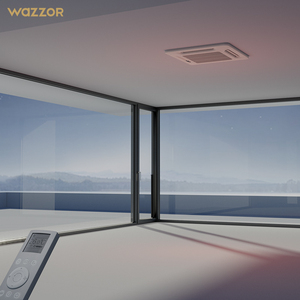
Wazzor Hurricane Proof High Impact Black Aluminum Alloy Low-E Glass Aluminium Windows And Doors Casement Window S For USA
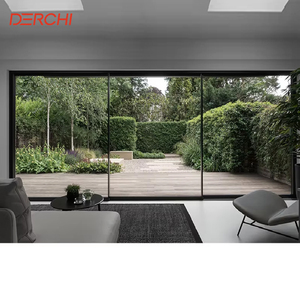
As2047 Australian Windows And Doors Double Glazed Stacker Doors Commercial Exterior Patio Panoramic Aluminum Sliding Doors
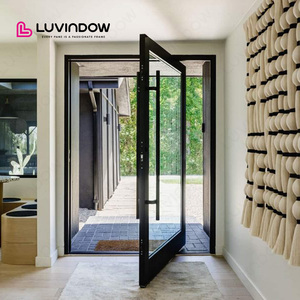
Modern Aesthetic Long Term Durability Low Maintenance Thermal Break Aluminum Pivot Door For Luxury Villa Entrance
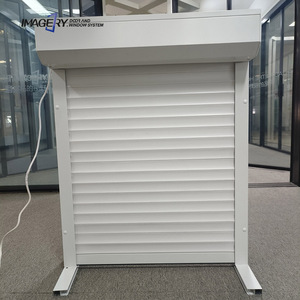
Aluminum Alloy Electric Roller Motorized Rolling Shutter Window Door For Balcony Shop Warehouse Window Residential Building
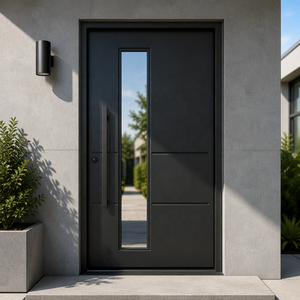
Modern Residential Villa Thermal Insulation Iron Entrance Doors With Smart Lock Available
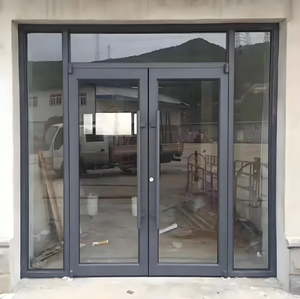
Commercial Aluminium Smart Glass Storefront Door Exterior Doors for Commercial Buildings Hurricane Impact Storefront Glass Doors
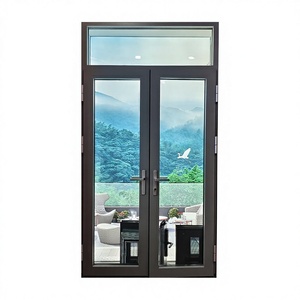
Modern Jouge Aluminum Casement Doors-Hinged Single Doors For Apartment & Hotel Use Heat Insulation Waterproof Finished Surface
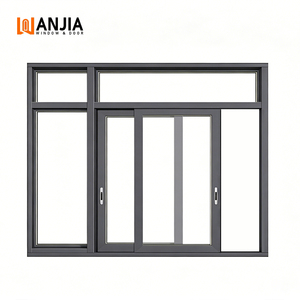
WANJIA Hurricane Impact Resistance Sliding Windows Aluminium Windows And Doors Others Sliding Window For House
Top 10 Global Aluminium Windows Manufacturers & Exporters Price Analysis
Factory-gate pricing varies substantially across international territories depending on automation depth, labor costs, extrusion alloying standards, and certified technical testing. The comparative matrix below outlines structural cost benchmarks across leading global manufacturers and export clusters.
| Manufacturer / Cluster | HQ Region | Target Markets | Primary Certifications | Avg. Standard Price (USD/m²) | High-Spec Thermal/Impact (USD/m²) |
|---|---|---|---|---|---|
| Guangdong Dejiyoupin (DERCHI) | Foshan, China | EU, USA, UK, AUS, ME | CEAS2047NFRCCSA | $95 - $160 | $185 - $320 |
| Schüco International | Bielefeld, Germany | Global / High-End | CEDINPassive House | $380 - $550 | $650 - $1,150 |
| Reynaers Aluminium | Duffel, Belgium | Europe, North America | CEQualicoatMinergie | $320 - $480 | $580 - $980 |
| YKK AP America / Japan | Tokyo, Japan / USA | North America, Asia | AAMANFRCJIS | $240 - $390 | $450 - $720 |
| Kawneer (Arconic) | Norcross, USA | Americas, Europe | AAMAASTMMiami-Dade | $260 - $410 | $490 - $820 |
| Wicona (Hydro Group) | Ulm, Germany | Europe, Middle East | CECradle-to-Cradle | $340 - $510 | $600 - $1,020 |
| Alumil SA | Kilkis, Greece | S. Europe, Balkans, ME | CEIFT Rosenheim | $180 - $290 | $320 - $540 |
| Cortizo | Padrón, Spain | Europe, Latin America | CEAENORQualicoat | $190 - $310 | $340 - $580 |
| Apogee Enterprises (Wausau) | Minneapolis, USA | North America | NFRCAAMALEED | $280 - $430 | $520 - $890 |
| Xingfa Aluminium | Foshan, China | Asia, Africa, Americas | ISOCEQualicoat | $85 - $145 | $160 - $280 |
Guangdong Dejiyoupin Doors & Windows: Enterprise Advantages
Recognized as a “China Famous Brand” by Xinhua News Agency, Guangdong Dejiyoupin Doors and Windows Co., Ltd. (operating internationally under the DERCHI brand) bridges the gap between precision European engineering and massive industrial production scale.
180,000 m² Mega Manufacturing Campus
Based in Foshan, Guangdong, our intelligent facility houses state-of-the-art CNC machining centers, automated corner-crimping lines, and robotic insulated glass sealing stations, guaranteeing dimensional tolerance within ±0.5mm across high-volume production cycles.
- Annual capacity exceeding 1,000,000 m²
- 600+ skilled technicians & master craftsmen
- Over $435M in global project delivery volume
Patented Security & Structural Innovations
Backed by 30+ dedicated R&D structural engineers, our proprietary fenestration technologies resolve longstanding issues with air infiltration, forced entry, and frame sagging under severe dead-loads.
- Patented Four-Side Six-Point Anti-Burglary Lock
- Integrated hidden drainage preventing water back-siphon
- 100+ national invention & design patents
Global Multi-Jurisdiction Certification
Eliminate regulatory compliance bottlenecks. DERCHI fenestration systems are pre-tested and certified by recognized independent testing authorities across North America, Europe, Oceania, and Asia.
- CE Marking (EN 14351-1) & ISO 9001 QMS
- Australia AS2047 & AS1288 Glazing Certification
- US NFRC Thermal & ASTM Hurricane Impact ratings
Zero-Error 360° Quality Control Protocol
Every order undergoes rigorous digital batch tracking from raw 6063-T6 billet spectroscopic analysis to final crating. Our full-scale mock-up testing chamber conducts on-site air, water, and wind structural tests prior to dispatch.
- Multi-stage quality gates at profile, glass, & assembly
- AkzoNobel & Tiger Drylac certified powder coating
- Pre-shipment photo & video inspection dossiers
Turnkey Architectural Engineering Service
More than a manufacturer, our technical office acts as an extension of your architectural and cost-consulting teams, providing comprehensive shop drawings, structural wind-load calculations, and thermal modeling.
- AutoCAD & BIM model generation for submittals
- Exact thermal transmittance (Uw/Ud) calculations
- Modular installation drawings & technical video support
Export Logistics & Armored Sea-Crating
Exporting over 1,500 containers annually to European ports (Rotterdam, Hamburg, Felixstowe), North America (Long Beach, Miami, New York), and Australasia (Sydney, Melbourne) with specialized fumigated protective crating.
- Steel-reinforced fumigated plywood A-frame crating
- Moisture barrier desiccant packing for long transit
- Full container load (FCL) optimization to minimize breakage
Understanding Aluminium Window Price Breakdown & Cost Drivers
When reviewing tenders and FOB/CIF manufacturer quotes, commercial quantity surveyors and procurement directors must evaluate six core cost centers that dictate both immediate investment and 30-year lifecycle maintenance.
Aluminium Alloy Purity & Wall Thickness
Standard residential profiles utilize 1.4mm to 1.6mm thickness, whereas commercial storefronts and high-rise curtain fenestrations require heavy 2.0mm to 3.0mm primary wall profiles in primary architectural billet (6063-T5/T6). Sourcing virgin aluminum versus low-grade recycled alloy prevents post-installation frame deflection and corrosion under sustained wind pressure.
Thermal Break Strip Engineering (PA66 GF25)
Cheap non-thermal frames lack interior insulation. High-efficiency systems employ 24mm to 34mm multi-cavity Polyamide 6.6 reinforced with 25% glass fiber (PA66 GF25). This eliminates thermal bridging, reduces structural condensation risk, and dramatically drops window U-values from an inefficient 4.5 W/m²K down to < 1.1 W/m²K (Passivhaus tier).
Glazing Build-Up & Interlayer Specifications
Glass represents 40% to 55% of window cost. Upgrading from standard 5mm+12A+5mm clear double glazing to high-selectivity double Silver Low-E, warm-edge composite spacers, 90% Argon filling, or laminated SentryGlas (Kuraray SGP) hurricane interlayers significantly increases wind-resistance and thermal performance, reflected in unit pricing.
Architectural Hardware & Security Locking
Low-tier domestic hinges fail under 80kg+ triple glazed sash loads. Commercial tier projects demand multi-point locking gear from tier-1 manufacturers (Siegenia, Roto, Hoppe, or DERCHI patented 6-point systems) with 304/316 stainless-steel components rated for 50,000+ continuous duty cycles and RC2/RC3 anti-burglary standards.
Surface Finish Durability & Marine Salt Resistance
Electrostatic architectural powder coating (AAMA 2604 / 2605 compliant, Qualicoat Class 2) or Class I architectural anodizing (25-micron thickness) ensures 20- to 30-year resistance against UV-induced color chalking and saline air pitting along severe coastal zones, protecting exterior aesthetic value.
Logistics Packaging, Tariffs & Freight Optimization
International landed pricing requires meticulous container volume calculation. Inadequate flat-pack or improper crating risks massive transit glass micro-fractures. Pre-assembled frame systems delivered in engineered steel or fumigated plywood crates with dry-pack silica gels preserve project schedules and eliminate warranty dispute overhead.
Future Procurement Trends in Aluminium Windows & Facades
The global fenestration procurement ecosystem is undergoing a generational shift driven by decarbonization mandates, smart home integration, and extreme weather adaptation.
Ultra-Low Embodied Carbon Aluminium
European and North American green building frameworks (LEED v4.1, BREEAM, Level(s)) are penalizing high-emission extrusions. Institutional developers now mandate Environmental Product Declarations (EPDs) with aluminum smelted via hydropower (< 4.0 kg CO₂e/kg Al compared to coal-fired industry averages of 16-20 kg CO₂e).
Architectural Minimalism & Concealed Sashes
Modern luxury developments increasingly demand ultra-slim sightlines (< 20mm interlockers on oversized sliding systems). Concealed sashes, flush floor tracks with hidden linear drainage, and frameless fixed corner glass designs dominate contemporary residential and boutique commercial design palettes.
Smart Actuation, BACS & Dynamic Glazing
Windows are transforming into active building envelope controllers. Procurement contracts now specify concealed 24V linear chain actuators wired to central Building Automation and Control Systems (BACS), electrochromic dynamic solar glass, and multi-point smart biometric access control integrated within the door stile.
Aluminium Windows Procurement: Frequently Asked Questions
Direct answers to the most critical technical, commercial, and logistical questions raised by overseas developers, general contractors, and facade consultants.
Request Factory-Direct Project Pricing & Engineering Submittal
Send us your architectural window schedules, CAD elevations, or performance criteria. Our engineering team will return a comprehensive structural estimate, thermal performance simulation (Uw/SHGC), and glass build-up optimization within 24 to 48 hours.