Featured Fenestration Systems & High-Performance Louvres
Precision-extruded architectural aluminium window and door systems designed for severe tropical windloads, coastal corrosion resistance, and European thermal break compliance.
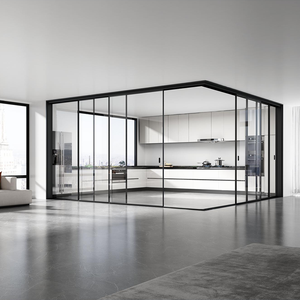
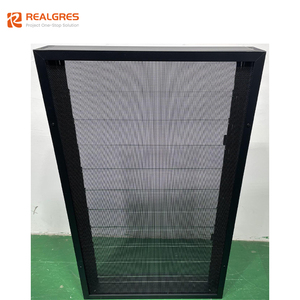
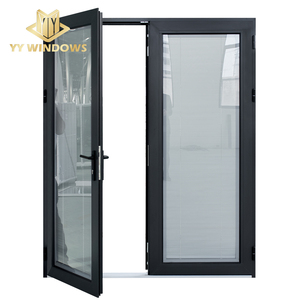
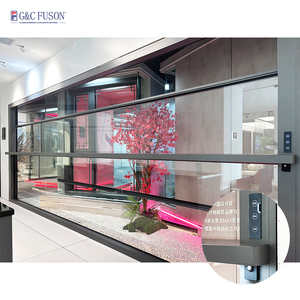
Engineering Paradigms in Modern Architectural Aluminium Louvres
Aluminium louvre windows—historically known as jalousie windows—have undergone an unprecedented technological renaissance over the past decade. Once perceived primarily as lightweight, passive ventilation slats suited solely for subtropical vernacular housing, modern architectural louvre assemblies are now engineered as aerodynamically optimized, thermally broken, and electronically synchronized fenestration envelopes. Today's commercial and multi-family residential developments mandate building envelopes that simultaneously fulfill aggressive decarbonization benchmarks, acoustic attenuation standards (STC/OITC ratings), and cyclone-grade water-penetration barriers under extreme cyclonic windloads.
For commercial facade engineers, procurement executives, and international distributors, selecting a world-class manufacturing partner requires vetting far beyond superficial extrusion dimensions. It demands an exhaustive audit of alloy metallurgic purity (specifically prime 6063-T5 vs. 6063-T6 architectural billets), CNC machining tolerances, structural silicone seals, polyamide (PA66 GF25) thermal barrier integration, and multi-point linkage drive-mechanisms capable of maintaining airtight compression over 50,000 operational cycles.
Key Engineering Performance Standard (EN 14351-1 & AS2047 Harmonization)
A high-performance louvre assembly must demonstrate zero water ingress at pressures exceeding 450 Pa (Class 9A under EN 12208) while maintaining structural integrity under ultimate limit state (ULS) windloads greater than 3,000 Pa, complete with air infiltration figures restricted below 0.5 L/s·m² under EN 12207 Class 4 standards.
Top 10 Global Aluminium Louvre Manufacturers & Exporters Matrix
A comparative assessment evaluating structural R&D depth, manufacturing footprint, testing credentials, and international export supply chain maturity.
| Manufacturer / Brand | Headquarters & Hub | Core Specialization | Thermal & Acoustic Barrier | International Certifications | BMS / Automation Readiness |
|---|---|---|---|---|---|
| DERCHI Windows & Doors (Guangdong Dejiyoupin) | Foshan, China (180,000m² Campus) | Architectural Louvres, Thermal Break Casement & Curtain Systems | Polyamide PA66 GF25 + Dual EPDM Multi-Blade Compression Seals | CE (EN 14351-1), NFRC, AS2047, CSA, Energy Star, ISO 9001 | 24V DC / Modbus / KNX BMS Smart Actuation Integration |
| Safetyline Jalousie | Sydney, Australia | Heavy-Duty High-Security Louvres | Acoustic Gasket Perimeter Seals, Laminated Infill | AS2047, AS1288, BCA Compliance | Motorized Somfy / Dry Contact Integration |
| Breezway Altair | Brisbane, Australia | Powerlouvre Component Systems | Dual-composite clips, low-E glass/extrusion blades | AS2047, ISO 9001, CE Mark | App & Smart Building Environmental Sensors |
| Colt Group | Havant, United Kingdom | Smoke Exhaust & Climate Control Louvres | Engineered industrial aerodynamic thermal louvres | EN 12101-2, CE, ISO 14001 | Advanced SCADA / Industrial Life Safety Networks |
| Schüco International | Bielefeld, Germany | Façade-Integrated Ventilators & Sunshades | Isolating profile cavities, passive-house class | DIN EN Standards, CE, Cradle to Cradle | Schüco Building Skin Control (BSC) Proprietary |
| Renson Ventilation | Waregem, Belgium | Acoustic, Storm-Resistant Natural Louvres | Continuous thermal breaks & internal acoustic foam liners | CE, Qualicoat, ISO 9001 | Demand-Controlled Ventilation (DCV) Ecosystem |
| Aluprof SA | Bielsko-Biała, Poland | Commercial Extruded Louvre Screens & Vents | Multi-chamber thermal struts with low Uw build-ups | CE, Passive House Institute, EN Norms | Standard European automated facade actuators |
| Reynaers Aluminium | Duffel, Belgium | Architectural Integrated Louvre Sashes | Polyamide insulating strips, multi-gasket sashes | CE, Qualicoat Seaside, Minergie | Reynaers Motorized System Drivers |
| Kawneer (Arconic) | Norcross, GA, USA | Impact-Resistant Exterior Louvres | Commercial thermal barriers, structural alloy blades | AAMA, NFRC, Miami-Dade NOA | Commercial Relay / Direct Voltage Actuation |
| Lisiere Architectural | Singapore / ASEAN Hub | Tropical High-Wind Tropical Jalousies | Fluorocarbon-coated aluminium blades, silicone boots | SS 212, ISO 9001, Green Mark Certified | Centralized rain/wind sensor network triggers |
Future Development & Architectural Trends in Louvre Technology
The market for architectural louvres is pivoting rapidly from static window fixtures to highly responsive facade micro-climates driven by four primary engineering trajectories.
Full BMS Aerodynamic Synchronization
Modern commercial projects demand low-voltage (24V brushless DC) motorization embedded invisibly within the structural mullion. Paired with internal building management software (BMS) through BACnet or KNX protocols, motorized louvres modulate blade angles continuously based on real-time indoor CO2 ppm concentrations, enthalpy calculations, wind azimuth, and solar radiant tracking.
Structural Thermal Break Fusion
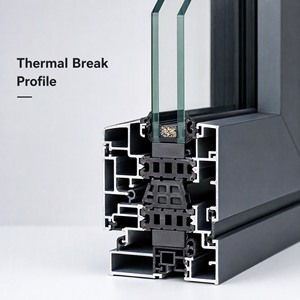
Historic louvres were notoriously thermal sieves. Next-generation systems incorporate 24mm to 34mm polyamide (PA66 GF25) thermal breaks running along jambs, blade carriers, and horizontal transoms. Coupled with double-glazed insulated glass blades (featuring warm-edge spacers and argon gas fill), modern louvres can achieve system U-values ($U_w$) under 1.6 W/m²·K.
Severe Weather & Cyclone Resilience
Driven by rising extreme weather events across coastal Europe, North America, and Australasia, louvre systems are now engineered with heavy interlocking perimeter tongue-and-groove extrusions. Advanced labyrinth drainage systems prevent water back-siphonage during Category 4 & 5 cyclonic events, complying with ASTM E1886/E1996 and AS/NZS 1170.2 impact testing.
Acoustic Dissipation Infill Technology
Urban residential density requires natural ventilation without urban noise pollution. The latest acoustic louvre designs integrate dual-blade perimeter hollow vulcanized Santoprene or co-extruded EPDM gaskets paired with asymmetric laminated safety glass or micro-perforated sound-absorbing aluminium aerodynamic aerofoil blades, attaining verified sound reduction indices of Rw 34 to 38 dB.
Future Procurement Trends: Navigating Supply Volatility & Carbon Audits
Procurement directors sourcing aluminium fenestration products in 2025–2030 face rigorous regulatory regimes, notably the European Union’s Carbon Border Adjustment Mechanism (CBAM) and strict Scope 3 embodied carbon disclosure rules. To protect project margins and prevent downstream regulatory delays at discharge ports, commercial buyers must align their procurement protocols with emerging best practices:
1. Low-Carbon Billet Verifications
Top global exporters now verify the carbon intensity of their aluminium stock. Sourcing profiles extruded from hydro-powered smelting or secondary billets containing upwards of 60% post-consumer recycled content dramatically diminishes embodied carbon footprints, ensuring effortless compliance with LEED v4.1, BREEAM Outstanding, and EU Taxonomy mandates.
2. Factory Direct Modular Assembly
Instead of importing loose components and knocked-down (KD) blade channels that require expensive, error-prone on-site assembly, developers are shifting toward pre-glazed, pre-motorized unitized louvre modules. Factory-controlled assembly guarantees perimeter seal integrity, precise motor calibration, and zero-defect quality before containerization.
3. Full Traceability & Digital Twin BIM
Top-tier exporters furnish complete BIM/Revit families with parameterized airflow coefficients (free vent area calculations), thermal transmittance curves, and full mill-test metallurgical reports for alloy chemical compositions, ensuring zero friction during structural engineering and architectural submittals.
Why International Buyers Partner with DERCHI (Guangdong Dejiyoupin)
Engineered precision, colossal capacity, and proprietary intellectual property built over 25+ years of dedicated fenestration manufacturing.
Under the corporate banner of Guangdong Dejiyoupin Doors and Windows Co., Ltd., the DERCHI brand stands at the apex of China's premium architectural fenestration manufacturing sector. Recognized as an official "China Famous Brand" by Xinhua News Agency, DERCHI operates one of the most technologically advanced digital intelligent production campuses in Asia, located in Shishan Town, Foshan.
180,000 m² Facility
A colossal manufacturing campus featuring high-precision automated German Elumatec CNC milling and multi-angle automated saws, guaranteeing 1,000,000 m²+ annual capacity.
25+ Years Experience
Over a quarter-century of focused engineering in thermal break architectural windows, louvres, heavy sliding systems, and hurricane-rated curtain wall façades.
100+ Patents
Pioneering proprietary designs including the patented Four-Side Six-Point Lock mechanism, delivering unmatched burglar resistance and acoustic perimeter compression.
Multi-Continent Accreditations
Fully accredited under European CE (EN 14351-1), American NFRC, Australian AS2047/AS1288, Canadian CSA, Energy Star, and ISO 9001 certified manufacturing.
30+ Dedicated R&D Engineers
A premier engineering division assisting overseas clients with custom profile dies, static wind-load calculations, thermal modeling simulations, and BIM files.
18,000+ Delivered Worldwide Landmarks
From prestigious international hospitality landmarks including Hilton Hotels and Atour luxury chains to ultra-luxury Beverly Hills residences, Emerald City, and high-spec waterfront villa complexes across the UK, France, Germany, Australia, and the Middle East, DERCHI provides seamless project lifecycle backing: from schematic drawing reviews to ocean-ready steel-framed crate logistics and virtual installation supervision.
Aluminium Louvre Procurement & Technical Compliance FAQs
Essential answers to critical engineering, testing, logistics, and compliance questions compiled by our senior export engineering division.
How do aluminium louvres prevent water ingress during torrential driving rain?
- Aerodynamic Blade Overlap & Compression Gaskets: When fully actuated to the closed position, each blade interlocks with continuous high-density EPDM or vulcanized Santoprene weather-stripping along both the bottom lip and upper trough.
- Labyrinth Internal Jamb Drainage: Ingress water that strikes the blade pivot mechanism is channeled into concealed vertical sub-frame tracks equipped with multi-stage non-return weep valves.
- Sill Cavity Pressure-Equalization: By equalizing internal chamber air pressure with external atmospheric gusts, water is physically prevented from siphoning inward, maintaining zero leakage up to 450–600 Pa test pressure under EN 12208 Class 9A and AS4420.5 water resistance protocols.
What are the key differences between 6063-T5 and 6063-T6 aluminium alloy for louvres?
- 6063-T5: Cooled from an elevated temperature shaping process and artificially aged. It offers a typical ultimate tensile strength of ~150 MPa and yield strength of ~110 MPa. It is highly versatile and ideally suited for intricate interior channels and non-structural blades.
- 6063-T6: Solution heat-treated and artificially aged to achieve superior mechanical hardness (Webster Hardness ≥ 12). It achieves tensile strength ≥ 205 MPa and yield strength ≥ 170 MPa. 6063-T6 is explicitly specified for high-windload structural mullions, expansive blade spans (>1200mm), coastal high-rise applications, and hurricane-resistant commercial louvre dampers.
Can aluminium louvre windows meet strict European energy regulations (such as GEG or RE2020)?
How do motorized louvre systems integrate with commercial Building Management Systems (BMS)?
What surface treatment is recommended for coastal or high-salinity marine environments?
- Qualicoat Class 2 (Super-Durable Powder Coating): Formulated with advanced polyester resins capable of passing 3,000-hour acetic acid salt spray (AASS) tests and Florida 5-year weathering exposure with minimal gloss reduction.
- High-Build Anodizing (Class 20 or 25): An electrolytic oxide layer measuring 20 to 25 microns thick, providing impenetrable resistance against airborne marine chlorides.
- PVDF Fluorocarbon (Polyvinylidene Fluoride): 2-coat or 3-coat architectural Kynar 500 coating (minimum 70% fluoropolymer resin) with dry film thickness > 35 microns, offering exceptional chemical resistance and UV degradation immunity.
How are fragile glass-bladed or wide-span louvres packaged for transoceanic container shipping?
- Multi-Layer Film & Edge Guards: Individual extrusions and sub-frames are encased in heat-shrink PE protective film with heavy-gauge corrugated EPE corner protectors.
- Fumigated Solid-Timber / Plywood Crating: Entire units are locked into custom-built, ISPM-15 compliant fully enclosed plywood crates reinforced with interior steel banding and high-density foam shock bumpers.
- Desiccant Integration & Container Chocking: Industrial container desiccant packs prevent cargo sweat, and specialized pneumatic air bags/timber bracing prevent load shifting during high-seas pitch and roll.
Ready to Engineer Your Next Fenestration Project?
Whether you require high-velocity hurricane impact louvres, European CE-compliant thermal break windows, or custom extruded architectural profiles, our senior engineering desk provides structural review, windload analysis, and formal shop drawings within 48 hours.