Featured Aluminum External Door Systems & Fenestration Assemblies
Engineered to comply with stringent international standards including CE EN 14351-1, AS2047, CSA, and NFRC certifications. Explore our precision-manufactured series configured for commercial and luxury residential envelopes.
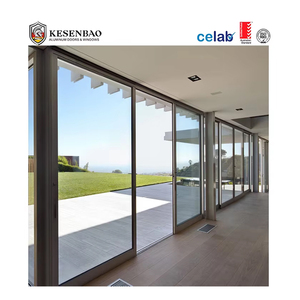
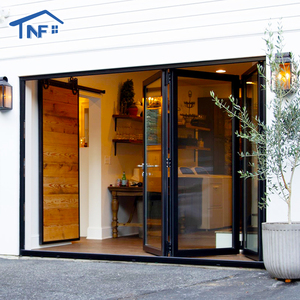
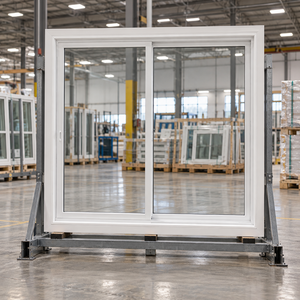
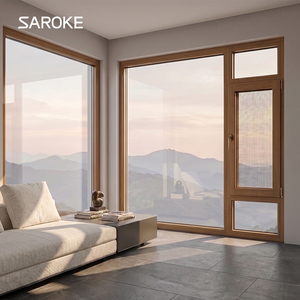
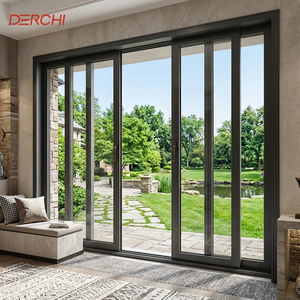
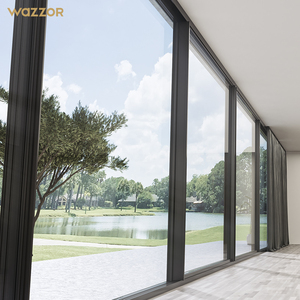
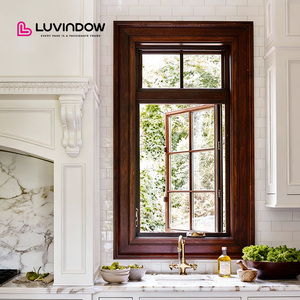
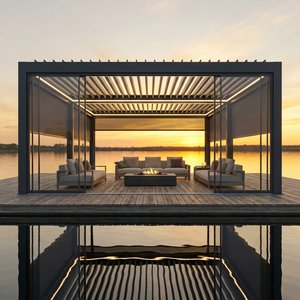
Intelligent Production Base
Annual Production Capacity
Proprietary National Patents
Technical Production Staff
Why Tier-1 Importers & Façade Engineers Rely on Our Factory
Guangdong Dejiyoupin Doors and Windows Co., Ltd. (DERCHI) combines more than 25 years of precision manufacturing with end-to-end customisation. Operating across 18,000+ completed structures worldwide, we deliver total supply chain security for residential developments, luxury hospitality (Hilton, Atour), and high-end estates.
Patented Anti-Burglary Engineering
Structural reliability forms the cornerstone of architectural external door assemblies. We implement independent invention patents engineered specifically to exceed rigorous forced-entry standards worldwide.
- Exclusive Four-Side Six-Point locking mechanical hardware
- Concealed hinge assemblies rated for sash weights up to 400kg
- Multi-point perimeter compression locking against forced prying
- Seamless integration with automated commercial access controls
Zero-Error 360° Quality Management
Every single external door extrusion profile, glass unit, and corner joint is managed via digital CNC tooling and an unbroken QA protocol certified under ISO 9001:2015 standards.
- Automated German-engineered CNC milling & corner crimping
- Profile thickness strictly exceeding 2.0mm structural thresholds
- Dual-component corner bracket gluing eliminating water ingress
- 100% pre-assembly inspection before maritime crate packaging
Worldwide Certification Compliance
We actively mitigate project regulatory friction by executing preliminary pre-testing and certified lab verifications for top construction markets across Europe, North America, and Australasia.
- CE EN 14351-1 Declaration of Performance (DoP) coverage
- AS2047 & AS1288 certified for extreme Australian wind loads
- North American NFRC and CSA compliant thermal ratings
- Florida Building Code hurricane-impact certifications
Future Procurement Trends in the B2B Aluminum External Door Market
Navigating regulatory overhauls, shifting carbon footprints, and architectural preferences is crucial for procurement directors and developers executing multi-year capital projects.
1. Stringent Whole-Life Carbon & Low-Carbon Aluminum
Global architectural standards such as the EU Carbon Border Adjustment Mechanism (CBAM) and LEED v4.1 are directly dictating procurement specifications. Commercial tenders increasingly favor suppliers utilizing certified primary ingots processed via hydro-electric smelters or post-consumer scrap loops.
- Transition to circular alloy billet formulations (6063-T5 / 6060-T66)
- Transparent Environmental Product Declarations (EPDs)
- Life-cycle calculation embedded directly into structural RFQ bids
2. Demanding Thermal Envelope Targets (Passivhaus & Zero-Energy)
National building regulations (such as UK Building Regs Approved Document Part L, Germany's GEG, and France's RE2020) continue to enforce aggressive limits on thermal transmittance. B2B buyers can no longer rely on conventional thermal breaks.
- Multi-chamber polyamide (PA66 GF25) thermal barriers up to 39mm
- Aerogel and closed-cell polyolefin insulation core fillings
- Target overall door U-values (Ud) lowering below 0.85 W/(m²·K)
3. Ultra-Slim Structural Sightlines with Automated Motors
Luxury residential and hospitality designs mandate monumental glazed openings with minimal visible framing. Sashes exceeding 3.5 meters in height and 500kg in panel mass necessitate industrial-strength concealed hardware and integrated building automation.
- Interlocking mullion sightlines reduced below 20mm
- Concealed linear electromagnetic drive actuators
- Zero-threshold, ADA-compliant flush recessed drainage tracks
Emerging Technical Developments in External Door Engineering
From metallurgical surface treatments to IoT hardware integration, these innovations define the competitive boundary of contemporary fenestration systems.
Advanced Surface Nanotechnology & Marine-Grade Finishes
Atmospheric corrosion poses the single largest threat to exterior architectural finishes in coastal and heavy industrial regions. The adoption of Qualicoat Class 2 and Class 3 super-durable fluoropolymer powder coatings (PVDF) ensures color retention, chalking resistance, and salt-spray durability exceeding 3,000 hours without oxidation breakdown.
Multi-Functional Insulated Glazing Units (IGUs)
The door framework is only as capable as its glazed infill. Modern exterior configurations synthesize vacuum insulated glass (VIG) with warm-edge composite thermoplastic spacers (TPS) and multi-silver Low-E magnetron sputtering, eliminating perimeter condensation and optimizing solar heat gain coefficients (SHGC).
Smart Access Integration & Biometric Security
Commercial and luxury developments demand seamless access control embedded directly within factory-machined profiles. Architectural doors now feature concealed motorized multi-point locksets operating in unison with 3D facial recognition, biometric finger-vein sensors, and building management system (BMS) dry-contact telemetry.
Our 8-Stage OEM/ODM Engineering & Delivery Workflow
Eliminating site installation discrepancies through rigorous design reviews, structural wind-load simulations, and international logistics execution.
Architectural Drawing Review
In-depth structural assessment of elevation schedules, wall sections, and local wind-load engineering requirements.
R&D Profile Engineering
Custom die fabrication, thermal simulation modeling (THERM/WINDOW), and extrusion structural optimization.
Technical Bidding & Pricing
Comprehensive cost breakdown, compliance matrices, glass configuration proposals, and lead-time scheduling.
Shop Drawing Sign-Off
Millimeter-accurate fabrication drawings, anchoring specifications, and hardware schedules confirmed by client architects.
Material Allocation & Extrusion
Primary 6063-T5 aluminum billet extrusion, precision thermal break crimping, and surface coating processing.
CNC Machining & Assembly
Multi-axis automated profile milling, corner bracket sealant injection, and pre-hanging of mechanical hardware.
360° Quality Control & Testing
Air-permeability, water-tightness, dimensional check, and scratch-free surface inspection under ISO 9001 guidelines.
Export Crating & Site Support
Reinforced steel-banded plywood crate packaging, sea-container load stabilization, and detailed bilingual installation manuals.
Frequently Asked Questions: Sourcing Aluminum External Doors
Addressing essential technical inquiries regarding compliance, structural integrity, lead times, and factory-direct procurement.
How do thermal break aluminum external doors compare to solid UPVC or timber systems?
Aluminum exhibits vastly superior structural strength-to-weight ratios compared to UPVC or timber. By integrating high-density fiberglass-reinforced polyamide (PA66 GF25) thermal barrier strips between the interior and exterior aluminum chambers, thermal conduction is disrupted, achieving U-values on par with timber while completely avoiding wood rot, seasonal warping, or UV degradation common to vinyl frames over prolonged exterior exposure.
What testing certifications do your exterior door assemblies hold for international commercial projects?
Our product suites are fully certified under CE EN 14351-1 for European territory distribution, AS2047 and AS1288 for Australia and New Zealand, and NFRC/CSA for the United States and Canada. All structural load testing covers air permeability (EN 12207), water tightness under static pressure (EN 12208), and resistance to severe wind load (EN 12210).
What is the minimum order quantity (MOQ) and production turnaround for custom architectural orders?
For standard architectural catalogue profiles in our factory inventory, our MOQ is flexible (supporting custom villa projects from 15 to 30 square meters). For fully bespoke OEM extrusion profiles requiring custom die creation, the minimum volume begins at 5 metric tons of aluminum profiles. Typical mass-production turnaround ranges between 25 and 35 calendar days following shop drawing sign-off.
Can you engineer doors to meet stringent coastal hurricane-impact and water-penetration requirements?
Yes. Our hurricane-proof series is engineered using heavy-duty 3.0mm structural wall thicknesses combined with SentryGlas (SGP) or PVB laminated impact glass build-ups. Coupled with multi-chamber stepped EPDM drainage chambers and high-capacity sill weeps, the assemblies prevent water ingress under cyclonic dynamic wind pressures exceeding 4,500 Pascals.
Which hardware brands and multi-point locking mechanisms are integrated into your export lines?
We partner directly with leading international hardware manufacturers including Siegenia, Roto Frank, Hoppe, and CMECH, alongside our proprietary patented Four-Side Six-Point locking assemblies. Buyers can customize lock cylinders to meet European DIN standards, British Secured by Design (PAS 24) standards, or American ANSI Grade 1 criteria.
How does your factory protect aluminum frames and glass assemblies from maritime transit damage?
Export orders receive industrial protective wrapping comprising peelable anti-scratch surface film, thick shock-absorbing pearl foam edge covers, and rigid corner brackets. The finished units are packed inside custom-engineered, fully fumigated multi-layer plywood crates reinforced with internal steel strapping, preventing shifting or racking during ocean container transport.