Featured OEM Architectural Window & Door Configurations
Engineered for global contractors, commercial specifiers, and high-end residential developers. Each system is calibrated for stringent air-tightness, wind load resistance, and regional energy metrics.
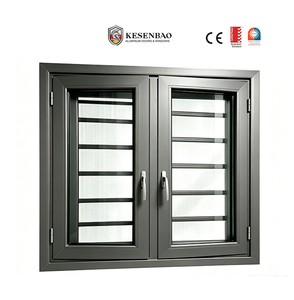
Australian Standard Aluminium Awning & Inward Opening Casement Windows
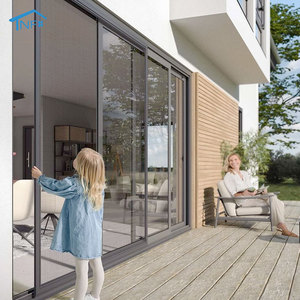
Aluminum Alloy Folding Screen Sliding Doors with Magnetic Roller Blind
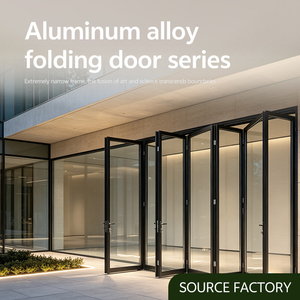
Aluminium Bifold Patio Door Thermal Break Double Tempered Glazing
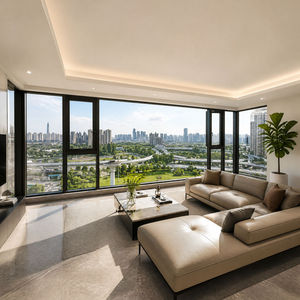
Architectural Thermal Break Aluminum Casement Window System
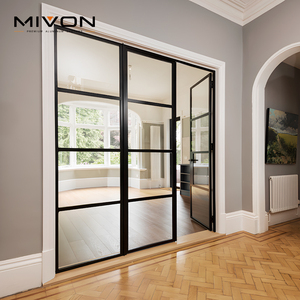
Modern Black Crittall Style French Double Doors Ultra Slim Glass Partition
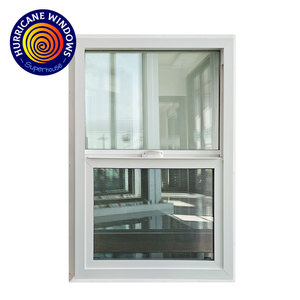
American Waterproof Aluminium Double Glass Sash Vertical Sliding Window
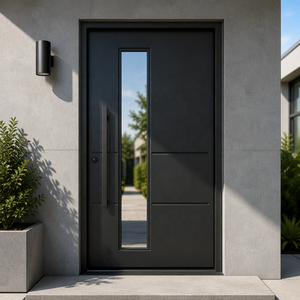
Modern Residential Villa Thermal Insulation Iron Entry Door with Smart Lock
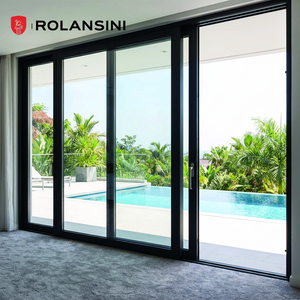
Rolansini S3 AS12 Australian Rustic Double Glazed Stacker Sliding Doors
Guangdong Dejiyoupin Doors and Windows Co., Ltd. (DERCHI)
Operating as an elite manufacturing partner for European, North American, and Australasian projects, DERCHI integrates intelligent CNC fabrication lines with comprehensive structural testing. Our facility provides end-to-end control from precision aluminum billet extrusion and polyamide strip insertion to vacuum glazing assembly and export crating.
Patented Burglary Protection
Proprietary Four-Side Six-Point Lock engineering delivers multi-directional engagement, securing door and window sashes against forced entry and cyclonic wind shear forces.
International Accreditation
Full conformance documentation under CE EN 14351-1, Australian AS2047/AS1288, American NFRC/AAMA, Canadian CSA, and ISO 9001 total quality control standards.
30+ Dedicated R&D Engineers
In-house structural engineering teams providing BIM/Revit modeling, custom extrusion die creation, FEA wind-deflection analysis, and thermal profile modeling.
Comparative Analysis: Standard Commercial vs. DERCHI OEM Performance
A technical assessment for architects, procurement directors, and building envelope consultants evaluating OEM suppliers.
| Performance Metric | Conventional OEM Supply | DERCHI Engineered OEM Standard | Compliance / Standard |
|---|---|---|---|
| Aluminum Alloy Quality | Recycled billet, non-traceable 6063-T5 | Primary 6063-T6 virgin architectural alloy with spectral batch test records | ASTM B221 / EN 755 |
| Thermal Barrier Method | PVC or cheap poured resin (Prone to cracking) | Technoform Polyamide PA66 GF25 reinforced with 25% continuous glass fiber | DIN 16941 / ISO 16396 |
| Overall Thermal Transmittance | Uw 2.2 – 2.8 W/m²K | Uw 0.8 – 1.4 W/m²K (Triple glazed Low-E + Argon warm edge) | EN ISO 10077-1 / NFRC 100 |
| Surface Coating Integrity | Standard powder coating < 40μm | AkzoNobel / PPG Interpon D2015 Qualicoat Class 2 super-durable fluorocarbon | AAMA 2604 / AAMA 2605 |
| Air Tightness & Infiltration | Class 2 or unverified leakage | Class 4 (≤ 0.05 m³/(h·m²) at 100 Pa) with continuous triple EPDM sealing | EN 12207 / AS4420.4 |
| Structural Wind Load Capacity | Serviceable up to 1500 Pa | Engineered deflection resistance up to 4500 Pa (Cyclonic & high-rise) | EN 12210 / AS4420.2 |
Future Trends in Global Architectural Door & Window Sourcing
How institutional specifiers, developers, and international contractors are restructuring procurement pipelines for 2025–2030.
1. Direct-to-Factory DDP Integration
Tier-1 contractors are bypassing localized distributors to engage OEM manufacturers directly. Through advanced 3D BIM integration, factories fabricate pre-glazed, pre-hung units shipped directly to the job site under Delivered Duty Paid (DDP) terms. This eliminates regional markup cascades (saving 25–40%), ensures complete traceability of hardware origins, and cuts job-site installation labor in half.
2. Embodied Carbon & CBAM Verification
The European Union's Carbon Border Adjustment Mechanism (CBAM) and North American green building statutes (LEED v4.1, CALGreen) now mandate documented Environmental Product Declarations (EPDs). Future procurement requires suppliers to use hydro-powered green aluminum smelting billets with carbon footprints below 4.0 kg CO²/kg Al, coupled with recycled scrap integration and ISO 14064 verification.
3. Supply Chain Agility & Dual Sourcing
To hedge against regional disruptions, developers are prioritizing OEM suppliers with multi-facility industrial zones and guaranteed inventory reserves. Modern contracts demand digitized real-time factory auditing: purchasers track billet casting, extrusion anodizing, and packing assembly line stages through ERP cloud portals with third-party SGS/Intertek inspection signoffs before departure.
Next-Generation Engineering & Architectural Systems
Key technological breakthroughs reshaping aluminum and glass fenestration performance over the coming decade.
Vacuum Insulated Glass (VIG) Synthesis
While traditional triple glazing adds excessive sash weight and depth, composite Vacuum Insulated Glass units achieve center-of-glass Ug values as low as 0.4 W/m²K within an 8.3mm profile. OEM manufacturers are redesigning internal structural extrusion cavities to house lightweight VIG units, radically reducing structural dead loads on high-rise curtain walls while exceeding Passivhaus standards.
Ultra-Slim Sightlines & Concealed Hardware
Architectural demand has converged around minimal 18mm visible interlock profiles for oversized panoramic sliding doors (sashes reaching 4000mm in height). Structural bonding techniques (silicone structural glazing) now allow the glass itself to act as the primary structural diaphragm, while drive motors, multipoint locks, and weepage channels are seamlessly recessed into structural sub-flooring.
IoT-Connected Mechatronic Fenestration
Fenestration systems are no longer passive static barriers. Modern OEM doors integrate concealed brushless magnetic levitation drive systems, biometric fingerprint scanning, and automated micro-ventilation cycles driven by indoor air quality (VOC and CO²) sensors. Extrusions are engineered with internal conduit paths for hardwired Power-over-Ethernet (PoE) security integration.
Frequently Asked Questions: Sourcing Custom OEM Aluminum & Glass Doors
Critical considerations for purchasing managers, structural engineers, and real estate developers.
How does DERCHI verify thermal transmittance (U-factor) for regional compliance?
We compute whole-assembly values (Uw and Ud) using finite element analysis software (LBNL THERM and WINDOW) calibrated to ISO 10077-1/2 and NFRC 100/200 methodologies. Profile cross-sections, polyamide barrier geometries, warm-edge spacers, and gas fillings are specifically customized to hit required values (e.g., German GEG ≤ 1.3, French RE2020, or UK Part L ≤ 1.4 W/m²K).
What surface finishes are recommended for high-salinity coastal environments?
For marine or coastal zones (within 1-3 miles of saltwater), standard polyester powder coatings degrade rapidly. We specify Qualicoat Class 2 super-durable powders or Class 3 PVDF (fluoropolymer) coatings meeting AAMA 2605 with 3000-hour acetic acid salt spray resistance, or heavy architectural anodizing (Grade AA25, ≥ 25 microns) to prevent filiform corrosion.
What are typical lead times and Minimum Order Quantities (MOQs) for OEM custom extrusions?
For existing catalog profiles, our MOQ starts at 50 square meters. For custom-designed architectural profiles requiring dedicated extrusion dies, the tooling lead time is 15-20 days, followed by sample signoff. Standard full-container orders (40ft HQ) require 30-35 days fabrication time at our automated Foshan manufacturing campus.
How are heavy oversized glass doors packaged to avoid ocean freight damage?
We use fully enclosed, ISPM-15 certified fumigated plywood crates with custom A-frame steel internal racks. Glass panels and aluminum profiles are separated by cork spacer pads, vacuum-sealed in anti-moisture thermal shrink film, and protected with heavy-gauge corner bumpers. Desiccant packs prevent condensation corrosion inside sea containers.
Can you provide custom engineering shop drawings and BIM components?
Yes. Our 30+ person engineering department generates full CAD fabrication shop drawings, elevation diagrams, anchor placement details, and structural calculation reports (finite element analysis for wind deflection). We also supply native Autodesk Revit (.RVT) and IFC BIM files embedded with localized thermal and structural properties.
What hardware brands are integrated into your high-end sliding and bifold systems?
We partner directly with tier-1 global hardware manufacturers including Siegenia, GU, Roto (Germany), Savio, Giesse (Italy), and CMECH (USA), alongside our proprietary patented Four-Side Six-Point security locks. All sliding roller carriages feature precision stainless steel sealed bearings tested for over 100,000 continuous duty cycles.
Submit Your Project Architectural Schedule for Immediate OEM Quotation
Send your CAD plans, door and window schedules, or performance tender specifications directly to our engineering department. Our team will return a complete thermal calculation, bill of quantities (BOQ), and factory-direct pricing proposal within 48 hours.