180,000 m²
Smart Manufacturing Base
1,000,000+ m²
Annual Production Capacity
100+
Patents & Innovations
18,000+
Global Projects Completed
Factory Direct Catalog
Precision-Engineered Architectural Window & Door Configurations
Explore our export-certified architectural systems designed to meet rigorous thermal, hurricane impact, and acoustic envelope requirements across European, North American, and Australian building sectors.
Executive Technical Synthesis
Navigating China's Aluminum Clad & Thermal Break Window Manufacturing Landscape
Understanding structural integrity, envelope thermal transmittance, and testing protocols required to ensure seamless project delivery across borders.
Structural Engineering & Cladding Technology
Aluminum clad windows represent the technological pinnacle of architectural fenestration, pairing the organic thermal dampening and aesthetic warmth of solid interior timber (such as American White Oak, European Larch, or Canadian Pinus sylvestris) with the maintenance-free, weather-resistant protection of exterior extruded aluminum alloy 6063-T5/T6. When sourcing wholesale quantities from Chinese manufacturers, technical buyers must distinguish between standard mechanical clip-cladding and pressure-equalized rear-ventilated exterior profiles.
Our intelligent fabrication bases deploy multi-axis CNC machining centers that ensure exterior cladding maintains an independent expansion joint channel. Because extruded aluminum profiles experience a coefficient of linear thermal expansion nearly double that of interior wood cores, proprietary nylon retaining clips prevent structural warping, seal failure, or internal wood rot over prolonged building life cycles.
Stringent European & International Compliance
Direct sourcing from high-capacity factories like DERCHI provides direct access to audited testing documentation compliant with international building codes. Whether your projects mandate CE marking under EN 14351-1 for the European Union, AS2047 fenestration standards for Oceania, or high-velocity impact requirements such as Florida Miami-Dade NOA testing, tier-one manufacturers formulate profile geometries with integrated PA66GF25 polyamide thermal isolators to deliver low overall U-values (Uw ≤ 0.8 W/m²·K).
By implementing comprehensive finite element analysis (FEA) during the design stage, we optimize thermal breaks, triple-seal EPDM gaskets, and gas-filled insulated glass units (IGUs) to mitigate cold bridging while eliminating acoustic transmittance in high-density urban environments.
| Performance Characteristic | Test Standard | DERCHI Engineering Value | Procurement Significance |
|---|---|---|---|
| Thermal Transmittance (Uw) | EN ISO 10077-1 / NFRC 100 | 0.79 – 1.2 W/m²·K (Passive House Spec) | Directly impacts local building code compliance (GEG, RE2020, Part L). |
| Structural Wind Load | EN 12210 / ASTM E330 | Class C5 (≥ 3000 Pa) / DP 70+ | Ensures frame deflection safety in high-rise coastal & hurricane installations. |
| Acoustic Insulation (Rw) | EN ISO 717-1 / ASTM E413 | Up to 45 dB (with asymmetric laminated glass) | Mitigates low-frequency traffic noise in prime hospitality & urban residential hubs. |
| Air Permeability | EN 12207 / AS 2047 Class 4 | Class 4 (≤ 600 Pa airtight performance) | Prevents micro-draft energy losses and pressure-driven moisture penetration. |
| Water Tightness | EN 12208 / ASTM E331 | Class 9A (≥ 600 Pa) to Class E1050 | Guarantees envelope dryness during monsoon, coastal, and continuous storms. |
Market Intelligence
Emerging Procurement Trends in Aluminum Clad Window Systems
Architects, facade consultants, and general contractors are adapting to macro shifts in energy decarbonization, material circularity, and smart automation.
Triple & Quadruple Low-E Glazing Configurations
Driven by strict European Net-Zero targets and North American Energy Star benchmarks, wholesale demand has permanently shifted away from dual pane to triple insulated glazing (4Low-E+12Ar+4+12Ar+4Low-E) featuring warm-edge composite spacer bars and 95% argon gas fill to minimize radiant heat loss.
Ultra-Narrow Architectural Sightlines
Contemporary minimalist architecture requires the exterior visual weight of aluminum frames to disappear. Next-generation systems feature concealed sash hinges, frameless structural floor embeds, and sash sightlines compressed down to 48mm while supporting massive 600kg automated sliding panels.
BIM Integration & Precision Digital Fabrication
International developers now mandate direct Building Information Modeling (BIM) data integration. Procurement teams increasingly reject vendors lacking Revit/CAD parametry, demanding millimeter-accurate clash detection, site laser scanning validation, and shop drawing confirmation prior to extrusion.
R&D Roadmaps
The Technological Evolution of Chinese Architectural Fenestration
From simple extruded profiles to intelligent, climate-responsive envelope systems built in automated manufacturing ecosystems.
Gen 1: Structural Cladding Evolution
Early systems relied on surface adhesives or rigid rivets that failed due to seasonal expansion differentials. Modern systems utilize floating engineered clips that enable independent expansion while resisting dynamic Category 5 wind loads.
Gen 2: Patented Multi-Point Locking
Security engineering has evolved from rudimentary single latch pins to DERCHI's patented Four-Side Six-Point Lock technology. This ensures extreme perimeter seal compression, resistance to forced entry, and complete elimination of air infiltration.
Gen 3: Intelligent Envelope Systems
Today's production lines incorporate motorized concealed hardware, magnetic electrochromic switchable smart glass, embedded wind-rain sensors, and whole-building KNX/BMS automated ventilation connectivity built directly into the sash cavity.
Factory Advantage
Guangdong Dejiyoupin (DERCHI): Enterprise Engineering Credentials
Recognized as an industry leader, our manufacturing complex in Foshan provides end-to-end technical oversight for high-volume international developments.
180,000 m² Facility
High-volume automated production infrastructure in Foshan, Guangdong, maintaining predictable lead times and uncompromising quality control on export orders.
30+ In-House Engineers
Our dedicated R&D department handles wind pressure simulations, thermal calculations, shop drawing preparation, and tailor-made structural extrusion dies.
Xinhua Certified
Formally recognized as a "China Famous Brand" by Xinhua News Agency, DERCHI represents benchmark industrial reliability and export accountability.
Comprehensive Testing
Accredited factory testing protocols backed by CE (EN 14351-1), NFRC, CSA, AS2047, and ISO 9001 quality management procedures for zero-defect shipments.
Procurement Knowledge Base
Frequently Asked Questions: Sourcing Windows from China
Authoritative technical answers to common questions raised by commercial developers, general contractors, and overseas window distributors.
How does the factory prevent differential thermal expansion between aluminum and wood in clad windows?
Because aluminum has a much higher coefficient of thermal expansion than solid timber, direct rigid fastening causes frame warping or glass seal failure. DERCHI utilizes independent glass-fiber-reinforced polyamides and high-strength polymer retaining clips that allow the exterior aluminum shell to slide longitudinally along independent expansion paths without applying mechanical shear strain to the interior timber substrate. This ensures long-term structural stability under severe temperature swings (-30°C to +50°C).
Can DERCHI window and door systems meet the stringent thermal regulations of Europe (RE2020/GEG) and North America?
Yes. Our systems are engineered specifically for high-efficiency envelopes. By incorporating multi-chambered PA66GF25 thermal breaks, triple-sealed EPDM co-extruded gaskets, warm-edge silicone structural spacers, and argon-gas-filled triple Low-E glazing units (featuring soft-coat silver sputtered films), our standard window configurations easily achieve Uw ratings between 0.79 and 1.2 W/m²·K, fully qualifying for Passivhaus and high-performance energy rebate standards.
What third-party testing and certification do you supply for customs clearance and building inspections?
Every export shipment is backed by a full compliance portfolio. This includes CE certification under EN 14351-1 (covering air permeability, water tightness, wind resistance, and thermal transmittance), ISO 9001 factory audits, Australian AS2047 accreditation, NFRC thermal ratings, and Miami-Dade County Florida NOA impact certifications for coastal hurricane zones. Mill test certificates for 6063-T5 aluminum extrusions and structural glass reports are furnished with shop drawings.
How are glass units and oversized window assemblies protected against damage during international ocean freight?
Export packaging is an integral step in our zero-error quality assurance process. Finished assemblies undergo protective film application, corner-edge guards, high-density polyethylene foam wrapping, and crating inside fumigated ISPM-15 compliant solid plywood cases. Crates are engineered with internal desiccant bags to prevent moisture staining and are secured into 40ft HC open-top or dry containers using heavy-duty steel ratchet binders to withstand dynamic maritime movement.
What engineering documentation and shop drawing support are provided before production begins?
Our engineering team follows an 8-stage project execution framework. Upon receiving architectural drawings or window schedules, our 30+ R&D engineers prepare detailed 2D elevation sections, CAD structural cross-sections, anchor bolt positioning plans, and 3D installation node details for architect sign-off. We do not begin profile extrusion or timber CNC cutting until shop drawings, hardware brands, glass builds, and RAL surface color codes have received written customer sign-off.
Can we order whole-house matching systems including windows, curtain walls, and interior/exterior doors?
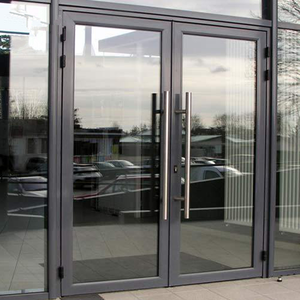
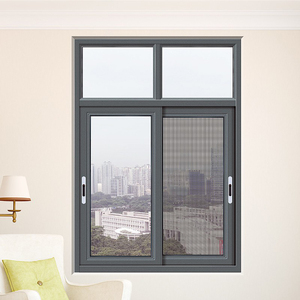
Yes. DERCHI offers a complete, unified architectural envelope service. Clients can procure thermal break tilt-turn windows, ultra-slim sliding patio doors, French casements, high-security thermal break front entrance doors, engineered solid wooden interior doors, and structural glass sunrooms under a single purchase order. This guarantees unified powder-coat color consistency, matching glass performance, and streamlined freight consolidation.
Ready to Engineer Your Architectural Fenestration Package?
Consult with DERCHI’s technical export team today. Receive comprehensive shop drawing reviews, structural wind pressure calculations, and detailed commercial project quotations within 24 hours.