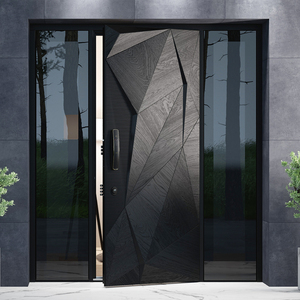
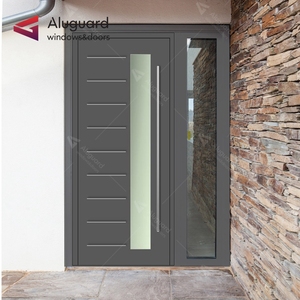
ISO 9001 & CE-Certified Factory Hub

China Top Aluminium Jali Door Manufacturers & Factory

Precision Architectural Mesh Systems, Thermal Break Security Barriers & OEM Engineered Architectural Casements from Guangdong Dejiyoupin Doors and Windows Co., Ltd.

Catalog Overview

Factory-Engineered Aluminium Jali, Screen & Entrance Systems

Built with high-tensile 6063-T5 aluminium alloys, micro-perforated mesh matrices, and multi-point security hardware engineered for residential villas, modern apartments, and commercial projects worldwide.

180,000 m² Integrated Mega-Factory
1,000,000+ m² Annual Production Volume
100+ Patents Four-Side Six-Point Lock
25+ Years Global Export Authority
Technical Specification

The Engineering Anatomy of Modern Aluminium Jali Doors

A comprehensive procurement breakdown for developers, facade consultants, and general contractors seeking verified hurricane-grade mesh, thermal efficiency, and anti-burglary structural frames.

Alloy Metallurgy & Extrusion Caliber

Aluminium Jali doors manufactured by Guangdong Dejiyoupin utilize primary 6063-T5/T6 billet extrusions with certified wall thicknesses ranging between 1.6mm and 2.5mm, meeting strict global wind load requirements.

  • Tensile Strength ≥ 205 MPa (Yield ≥ 160 MPa)
  • Multi-cavity pressure-equalized drainage design
  • Chromate-free eco passivation pre-treatment
  • Compatible with seamless flush corner crimping

High-Tensile Jali Mesh Integration

Beyond traditional decorative lattices, modern jali doors incorporate high-tensile 304/316 marine-grade stainless steel woven wire mesh and CNC-perforated structural sheets capable of withstanding knife shear and impact.

  • 0.80mm – 1.0mm 304/316 wire diameter options
  • Knife shear test compliant to AS5039 / EN 1627
  • Electrostatic powder coating resisting 2,000h salt spray
  • Insect-proof weave preserving 72% daylight penetration

Patented 6-Point Anti-Intrusion Hardware

Equipped with Guangdong Dejiyoupin’s patented Four-Side Six-Point locking invention, locking mushroom pins seat directly into continuous stainless keeps along the outer perimeter, neutralizing pry-bar attack vectors.

  • Continuous anti-lift and anti-jimmy jamb blocks
  • Concealed heavy-duty 3D adjustable 200kg hinges
  • Smart integration: 3D Face ID, Tuya & Zigbee modules
  • Double EPDM vulcanized continuous co-extrusion seals

Technical Baseline Comparison: Conventional vs. High-Performance Aluminium Jali Doors

Performance Characteristic Generic Market Jali Doors DERCHI High-Spec Jali Door Systems Compliance Test Benchmark
Aluminium Extrusion 1.0mm - 1.2mm Non-certified Scrap Mix 2.0mm Virgin 6063-T5 Architectural GB/T 5237 & EN 12020-2
Security Mesh Rating Soft 201 Stainless / Fiberglass Screen 0.9mm High-Tensile 316 Marine Grade AS 5039 Knife Shear & Dynamic Impact
Locking Mechanism Single Deadbolt / Surface-mounted Latches Patented Four-Side Six-Point Perimeter Lock RC2 / RC3 Resistance Class (EN 1627)
Corrosion Resistance Standard Mill/Thin Anodizing (≤10μm) Qualicoat Class 2 Powder Coat (≥65μm) AAMA 2604 / ASTM B117 (2000 hrs)
Thermal Separation Non-thermal Solid Extrusion (Uw > 5.0) PA66-GF25 Thermal Barrier Strips (Uw ≤ 1.4) ISO 10077-2 Thermal Transmittance
Industry Forecasting

Future Procurement & Architectural Trends for Aluminium Jali Doors

Actionable procurement insights derived from global building energy codes, climate change mitigation demands, and evolving consumer luxury preferences through 2026–2030.

1. Dual-Core Thermal & Protective Assemblies

Traditional jali doors were purely security and insect barriers fitted externally to timber doors. Future procurement favors integrated dual-action systems: a thermal break insulated glazed door combined directly with an integrated exterior flush stainless jali frame on one single structural sub-jamb.

This allows European, American, and Middle Eastern projects to achieve net-zero energy conservation targets (such as Germany's GEG, France's RE2020, and California Title 24) without forfeiting rapid night ventilation and intruder deterrence.

2. Smart Home & Touchless Actuation

Global architectural trends demand that security jali doors integrate into building automation protocols. Modern high-end procurement documents specify concealed motorized multipoint latches powered by low-voltage brushless servos.

Biometric fingerprint sensors, structural 3D facial recognition algorithms, and smart lock status sensors are seamlessly recessed inside the 6063-T5 aluminium profiles, eliminating external visible keypads and sustaining ultra-minimalist facade profiles.

3. Parametric Laser-Cut CNC Architectural Infill

While wire mesh dominates insect-exclusion scenarios, luxury hospitality and villa architects increasingly specify customized parametric laser-cut aluminium plates (3mm to 5mm solid sheets) creating culturally resonant architectural geometries (Islamic Mashrabiya patterns, Crittall geometric panels, and organic biomimicry).

This delivers daylight diffusion, privacy shielding, structural shear resistance, and wind dissipation simultaneously.

Enterprise Authority

Why Source From Guangdong Dejiyoupin Doors and Windows Co., Ltd.

Operating from the global window & door manufacturing capital in Foshan, China, we combine 25+ years of engineering mastery, a 180,000m² manufacturing plant, and international third-party compliance.

Xinhua "China Famous Brand"

Recognized as an authoritative national enterprise brand by Xinhua News Agency, verifying corporate financial integrity, high-volume capacity, and industrial supply chain trustworthiness.

Global Accreditation Footprint

Our aluminum jali doors, casements, and sliding facades are fully certified under CE (EN 14351-1), ISO 9001, NFRC (North America), AS2047 (Australia), CSA (Canada), and Energy Star protocols.

Zero-Error 360° Quality Control

From primary alloy spectrometry to automated dual-head CNC corner crimping and pneumatic test-chamber air/water checks, every door is pre-assembled and test-hung before ocean packing.

Worldwide Project Proven Track

Trusted across 18,000+ completed projects across Europe, North America, the Middle East, and Oceania—including prominent references like Hilton Hotels, Beverly Hills luxury villas, and Atour Hotels.

Procurement FAQ

Frequently Asked Questions by Overseas Contractors & Buyers

Critical technical, structural, logistic, and compliance answers directly answered by our senior facade export engineering desk.

What differentiates an Aluminium Jali Door from a standard insect screen door?
A standard fly screen door relies on lightweight aluminum frames (often 0.8mm wall thickness) and pliable fiberglass mesh designed solely for basic pest barrier functions; it provides zero physical resistance against intrusion. In contrast, an Aluminium Jali Door manufactured by Guangdong Dejiyoupin features heavy-duty 2.0mm+ 6063-T5 architectural extrusion profiles, reinforced internal steel corner keys, high-tensile 304 or 316 stainless steel woven wire mesh (0.8mm-1.0mm diameter) or structural laser-cut lattice panels, and our patented Four-Side Six-Point anti-theft locking system. It functions as a certified architectural security barrier, hurricane screen, and child fall-protection barrier while allowing 100% natural ventilation.
How do your aluminium jali doors perform in coastal or humid marine environments?
Coastal environments expose metal building components to severe sodium chloride corrosion and galvanic degradation. To eliminate these risks, our jali door systems undergo comprehensive anti-corrosion engineering: we apply certified Qualicoat Class 2 architectural powder coatings (or 25μm thick anodized finishes) that withstand over 2,000 hours of ASTM B117 neutral salt spray testing. Furthermore, all woven mesh utilizes certified 316 marine-grade austenitic stainless steel wire woven under strict tension, isolated from the aluminium frame by non-conductive PVC or EPDM anti-galvanic isolating gaskets to prevent bi-metallic galvanic corrosion.
Can aluminium jali doors be integrated with thermal break profiles and smart locks?
Yes. We routinely engineer integrated whole-house systems. Our R&D team of 30+ engineers designs dual-track and triple-track frames featuring PA66-GF25 polyamide thermal barrier strips. On the interior track, double or triple insulated low-E glass ensures compliance with European GEG / UK Part L energy codes (Uw ≤ 1.2 W/m²·K). On the exterior track, a flush high-tensile jali screen operates independently. Furthermore, our doors can be factory-fitted with biometric smart locks (fingerprint, NFC, 3D facial recognition, smart home Zigbee/Tuya gateways) and wired into centralized commercial building security control systems.
What documentation and certifications are provided for commercial container orders?
For international importers, general contractors, and facade consultants, we furnish complete compliance documentation per shipment. This includes ISO 9001 factory production control audit certificates, CE Declarations of Performance (DoP) under EN 14351-1, AS2047 test records (Australia), NFRC thermal performance ratings, mill material test certificates (MTC) verifying virgin 6063-T5 alloy composition, structural shop drawings signed by licensed facade engineers, and step-by-step bilingual installation manuals.
What is your ocean freight packaging standard to prevent frame damage?
Export shipments traveling via ocean freight face high humidity, rough handling, and container vibration. We execute a 5-layer protective packing protocol: (1) PE protective film over all finished aluminum profiles, (2) heavy-duty foam corner caps on all 4 frame corners, (3) waterproof bubble wrap enveloping the entire assembly, (4) heavy multi-layer honeycomb corrugated cardboard, and (5) fumigation-free solid plywood crates fitted with internal lifting lugs and moisture desiccant packs, engineered for forklift offloading at European, American, or Middle Eastern ports.
What is the typical production lead time and minimum order quantity (MOQ)?
With our 180,000m² manufacturing base and automated CNC extrusion centers, our standard production lead time is 25 to 35 calendar days following shop drawing confirmation and technical sign-off. Because we handle whole-house custom villa packages as well as commercial residential projects, we maintain a flexible MOQ policy: we accept project-based customized orders starting from 1 complete set for private luxury villa architectural packages, up to multi-container 40HQ monthly supply contracts for commercial developers.
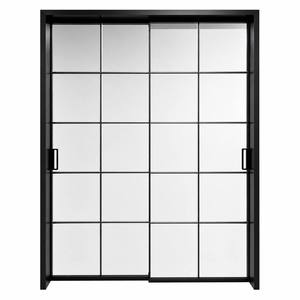
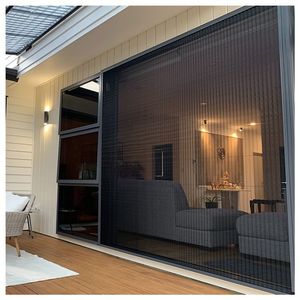
Consult Our Senior Facade Engineering Team in Foshan

Submit your door schedules, CAD architectural blueprints, or specific security mesh performance targets. Our technical engineers will provide structural proposals, thermal calculations, and factory-direct FOB/CIF estimates within 24 hours.