European-Compliant Architectural Storm & Security Assemblies
Manufactured using aerospace-grade 6063-T6 virgin aluminum alloy, multi-cavity thermal profiles, and verified under harmonized European safety and wind-load benchmarks.
Architectural Whitepaper: CE EN 14351-1 Compliance & Structural Mechanics
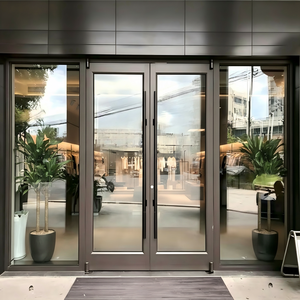
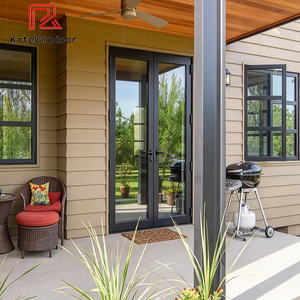
For international general contractors, structural engineers, and commercial fenestration importers, procuring aluminum storm doors goes far beyond aesthetic surface finishes. Under the European Construction Products Regulation (CPR 305/2011/EU) and the harmonized standard EN 14351-1:2006+A2:2016, exterior pedestrian storm doors must withstand cyclical atmospheric pressures, prevent catastrophic air/water ingress during cyclonic wind bursts, and maintain certified thermal boundaries. At Guangdong Dejiyoupin Doors and Windows Co., Ltd. (DERCHI Europe), our production lines adhere strictly to these performance thresholds, deploying heavy-gauge 6063-T6 aluminum extrusions paired with high-tensile polyamide thermal break barriers.
A primary failure point in non-certified storm door imports is structural deflection under sustained positive and negative wind loads. When exposed to wind velocities exceeding 140 km/h (Class C4/C5 per EN 12210), low-grade profiles twist along the vertical mullion axis, causing gasket decompression, localized micro-buckling, and severe water infiltration through the perimeter threshold. Our structural design implements a minimum 2.0mm to 3.0mm primary wall extrusion profile reinforced by internal mechanical corner cleats injected with two-component polyurethane bonding adhesives. This ensures complete frame squareness under 3000 Pa wind pressures, preventing structural fatigue across decades of service life.
| Testing Parameter | Standard Reference | DERCHI Certified Rating | Commercial Impact for Importers |
|---|---|---|---|
| Air Permeability | EN 1026 / EN 12207 | Class 4 (up to 600 Pa test pressure) | Eliminates parasitic drafts; mandatory for Passivhaus and RE2020 energy compliance. |
| Watertightness | EN 1027 / EN 12208 | Class 9A / E1200 (1200 Pa sustained) | Prevents capillary moisture ingress during violent cyclonic coastal rainstorms. |
| Resistance to Wind Load | EN 12211 / EN 12210 | Class C5 (±2000 Pa, safety 3000 Pa) | Zero permanent deflection; prevents glass blowout in high-rise and maritime installations. |
| Thermal Transmittance (Ud) | EN ISO 10077-1/-2 | 0.82 to 1.30 W/(m²·K) | Matches German GEG, UK Part L, and French RE2020 carbon reduction mandates. |
| Burglary Resistance | EN 1627 to EN 1630 | RC2 / RC3 / RC4 configurations | Equipped with patented Four-Side Six-Point locking to withstand heavy mechanical intrusion. |
| Operating Forces & Cycles | EN 12046-2 / EN 1191 | Class 2 / 200,000 continuous cycles | Ensures commercial heavy-traffic resilience with zero hinge sagging or latch binding. |
Future Trends in Architectural Aluminum Storm Door Procurement (2025–2030)
How stringent ESG standards, climatic intensification, and smart architectural integration are reshaping commercial supply chain requirements.
1. Low-Carbon Aluminum Billets & EPD Verification
Global developers now enforce strict limits on Embodied Carbon. Future procurement favors factories utilizing renewably powered hydroelectric smelting yielding ≤4.0 kg CO₂ per kg aluminum. DERCHI provides comprehensive Environmental Product Declarations (EPD) enabling direct integration into BREEAM and LEED v4 green building documentation.
2. Polyamide PA66GF25 Multi-Chamber Thermal Breaks
Traditional non-insulated storm doors are being rendered obsolete by progressive building energy codes. Next-generation configurations utilize 34mm to 45mm glass-fiber reinforced polyamide thermal struts (PA66GF25) filled with aerogel or high-density polyurethane foams, driving thermal transmittance ($U_d$) values down to near-passive levels.
3. Biometric & IoT Integrated Security Storm Perimeters
Architects are converging perimeter physical security with home automation. Modern aluminum storm doors increasingly integrate concealed magnetic contacts, motorized multi-point European shoot bolts, and hidden wiring conduits for facial recognition, RFID keypads, and automated HVAC interlocks that disable heating/cooling during door vent cycles.
Engineering Evolution: From Basic Screening to Engineered Building Shields
Historically, residential storm doors served merely as secondary sacrificial barriers fabricated from roll-formed 0.8mm sheet metal with stamped aluminum corners. Over the past decade, rapid urbanization, severe climatic volatility, and aggressive acoustic noise pollution in metropolitan transit corridors have driven a complete engineering paradigm shift. Modern architectural storm doors are now categorized as engineered building shields, operating as the first line of defense in dual-facade wall assemblies.
Our engineering laboratory in Foshan incorporates finite element analysis (FEA) to assess cyclic wind load distribution across heavy-duty stainless steel butt hinges, continuous piano hinges, and concealed pivots. By utilizing continuous co-extruded EPDM (ethylene propylene diene monomer) gasket seals that remain supple and elastic at -40°C without hardening or cracking, our systems maintain structural contact pressure against the frame rebate regardless of thermal expansion coefficients between season peaks.
Furthermore, surface treatment technology has advanced from standard electrostatic powder finishes to Qualicoat Seaside and Qualanod Class 20 standards. In coastal or hyper-saline regions—such as the Mediterranean basin or the North Sea coastline—fluorocarbon PVDF (polyvinylidene fluoride) coatings with minimum 3-coat 35-micron film thickness are baked at 230°C to prevent blistering, filiform corrosion, and color degradation under relentless solar UV exposure.
Guangdong Dejiyoupin Doors and Windows Co., Ltd. (DERCHI)
Distinguished as a "China Famous Brand" by Xinhua News Agency, DERCHI operates one of Asia's most sophisticated fenestration manufacturing facilities in Foshan, Guangdong. Operating across 180,000 m² of specialized production floor space with 600+ skilled workers and an R&D team of over 30 certified senior structural engineers, we bridge the gap between large-scale industrial output and bespoke European architectural precision.
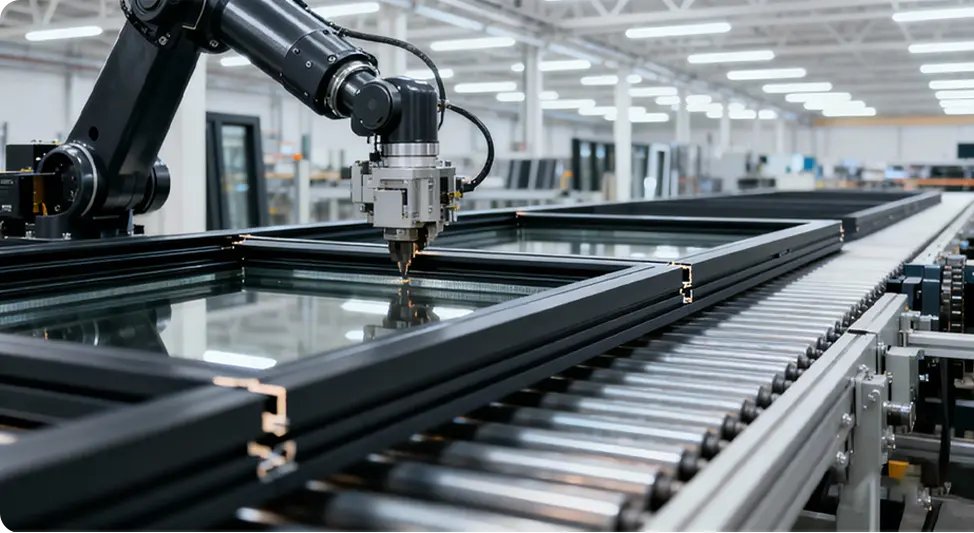
Our export operations are structured specifically to meet the high administrative and technical standards of overseas B2B buyers. We maintain full traceability from raw 6063-T6 aluminum ingots through computerized CNC multi-axis profile machining, glass automated lamination, hardware integration, and multi-stage dry-run assembly testing.
Frequently Asked Questions for B2B Importers & Contractors
Detailed engineering, certification, logistical, and commercial guidelines for international door procurement.
What specific CE documentation and testing reports are supplied with each aluminum storm door shipment?
How does the patented "Four-Side Six-Point Lock" mechanism elevate storm and anti-burglary security?
Can DERCHI engineer custom profiles to comply with specific European energy codes like Germany's GEG or France's RE2020?
What anti-corrosion surface treatments are utilized for coastal maritime projects?
How does DERCHI ensure zero damage during containerized maritime shipping to European hubs?
What is the typical production lead time and minimum order quantity (MOQ) for custom project schedules?
Ready to Engineer Your Next Fenestration Project?
Partner directly with a world-class CE & ISO 9001 certified aluminum doors and windows manufacturer. Connect directly with our engineering team for technical drawing reviews, DoP compliance documents, and factory-direct commercial tenders.