0%

Choosing an Aluminium Washroom Door is not just a matter of matching a finish to the wall tiles. The door must handle damp air, frequent cleaning, and constant opening without becoming a maintenance problem. Look closely at the frame, hinges, lock, ventilation, and installation details. A neat showroom sample can hide weak hardware. Real use is less forgiving.

Aluminium door consultant Oliver Grant offers a useful rule: “Choose for the room’s daily demands, not just its first impression.” This is a practical guiding principle, not a substitute for checking product specifications and installer advice. A reliable choice depends on the room’s layout, expected traffic, privacy needs, and exposure to moisture. Measure the opening carefully; even a small error can leave an uneven gap or a door that catches on the floor. Also consider how the finish will look after repeated wiping. Fingerprints show. So can scratches.

The seven tips ahead examine durability, corrosion resistance, hardware quality, ventilation, privacy, sizing, and maintenance. They are designed to help you compare options with clear questions rather than sales claims. Some details are easy to overlook, especially when a door looks polished in a catalogue. That deserves a second look. A thoughtful Aluminium Washroom Door should feel solid in use, close smoothly, and suit the space for years. It may not be the cheapest option. Still, the lowest price rarely tells the whole story.
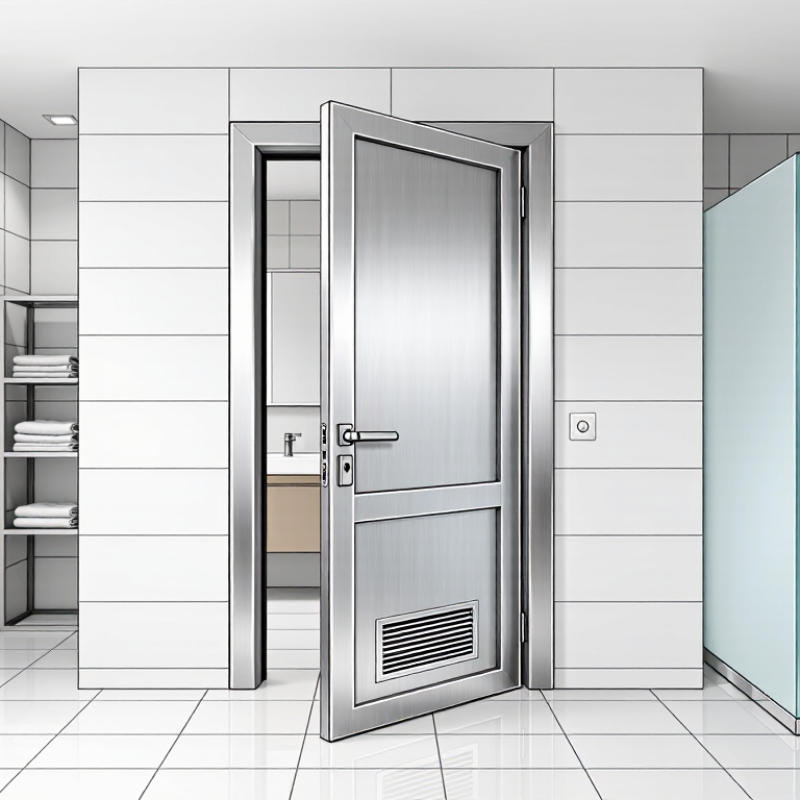
7 Tips for Choosing an Aluminium Washroom Door

Assess the Washroom’s Layout, Use, and Privacy Requirements

Start with the room, not the door sample. Measure the clear opening, corridor width, basin position, and space needed for the door swing. The U.S. Access Board’s 2010 ADA Standards specify at least 32 inches of clear opening for doors on accessible routes. Treat this as a design check, not a complete layout plan; approach space and door hardware matter too. A door that swings into a busy route can obstruct people and cleaning carts. Small details matter.

Next, consider who uses the washroom and when. A staff washroom used by a few people has different traffic patterns from a public washroom near a café or event space. For shared facilities, check whether the aluminium door’s lock, indicator, and emergency release are easy to operate and maintain. Look closely at sightlines from the entrance: a door may fit perfectly yet expose a cubicle when opened. Privacy is contextual. Solid panels and carefully placed screens can help, while ventilation requirements may affect the design. A plan can look clear on paper and still fail when a bin blocks the turning space, so test the layout with fixtures and typical equipment marked in place.

Compare Aluminium Grades, Finishes, and Corrosion Resistance

An aluminium washroom door faces more than occasional splashes. Steam, wet hands, and cleaning products can attack exposed edges and fittings. Compare alloy grades, not just the word “aluminium.” Many architectural doors use 6xxx-series alloys for their balance of strength and formability. Some 5xxx-series alloys offer strong corrosion resistance, especially in damp environments, but the full door assembly still matters. Ask for the alloy designation and coating details.

Anodising creates a durable oxide layer and can provide a neat, consistent finish. Powder coating adds colour and another protective layer, but chips may expose the metal beneath. Inspect corners, cut-outs, and hinge areas closely. Small details matter. Stainless-steel hardware can help, though incompatible metals may encourage corrosion where they touch. A grade chart alone can be misleading; that shortcut is tempting, but it ignores finish quality and installation.

Consider the room’s actual conditions. Is the door near a shower, or in a well-ventilated changing area? Check whether the finish tolerates the cleaners used on site, and look for clear care guidance. Rinse away residue when practical and dry persistent water marks. This is not perfect protection, and maintenance is easy to overlook. Still, choosing a suitable alloy and finish together can reduce premature staining and edge damage.

Choose the Right Door Style, Dimensions, and Opening Direction

Choose the door style around the room’s traffic and available wall space. A hinged aluminium door feels familiar, but its swing can hit a basin, toilet, or passing user. A sliding door saves floor space, though its track needs regular cleaning and may offer less sound privacy. Look at the actual layout, not just a catalogue image. A mock-up with tape on the floor can reveal awkward clearances.

Measure the finished opening after tiling, then check the clear passage with the door open. The U.S. Access Board’s 2010 ADA Standards specify at least 32 inches of clear width for accessible door openings, measured at 90 degrees. This is a useful reference, not a substitute for local requirements. Opening direction matters, too: an outward swing may help access in an emergency, but it can obstruct a corridor. An inward swing can reduce that conflict, yet may consume scarce room space. Check hinges, latch reach, and nearby fixtures together. Small details matter. I’ve seen plans miss the towel dispenser. That is easy to overlook.

Check Locks, Hinges, Ventilation, and Accessibility Features

A reliable aluminium washroom door should close smoothly without trapping fingers or slamming. Test the lock from both sides, including with damp hands. The indicator should be easy to read, and the emergency release should work as intended. Check local requirements and the door’s instructions before selecting lock hardware. Small details matter.

Inspect hinges for firm fixings, even gaps, and signs of corrosion. Open and close the door several times. It should not scrape the floor or sag toward the latch. If it binds, stronger hardware may not solve the problem; alignment could be the real issue. Ask an experienced installer when adjustment is unclear.

Ventilation needs attention, too. A suitable gap or grille can help air move, but it should not compromise privacy or create sharp edges. Consider how the door performs in a humid room, where poor airflow can leave surfaces wet. For accessibility, check that the opening is wide enough for users and mobility aids. The handle should be reachable and simple to operate, with enough clear space to approach it. Try the layout with the actual room dimensions. A drawing can miss an awkward turn.

Review Installation Quality, Maintenance Needs, and Total Cost

A washroom door can look sturdy yet bind after a few months. Check the frame for plumb, even gaps, and firm fixing points; ask the installer to test the closer and latch repeatedly. A door that scrapes a wet tile edge may need adjustment, not stronger hardware. Small detail, real cost.

Maintenance affects the price beyond the invoice. Inspect hinges, seals, and surface damage on a schedule, and confirm that replacement parts are readily available. The National Institute of Standards and Technology’s Handbook 135 life-cycle cost method considers purchase, operation, maintenance, and replacement costs—not purchase price alone. Compare quotes on that basis. The Aluminum Association reports that recycling aluminum uses about 95% less energy than producing primary aluminum. That is an industry-level energy comparison, not a promise of lower door costs; finish, hardware, and service life still matter. Ask for written warranty terms and a clear repair allowance. I would not assume “low maintenance” means no maintenance.

FAQS

What should I measure before choosing a washroom door?

Measure the clear opening, corridor width, basin position, and door swing space. A 32-inch clear opening is a useful accessibility design check, not a complete layout plan.

Can a door swing block the washroom?

Yes. A door opening into a busy route may obstruct people or cleaning carts. Mark fixtures and equipment on the plan, then check the turning space.

How can I protect privacy near the entrance?

Check sightlines from the entrance with the door open. Solid panels or a carefully placed screen can help. A neat plan can still expose a cubicle.

What should I check on the lock and emergency release?

Make sure the lock, indicator, and emergency release are easy to operate and maintain. Try them in person if possible. Small details matter.

Does the aluminium alloy affect durability?

Yes. Ask for the alloy designation, not just a general aluminium description. Many architectural doors use 6xxx-series alloys; some 5xxx-series alloys resist corrosion well in damp areas.

Which finish works well in a damp washroom?

Anodising can provide a durable, consistent surface. Powder coating adds colour and protection, but chips may expose the metal underneath. Check corners and hinge areas.

Can door hardware cause corrosion?

It can. Stainless-steel hardware may help, but incompatible metals touching each other can encourage corrosion. A grade chart alone misses this detail.

How should I care for the door finish?

Check that the finish suits the cleaners used on site. Rinse off residue when practical and dry persistent water marks. Maintenance is easy to forget.

Conclusion

Choosing the right Aluminium Washroom Door starts with understanding the space and its users. Consider the washroom’s layout, how frequently it is used, and the level of privacy required. Compare aluminium grades and surface finishes for durability, appearance, and resistance to moisture and corrosion. Then select a door style, size, and opening direction that suit the available space and allow comfortable access.

Before making a decision, check that the locks and hinges are sturdy, ventilation is appropriate, and accessibility features meet users’ needs. Professional installation helps the door operate smoothly and fit securely. Also consider routine cleaning, maintenance, and the full cost over time—not only the initial purchase price. A thoughtful comparison of these factors can help you choose a practical, durable door that works well in everyday use.

Hazel

Hazel

Hazel is a professional marketing specialist who brings a deep understanding of the company’s products and the needs of the people who use them. Through regular contributions to the company’s blog, Hazel turns product knowledge into clear, practical articles that help readers understand key......