Choosing an Aluminum Door manufacturer is more than a price comparison. Global buyers must weigh thermal performance, weather resistance, finish quality, customization, and delivery reliability. A door may look flawless in a sample room, yet fail to suit a coastal project or a cold-climate installation. Small details matter.
The International Energy Agency reported that buildings accounted for about 30% of global final energy consumption and 26% of energy-related emissions in 2022. That puts building-envelope choices, including doors, in a wider efficiency conversation. The International Aluminium Institute notes that recycling aluminum requires roughly 5% of the energy used to produce primary aluminum. Useful context, but not a guarantee of a product’s environmental impact. That depends on materials, manufacturing, transport, and the project itself. The stakes are real.
This guide introduces 10 manufacturers for buyers comparing international supply options. It considers product range, engineering capabilities, certifications, production capacity, and export support. Ask for test reports, installation guidance, and clear warranty terms; a polished catalog cannot answer every technical question. And rankings have limits. A strong supplier for a hotel project may not fit a residential renovation, while lead times can change with specifications and location. Use the profiles as a starting point, then verify each manufacturer against your project’s requirements.
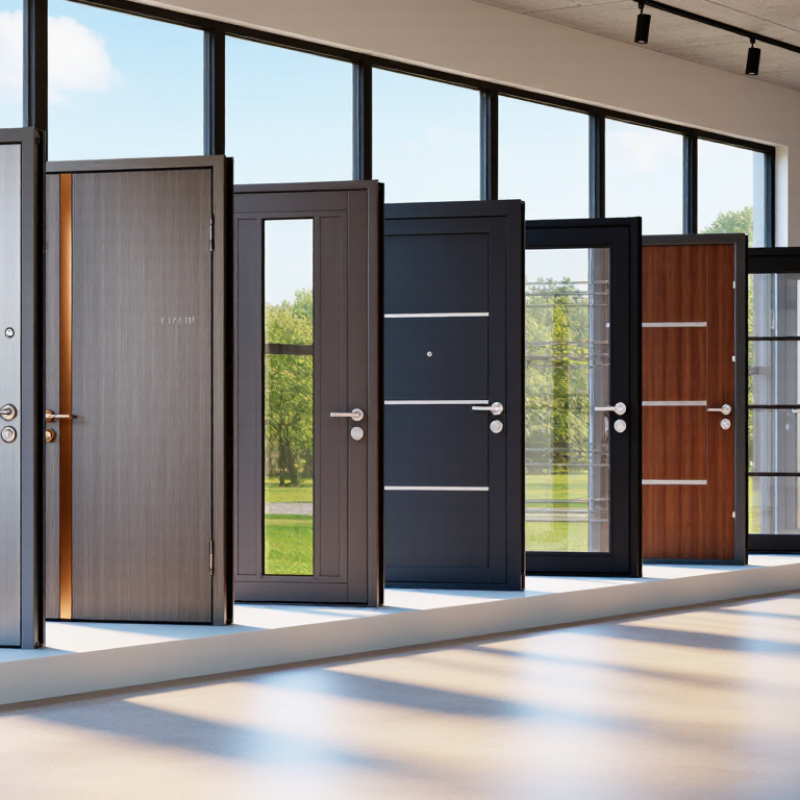
Aluminum Door Systems: 6063-T5 Profiles, Frames, and Thermal Breaks
For global buyers, an aluminum door is more than a clean-looking frame. Its performance depends on the profile design, alloy temper, hardware, seals, and assembly quality. Many systems use 6063-T5 aluminum profiles, shaped for straight edges and consistent fit. Ask manufacturers for profile drawings, wall-thickness details, and documented production tolerances. A smooth sample is useful, but it cannot show how well a full-size door handles repeated opening or changing weather.
Thermal breaks matter. A polyamide strip separates the inner and outer aluminum sections, reducing heat transfer through the frame. It does not stop heat loss on its own. Glass, gaskets, thresholds, and installation gaps all affect the finished door’s performance. Small details matter. Request test data for the complete door configuration, not just the profile. Check how corners are joined, how water drains from the sill, and whether hardware remains adjustable after installation. It is tempting to compare systems by alloy or price alone; that can miss the practical differences. Even careful specifications leave room for surprises on site. A sample installation can reveal fit issues before a larger order.
10 Best Aluminum Door Manufacturers for Global Buyers - Aluminum Door Systems: 6063-T5 Profiles, Frames, and Thermal Breaks
Technology-based comparison of ten aluminum door system categories for evaluating manufacturers. It is not a verified ranking of named companies. Profile alloys, thermal-break designs, dimensions, glazing options, and tested performance vary by product and market.
| No. | Door system category | Typical frame and profile considerations | Thermal-break considerations | Glazing and configuration | Buyer checks |
|---|---|---|---|---|---|
| 1 | Thermally broken hinged door | Extruded aluminum frame and sash; 6063-T5 is commonly used for architectural extrusions. Confirm alloy and temper in the product documentation. | A thermal barrier separates interior and exterior aluminum sections; barrier material and geometry affect whole-door performance. | Single or insulating glass units, subject to the system’s glazing-pocket limits and hardware capacity. | Request complete-door air, water, structural, and thermal data for the specified size and configuration. |
| 2 | Lift-and-slide patio door | Reinforced sash and track design supports large, heavy sliding panels; allowable panel size depends on the tested system and hardware. | Thermal breaks can be incorporated in frame and sash sections; threshold design is important to both thermal and water performance. | Often designed for insulating glass units; glass thickness and weight must remain within system limits. | Check operating-force data, panel limits, drainage details, and test results for the selected configuration. |
| 3 | Multi-slide door | Multiple panels run on one or more tracks; track count, stack arrangement, and sill layout affect opening size and installation requirements. | Thermally broken options are available in some systems; more panel joints mean sealing and drainage details need close review. | Glazing options depend on panel construction, hardware capacity, and local safety-glazing rules. | Confirm tested panel combinations, interlock design, sill accessibility, and field-installation instructions. |
| 4 | Folding door | Hinged panels fold and stack to the side; hinge, roller, and track specifications determine panel limits and operation. | Thermal-break construction may be offered, but performance depends on the complete frame, panel joints, seals, and threshold. | Available with varied panel counts and glazing choices; confirm compatibility with the system’s tested configuration. | Review weather-seal continuity, hardware adjustment, drainage, and maintenance requirements. |
| 5 | Pivot door | The pivot location and panel mass influence balance and hardware selection; oversized designs require project-specific engineering. | Thermally broken frames and insulated panels may be specified; check the junction between the pivot, frame, and threshold. | Can use glazed or opaque infill where supported by the system and hardware design. | Request maximum tested panel weight and dimensions, pivot-load data, and installation tolerances. |
| 6 | Narrow-stile commercial entrance | Slim aluminum stiles support a larger glazed area; door construction must suit the intended traffic and hardware. | Thermal-break versions are available for some entrance systems; non-thermal designs may be intended for different applications. | Typically glazed; glazing thickness, safety classification, and retention method are system-specific. | Check cycle testing, accessible clear opening, hardware compatibility, and applicable local building requirements. |
| 7 | Thermally broken storefront entrance | Designed to integrate with a storefront framing system; anchorage and connection details must match the project design. | Thermal barriers reduce direct heat flow through aluminum sections, but do not by themselves establish whole-assembly energy performance. | Commonly coordinated with the surrounding glazing system and specified glass build-up. | Verify door-and-frame test scope, perimeter seals, threshold, and compatibility with adjacent framing. |
| 8 | High-performance insulated door | May combine thermally broken aluminum framing with insulated glazing or an insulated panel; exact construction varies by design. | Some systems use polyamide thermal barriers, including glass-fiber-reinforced grades; confirm the specified material rather than assuming it. | Glass make-up, spacer, seals, and frame proportion all influence the rated whole-door result. | Request whole-product U-factor or equivalent local metric and the rating method used. |
| 9 | Coastal or corrosion-conscious door | Aluminum alloy, pretreatment, coating, fasteners, and drainage should be selected for the exposure and maintenance conditions. | Thermal-break selection remains a separate design consideration; it does not replace suitable corrosion protection. | Glazing and seals should be selected for local exposure, design pressure, and project requirements. | Ask for coating specifications, finish warranties, compatible fastener details, and a maintenance plan. |
| 10 | Custom large-format aluminum door | May require project-specific sections, reinforcement, and engineering; 6063-T5 is one commonly used extrusion temper, not a guarantee of structural suitability. | Thermal-break geometry and frame depth should be selected alongside structural and weather-performance needs. | Panel size, infill weight, and hardware capacity must be checked together. | Require project-specific calculations, shop drawings, installation details, and applicable full-size test evidence. |
Note: 6063-T5 is a commonly used aluminum extrusion alloy and temper, but suitability depends on design loads and applicable codes. Thermal breaks and glazing do not guarantee a particular energy rating. Compare certified or independently tested results for the complete door assembly, including its frame, hardware, seals, glazing, and threshold.
FAQS
It measures heat transfer. A lower value generally means better insulation. Check the units and whether the report covers the complete door.
Size, glazing, seals, frame, and hardware can affect results. Ask for a report covering your actual configuration. Small details matter.
It shows how much air passes through a closed door under stated test conditions. Compare results only when methods, pressures, and units match.
No. They use different testing frameworks. Check the test method, pressure difference, and reported leakage rate before comparing figures.
A water test reports the pressure where leakage begins. A wind rating describes structural performance under specified loads. Neither guarantees results on every building.
Not by itself. A poorly adjusted door, weak threshold, or careless installation can still cause problems. Reports help, but they are not the whole story.
Consider the site. A sheltered entrance and an exposed coastal façade face different conditions. Match the ratings to local weather and building exposure.
Guidance cited in the article estimates whole-home air leaks may account for 25–40% of heating and cooling energy use. That is not a door-only estimate. Worth remembering.
Conclusion
Choosing an Aluminum Door system for a global project involves more than comparing appearance and price. Buyers should understand how 6063-T5 aluminum profiles, frame design, and thermal breaks affect strength, insulation, and long-term performance. A careful manufacturer evaluation should also consider U-factor, air leakage, water penetration, and wind-load ratings, since these measures help indicate how a door may perform in different climates and building conditions.
The leading manufacturers serve varied regions and offer different product ranges, so buyers should match specifications to project needs rather than rely on a single general ranking. Check whether testing follows relevant methods, including EN 14351-1 and ASTM E283, and ask for clear documentation. Before ordering, confirm certifications, customization options, warranty terms, production lead times, packaging, and shipping arrangements. Comparing these details can help buyers select a suitable system and reduce surprises from specification through delivery.
